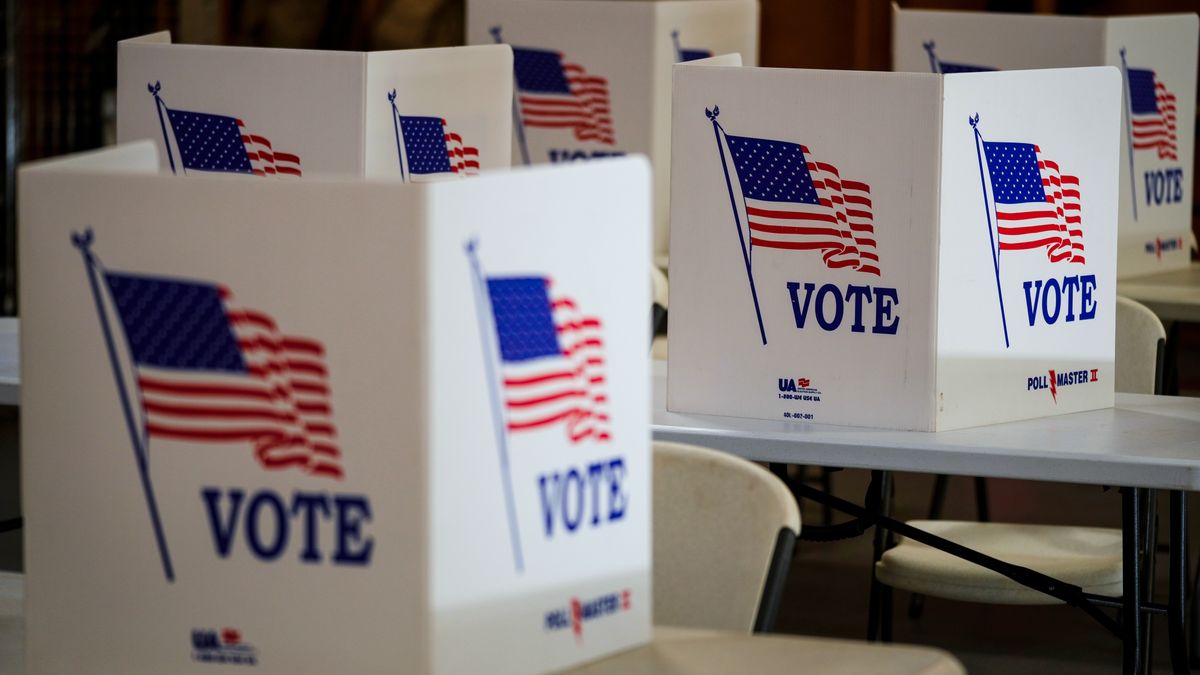
In-person early voting for North Carolina’s 2026 primary elections ends Saturday, giving voters the chance to determine who will face off in November's general election.
This year’s election features races for an open U.S. Senate seat, as well as every U.S. House and state legislative district. Many voters will also be asked to choose local prosecutors, sheriffs and other city or county leaders.
Other WRAL Top Stories
Here are some important dates and details to know before you vote.
Early voting: Mail-in voting has already begun, and Election Day for the primaries is March 3. Early voting offers yet another way to cast a ballot.
People can cast their ballots before the official day at designated early-voting sites. Early, in-person voting ends Feb. 28. During the early voting period, voters can cast a ballot at any early voting site, as opposed to voting at an assigned polling place on Election Day. For people who want to vote by mail, the deadline to request an absentee ballot was Tuesday, Feb. 17.
Requesting a mail-in ballot: The deadline for most voters to request one was Feb. 17, though military and overseas voters can request until March 2.
For people who would rather vote in person, there’s plenty to know about that process as well. The state elections board is encouraging North Carolinians to ensure their registration is up-to-date with their current name and address. Voting at an incorrect address could be a crime.
Updating existing voter registration: People who need to update their name or address can do so at an early voting site. However, registered voters may not change their party affiliation at an early voting site during the primary election.
Voters who want to update their address can bring a paycheck, utility bill, bank statement or college identification card. Voters who want to change the name on their registration can bring photo ID. If you move fewer than 30 days before March 3, then you will vote in the races corresponding with your old address. More information on updating your registration can be found at the state board of elections website.
New voter registration: People who plan to vote early can still register when they show up to an early voting polling place in their county, thanks to the state's same-day registration option for early voters.
To do so, they must prove they are eligible by showing a driver’s license or other government document, paycheck, utility bill, or bank statement that has their current name and residence address on it. More details can also be found on the state elections website. However, for people who plan on voting by mail or on Election Day itself, the voter registration deadline has passed.
How party affiliation affects participation: North Carolina has what’s called a semi-closed primary. Registered members of the Democratic or Republican parties can only vote in their party’s primary. There are no primaries on the ballot this year for the state’s other recognized political parties, the Libertarian and Green parties.
Unaffiliated voter ballots: If you’re registered as unaffiliated, you can choose which party’s primary to vote in.
Elections to watch: There are a few statewide races on the ballot this year, including a U.S. Senate race, that every North Carolinian can vote in. But most races on the ballot are limited to smaller regions — congressional and state legislative seats, county sheriffs, judges and prosecutors, and a few municipal races. Some of them will be more competitive than others. Here’s a list of races that political analysts will be keeping an eye on.
Sample ballots: Anyone in the state can find their specific sample ballot — or, for unaffiliated voters, all the sample ballots they can choose from — by looking up their voter registration online. Enter your name on the state’s voter-search website, find your records and scroll down to the field marked “your sample ballot” where there will be links indicating “D” for Democrat, “R” for Republican or both.
Voter ID: All voters can cast a ballot with or without a photo ID. Those with valid IDs should have their ballots be counted. Those who cannot show an acceptable photo ID will fill out what’s called a provisional ballot. That means their votes might or might not be counted, depending on whether they have a valid excuse under state law.
There are dozens of types of acceptable IDs, including a driver's license or passport. See all accepted forms of ID here. County boards of elections also offer free voter photo IDs to registered voters in their county. To receive a free voter photo ID card, voters must provide their name, date of birth and the last four digits of their Social Security number and have their photo taken.
Making sure your vote counts: Voters can find out whether their vote counted in the "Your Ballot: By Mail or Early Voting" section of the state elections board’s voter search database. Your ballot status will show up in the “Your Voter History” section as soon as your county completes the post-election process of assigning voter history to your record. This process might take up to a few weeks after Election Day.
People who vote by mail can also track their ballot through the postal system using the state’s official app, BallotTrax. For anyone who receives a mail-in ballot but doesn’t want to trust it to the postal system, they can fill it out and then hand-deliver it to their county elections office.
Due to a recent change in state law, any mail-in ballots that arrive after polls close on Election Day will be thrown out, regardless of when they were postmarked.