President Donald Trump’s endorsement of Michael Whatley in North Carolina’s U.S. Senate race isn’t deterring other Republicans from the race.
Whatley, the former Republican National Committee chairman who Trump endorsed this summer, is expected to face Waxhaw lawyer Don Brown and teacher Elizabeth Temple of Smithfield in the GOP primary to replace outgoing Republican U.S. Sen. Thom Tillis, who isn’t seeking reelection in next year’s midterms.
Other WRAL Top Stories
Whatley filed candidacy paperwork Tuesday, a day after Brown and Temple filed. The Republican field could grow; candidates can file to run until Dec. 19.
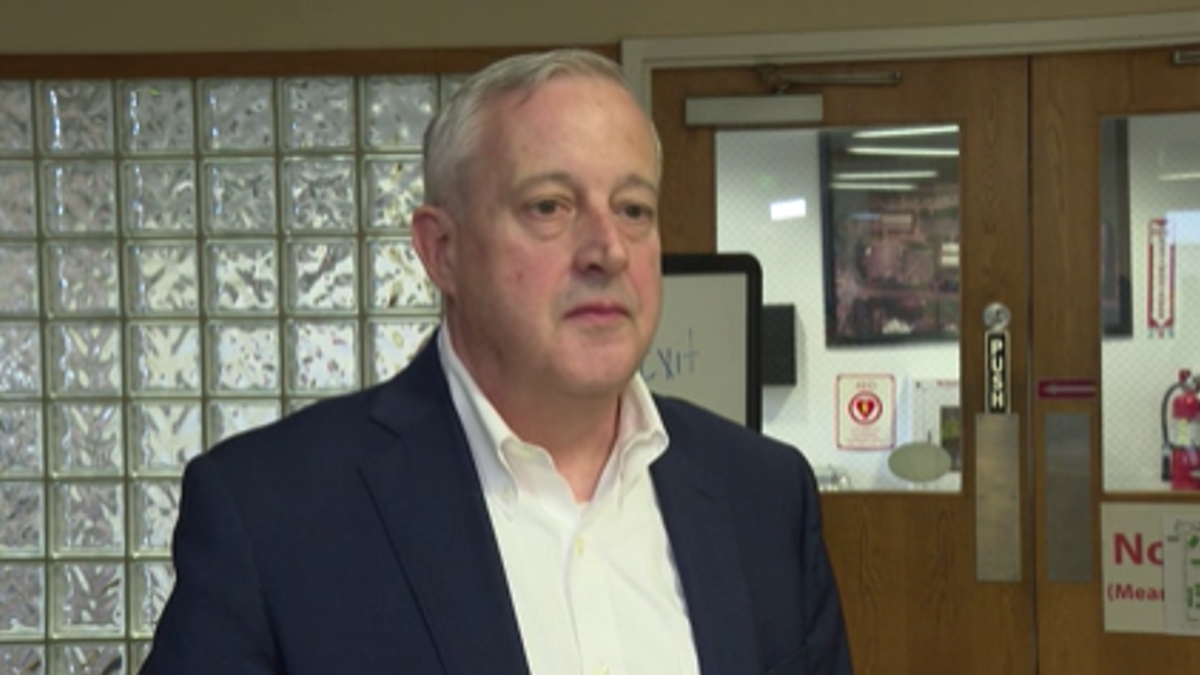
Whatley on Tuesday wore tan cowboy boots and a blue suit to the Gov. James B. Hunt Jr. Horse Complex, where candidates are filing candidacy paperwork with the state Board of Elections. After filing, Whatley told reporters that his bond with Trump sets him apart from the other Republican candidates.
“I have been endorsed by the President, and ultimately in the Republican universe,” he said. “That is the most important endorsement that you could possibly have.”
Brown says he supports the president but thinks he could do a better job than Whatley of implementing his agenda.
“Ramming Whatley down North Carolina Republicans’ throats is not going to work,” Brown said in an interview Tuesday. He added: “People really want to know, what are you going to bring to the table to try to help me? And that's what we're trying to focus on.”
Whatley and Brown announced their campaigns months ago. Temple, a longtime public school teacher who sits on the Smithfield Historic Preservation Commission, is a recent addition to the GOP field. “For over 10 years, the Republican Party has been my life,” Temple said in a six page, handwritten statement.
A competitive GOP primary could affect the party’s odds of winning the general election. Competitive primaries can drain a candidate’s campaign funds, leaving the party nominee with fewer resources in the general election — and North Carolina’s race is expected to be one of the most expensive in U.S. history.
Whoever wins the Republican primary is expected to face Democrat Roy Cooper, who served two terms as the state’s governor. Cooper, who has also served as the state’s attorney general and in the state legislature, has never lost a statewide election.
Cooper is a prolific fundraiser, and the Democratic Party is expected to spend tens of millions of dollars supporting his bid. Democrats need to flip four seats in the U.S. Senate to take a majority in the chamber. North Carolina is home to one of only two GOP-held seats that the nonpartisan Cook Political Report considers a toss up.
Cooper filed his paperwork to run for the seat on Wednesday, a day after this article was initially published. He told reporters Wednesday that he wants to restore North Carolinians’ hopes in the American dream.
“We know that so many families right now are struggling with paying higher rent, utility bills, child care, health care costs,” Cooper said. “I want to go to Washington to help lower prices for them and try to push back on these tariffs that everyday people are paying, [and] try to put in a fair tax system to make sure that we protect the health care that we've won in North Carolina for 690,000 people with expansion of Medicaid.”
Polling on the race is limited, but shows Cooper with a lead over the Republican candidates. In August, Emerson College Polling found Cooper with a 6-point lead over Whatley in a hypothetical head-to-head match up. In November, the Carolina Journal and Harper Polling found Cooper to have an 8-point lead over Whatley and a 10-point lead over Brown in those hypothetical matchups.
About the candidates
Whatley is running on his record as a Trump loyalist who knows what it takes to win elections in North Carolina.
Whatley was an early supporter of Trump’s 2016 White House run and then helped the president carry the state again in the 2020 presidential election while he served as chairman of the state Republican Party. Whatley served in that role from 2019 to 2024, along the way helping the GOP gain control of the state Supreme Court and state Court of Appeals.
Trump cited those accomplishments last year when endorsing Whatley to be chairman of the Republican National Committee. In that role, Whatley helped Trump win the 2024 presidential election. In July, Trump pointed to Whatley’s body of work when endorsing him for the U.S. Senate seat.
In interviews and stump speeches, Whatley has regularly blamed inflation — from prices of energy to groceries to housing — to the policies of former President Joe Biden. He also has focused on other themes popular with the GOP base in public remarks — on reducing government spending, eliminating “woke ideology,” and transgender issues, and he has touted his efforts to recruit election monitors across the country while also advancing false claims of 2020 voter fraud.
Whatley said Tuesday that job creation and public safety would be his top priorities in Washington: “We need to create jobs, we need to raise wages, we need to make sure that we have trade policies, tax policies, regulatory policies that are going to help our small businesses, our manufacturers and our farmers.”
Brown, a Stanly County attorney who also writes military novels, says he supports Trump and is campaigning as someone who is more in touch with the Republican base than Whatley. Brown touts his experience defending people who were charged with crimes after entering the U.S. Capitol on Jan. 6, 2021. He also represented workers who opposed their employer’s vaccine mandate.
Brown says he wants to cut two-thirds of federal agencies, including the Internal Revenue Service and the Department of Education. He also wants to reduce gun restrictions, and give unborn babies constitutional rights from conception. He also supports measures that would protect small businesses from lockdowns and other restrictions such as those implemented during the Covid-19 pandemic.
Brown said the GOP base tends to be skeptical of establishment officials, and he suspects many Republicans will view Whatley as just that. Whatley will likely outspend Brown on the campaign trail, Brown said. But Brown says he plans to “outwork” Whatley by traveling across the state to meet voters face-to-face.
“We've got a cost-of-living problem not just in North Carolina but nationwide. We’ve got to hit harder on deregulation,” Brown told WRAL. “So I want to continue to talk about proposals and solutions and to do the best we can.”
Like Whatley and Brown, Temple backs the president’s “make America great again” ethos. She has run unsuccessfully for seats on the Smithfield Town Council and the state House of Representatives. In a statement to WRAL, Temple said she supports the state’s Voter ID laws and she said she’s a staunch opponent of illegal immigration. She also believes the state’s leaders should be born in the state or town they represent and she opposes money in politics.
Temple also said she was at the U.S. Capitol on Jan. 6, when Trump supporters rallied against the 2020 election results before breaking into the Capitol building. Temple said in her statement that she didn't go into the Capitol because it was too cold.
Crowded GOP field
Political analysts consider Whatley to be the favorite. Not only is Whatley endorsed by Trump, the former party operative is considered a formidable fundraiser who has connections in Washington and on the ground in various parts of the state.
“Whatley is the former state party chair and is endorsed by the incumbent president. That's as close to locking things down as you get,” said Doug Heye, a Republican strategist and former communications director for the Republican National Committee.
That said, Heye isn’t surprised that other Republicans filed to seek the GOP’s nomination: “There are always candidates who run, people who want to put their names on a ballot whether their candidacy is serious or not.”
While a Trump endorsement helps many Republicans, it doesn’t guarantee victory. Former U.S. Rep. Madison Cawthorn, who represented western North Carolina in Congress from 2021 to 2023, defeated a Trump-endorsed Republican in the 2020 GOP primary for his seat.
Primaries can be unpredictable especially for first-time candidates, said Jim Womack, who ran against Whatley for state party chair in 2019. Underdogs can gain momentum quickly if the frontrunner ignores the party base and makes other missteps, Womack said.
“It's worth getting in the race just to see how it develops,” Womack said.
GOP candidates line up for Congress
Dozens of North Carolina politicians and political hopefuls have flocked to the state fairgrounds in Raleigh this week for the start of the 2026 candidate filing period. Next year’s midterm elections will offer voters the chance to elect offices ranging from Congress to state courts, county commissions, the state legislature, sheriffs’ offices and more.
In addition to the U.S. Senate race, another federal seat — the state’s 1st Congressional District — is expected to feature a crowded primary after state lawmakers redrew the district last month to favor a GOP candidate. The 1st district has been the state’s most closely contested district in recent years.
Incumbent Democratic U.S. Rep. Don Davis, a moderate Democrat and Air Force veteran, won the competitive version of the seat in 2024 even though voters in that election also supported Republican President Donald Trump for president by a slim margin that year. The new map turns it into a district that would have supported Trump by double digits.
Davis plans to seek reelection in the district, despite being drawn out of it last month as Republicans seek to maintain control of the U.S. House of Representatives. Members of Congress don't have to live in the districts they represent, but Davis said in a statement Monday that he plans to live in the new 1st district, which includes 25 counties primarily in the northeast and along the coast.
The Republican primary for the seat is expected to be crowded. Republican state Sen. Bobby Hanig, a military veteran and small business owner who represents the Outer Banks in the state legislature, filed to run for the seat on Monday. Eric Rouse, a businessman and Lenoir County commissioner, on Tuesday filed to run for the Republican nomination in the district. Rocky Mount Mayor Sandy Robeson is another potential candidate.
It’s unclear if Davis will face a challenger for the Democratic nomination, although party insiders likely see him as their best shot at holding onto the district. Davis’s history of siding with Republicans on certain issues, such as immigration, has earned him detractors on the more progressive wing of the party who could seek to challenge him.