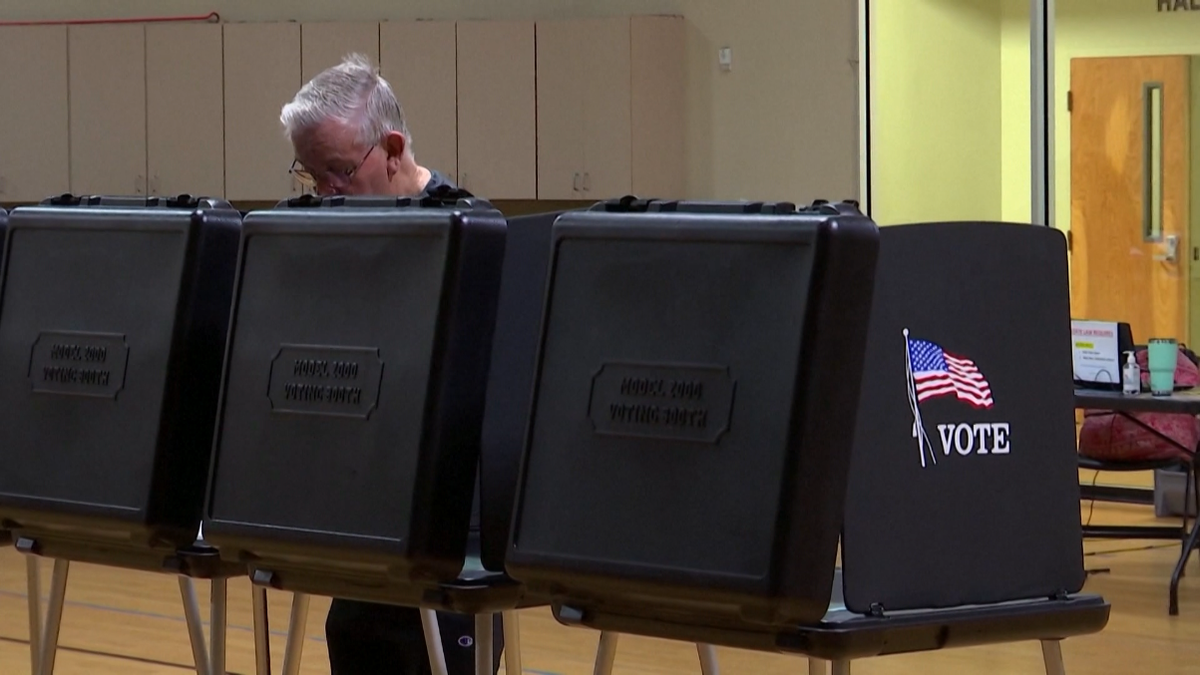
State election leaders may soon make it easier for county officials to reject ballots submitted by voters seeking an exception to North Carolina’s voter identification requirements.
North Carolina voters are required to show a form of ID — such as driver’s license or a U-S passport — in order to cast a ballot. Voters who are unable to show ID can seek an exemption from the rule by testifying that they are a victim of a recent natural disaster, have a religious objection to being photographed, or have an impediment to obtaining ID, such as a disability or lack of transportation.
Other WRAL Top Stories
Under current rules, county elections boards can reject a voter’s exemption request if they believe it to be false — but only if board members vote unanimously. The North Carolina State Board of Elections is considering changing the rule so that local boards can reject those exemption requests by a majority vote, rather than a unanimous vote.
The Republican-majority state board voted 3-2 along party lines Wednesday to gather feedback on that potential change, as well as a variety of other proposals that could affect mail-in voting, rules for campaign volunteers at election sites, and more.
The proposals can be implemented for the November elections if adopted by the state elections board at a later date and are then approved by the Rules Review Commission, a panel appointed by legislators.
Democrats objected to the idea of making it easier to reject voter ID exemption requests. State law grants Republicans a majority on every county elections board. Allowing county boards to reject voter ID exemption requests through a majority vote could lead to more politically-motivated decisions, said Democratic State Board of Elections member Jeff Carmon.
“I think as a board, we don’t want that issue to come into play for something as important as this,” Carmon said, referring to political partisanship.
Republicans dismissed Carmon’s suggestion that county board members would let their political affiliation inform their decision to accept or reject a voter ID exception form. At the same time, they argued that the change would be necessary.
“This change is more consistent with the statute and how we do everything else that comes before the board,” said Republican Stacy Eggers, referring to votes that pass with majority support.
Republican Angela Hawkins agreed, adding that it’s already difficult to disprove a voter’s stated reason for not having ID. “You usually cannot prove the falsity of it,” she said.
Under the proposal, county elections boards would still be required to notify voters whose exemption requests come under scrutiny. County election officials would be required to invite the voter to discuss their request at a board meeting.
Democrats also took issue with proposed rules that attempt to crack down on noise at voting sites. One proposed rule would ban people outside of polling sites from making noise “at a volume that is audible to the chief judge or a judge when that official is in the voting enclosure.” Another would ban anyone near a polling site from using a “sound amplification device” — such as bullhorns, megaphones or a vehicle’s internal audio system — at a loud volume during voting hours.
Republicans said the proposed rule might be necessary because loud noises can be distracting to voters, while Democrats said the rule would be difficult to enforce.
The state elections board has pursued a number of changes to North Carolina’s election rules since Republicans gained control of the board last year. Shortly after the 2024 elections, the GOP-led state legislature passed a law transferring control of the board from the governor, currently Democrat Josh Stein, to the state auditor, currently Republican Dave Boliek. That legislation also shifted the majority of the state board and all 100 county election boards from Democratic to Republican control.
Just last week, the state elections board sent the Rules Review Commission several proposed rules for reviewing the citizenship status of North Carolina voters. The board is in the process of uploading North Carolina voter information — names, dates of birth and the last four digits of Social Security numbers — to a federal database that can help election officials determine someone’s citizenship status. The rules outline how challenges to a voter’s citizenship status must be filed, which documents can be accepted as proof of citizenship, and when hearings can take place.
Democrats on the board argue that the changes are unnecessary because noncitizens are prohibited from voting under state and federal law, and there is no evidence of widespread voter fraud by noncitizens in North Carolina. Still, Republicans want to make sure no non-citizens have slipped through the cracks.