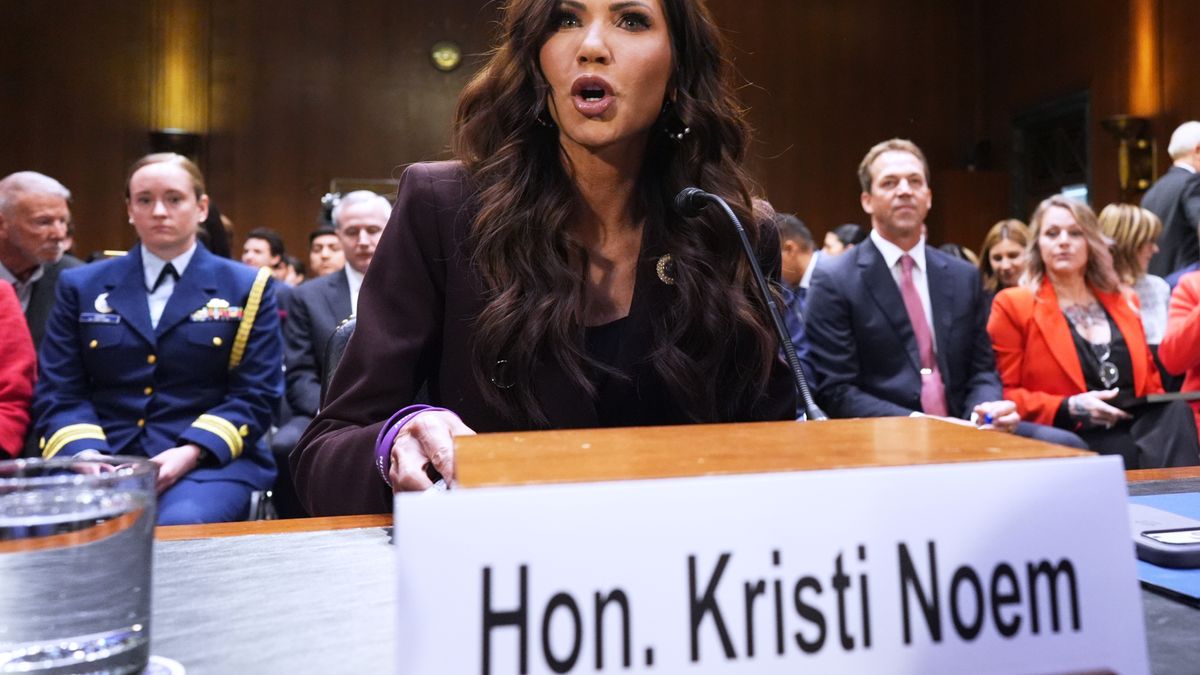
North Carolina has received another $40 million in new recovery funding for communities still reeling from Hurricane Helene, even as billions in federal disaster aid remain uncertain following the reported departure of Kristi Noem, who had faced bipartisan criticism over her handling of Federal Emergency Management Agency operations tied to the storm.
The announcement came Friday during a meeting of Democratic Governor Josh Stein’s Helene advisory committee, just a day after Republican President Donald Trump fired Noem as the head of the Department of Homeland Security, which oversees FEMA. The funding includes $24 million in Disaster Relief and Mitigation Fund grants and $16 million for nonprofit rebuilding organizations assisting residents in repairing or rebuilding homes.
Other WRAL Top Stories
Noem had demanded all FEMA funding for Helene must go through her office to “eliminate waste,” according to state officials. She had faced criticism from Stein, a Democrat, as well both the state’s Republican U.S. Senators, over her policy that any amount of spending over $100,000 needed her personal approval. But with her departure and Trump’s nominee to replace her, Oklahoma U.S. Sen. Markwayne Mullin, still awaiting Senate confirmation, the pace of future federal disaster funding remain unknown.
WRAL News reached out to Noem, Mullin, and the U.S. Department of Homeland Security for comment but did not immediately receive responses.
Lawmakers have been critical of Noem’s oversight. U.S. Senator Tom Tillis, R-NC, told Noem this week just before her firing, “We expect exceptional leadership, and you’ve demonstrated anything but that. The time I’ve seen you responding to the emergency in North Carolina and across the Southeast and acknowledging when mistakes are made and speaking too soon for the expedient of social media or whatever it is, has been concerning.”
U.S. Senator Ted Budd, R-NC, introduced a bipartisan Disaster Recovery Improvement Act this week that would create a task force to strengthen federal government programs responsible for providing disaster aid.
Budd has publicly called on FEMA funding to get to North Carolina communities quicker.
“I have worked with DHS to unlock FEMA funding for Western North Carolina that has been stuck in longstanding regulatory bottlenecks. I’ve also uncovered additional gaps in our federal disaster response, including programs run by other agencies that have slowed recovery efforts,” said Budd.
Stein’s advisory committee said requests for water and wastewater repairs across Western North Carolina already total about $1.3 billion, while just $644 million from federal and state sources has been allocated so far.
“Part of the risk of not fully funding all of these needs are that the systems won’t have funding to be able to be functional the way they need to be in the long term,” said Andy Miller, deputy secretary of the North Carolina Department of Environmental Quality. “We knew right off the bat that what we were going to get was not going to be enough.”
Miller and other officials said communities such as Hendersonville and Marion still rely on temporary pumps, makeshift flood barriers and emergency fixes while waiting for permanent repairs.
Stein said the funding will be used to reduce flood risks, improve water and wastewater infrastructure, restore high‑hazard dams, and strengthen emergency communication networks across the region.
Stein outlined several major awards, including:
- $2 million to the city of Hendersonville for stormwater improvements along Wash Creek;
- $2 million to the town of Banner Elk to relocate or mitigate flooding at its police department;
- Nearly $1.94 million to the town of Black Mountain for flood mitigation along Flat Creek;
- $1.44 million to the city of Marion for replacement of the Clinchfield Lift Station bridge;
- $600,000 to the Eastern Band of Cherokee Indians to expand flood warning alert systems.
Nonprofit rebuilding grants included $3.45 million to Baptists on Mission, $2.43 million to Asheville Area Habitat for Humanity, $1.8 million to Fuller Center Disaster Rebuilders and $1.5 million to Appalachia Service Project, among others.
“These projects showcase the whole‑of‑community effort that is underway to assist communities with mitigating risk and impacts from future events and in rebuilding stronger,” NC Emergency Management Director Will Ray said.
Still, some counties that spent tens of millions on cleanup and emergency repairs remain largely un-reimbursed, waiting on money that in the past likely would’ve already been paid back by the federal government.
The state also created a $75 million bridge loan program intended to help local governments cover emergency repairs while waiting for FEMA reimbursements. But some smaller towns have been hesitant to borrow, unsure how much federal aid they will ultimately receive. “They’re not sure how much FEMA is going to reimburse them, and they don’t want to take on that debt … even at 0% interest,” Miller said.
Committee members said the path to full recovery will take years. Brian Wilson, a community development coordinator, noted, “We have 25 different programs that are up and running, and we have more that we are working on to get out the door. We are well on our way to over a billion dollars awarded to Western North Carolina.”
Asheville Mayor Esther Manheimer emphasized sustained partnership between state, federal and nonprofit groups will be essential. “This committee still seems like it very much needs to be a part of the recovery process for the next years to come,” she said.
Even as recovery continues, the scale of damage from Helene — a storm that, in some locations, produced rainfall totals with a less than 0.1% chance of occurring in any given year — means rebuilding is likely to take years longer than many residents expected.