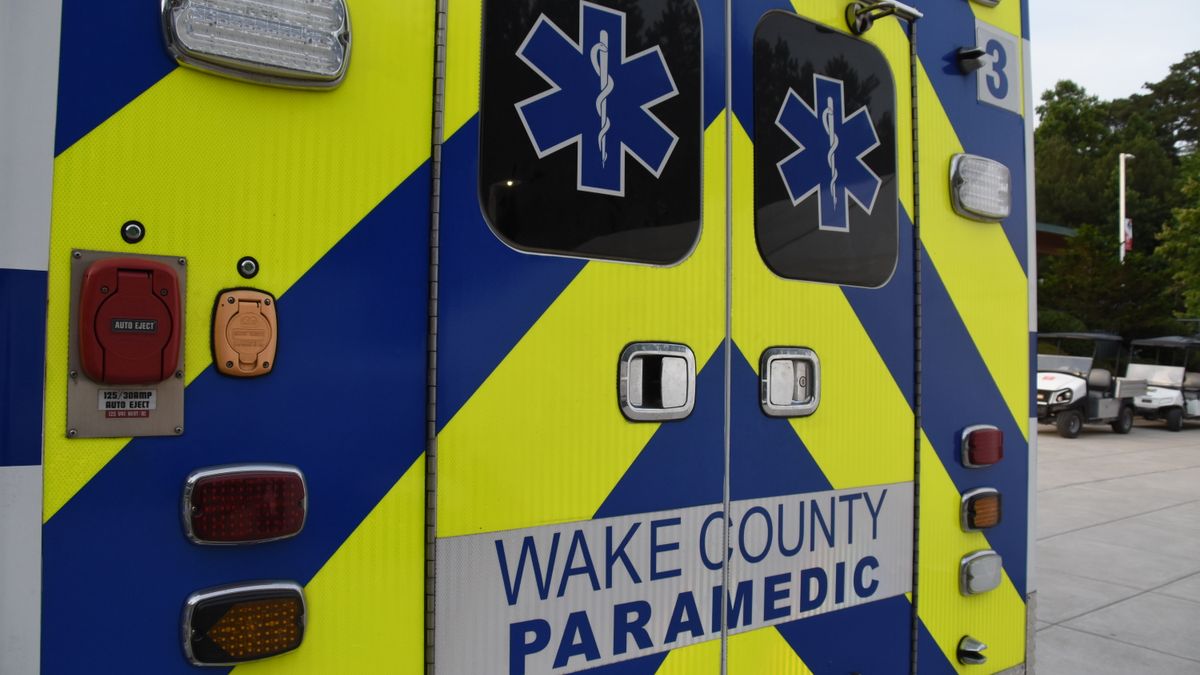
Emergencies in Wake County are about to look and sound different. Wake EMS announced Monday that ambulances will silence sirens and turn off emergency lights for the majority of 911 calls.
Ambulances would still use lights and sirens for the most serious calls, including shootings, stabbings, and car crashes.
Other WRAL Top Stories
EMS leaders say the reason is safety. The lights and sirens can confuse drivers on the roads who don't know what to do, and can lead to more crashes.
“Red lights and sirens use is one of the most dangerous things we do as emergency responders,” Wake EMS director Jon Studnek told the Wake County Board of Commissioners during their regular meeting on Monday. “We know that EMTs, firefighters, paramedics, and police officers have a five time increase in being involved in a fatal motor vehicle collision when compared to the general public.”
According to data from Wake EMS, ambulances with lights and sirens on have been involved in 21 crashes in Wake County this year alone, resulting in the loss of two ambulances. No one was seriously injured in those crashes.
The plan will require a top-to-bottom overhaul of how Wake EMS responds to emergencies. Studnek said he has already been coordinating with other emergency departments and will begin training Wake, Raleigh, and Cary dispatchers on the new system soon. The new light and siren plan itself will be rolled out in phases, starting in December and ending in March.
Wake County is far from the first county to consider this change. Studnek pointed to dozens of other municipalities around the country, including Charlotte, where he said red light and siren crashes have dropped 33%.
“Out of a hundred calls, only 10 to 15 times does a patient need immediate, life-saving intervention,” Studnek said. “Red lights and sirens should be thought of as a clinical intervention that we use on those patients that we suspect of having need for a time-critical intervention.”
The change will mean slower response times to some 911 calls. Studnek noted that using lights and sirens does save, on average, two to three minutes per response.
“We should reserve those red lights and sirens for when we think that 2-3 minute savings will have a clinical impact,” Studnek said.
During the presentation, that change worried County Commissioner Shinica Thomas, who asked what this could do to Wake EMS’s average response times.
Studnek did not have an immediate answer, but promised to reach out to other departments and check.