North Carolina appellate court judges heard arguments Tuesday in a lawsuit that could determine which political party is in charge of setting the rules for and confirming the results of elections in the state. It could also pave the way for a mass reshuffling of executive power in the state.
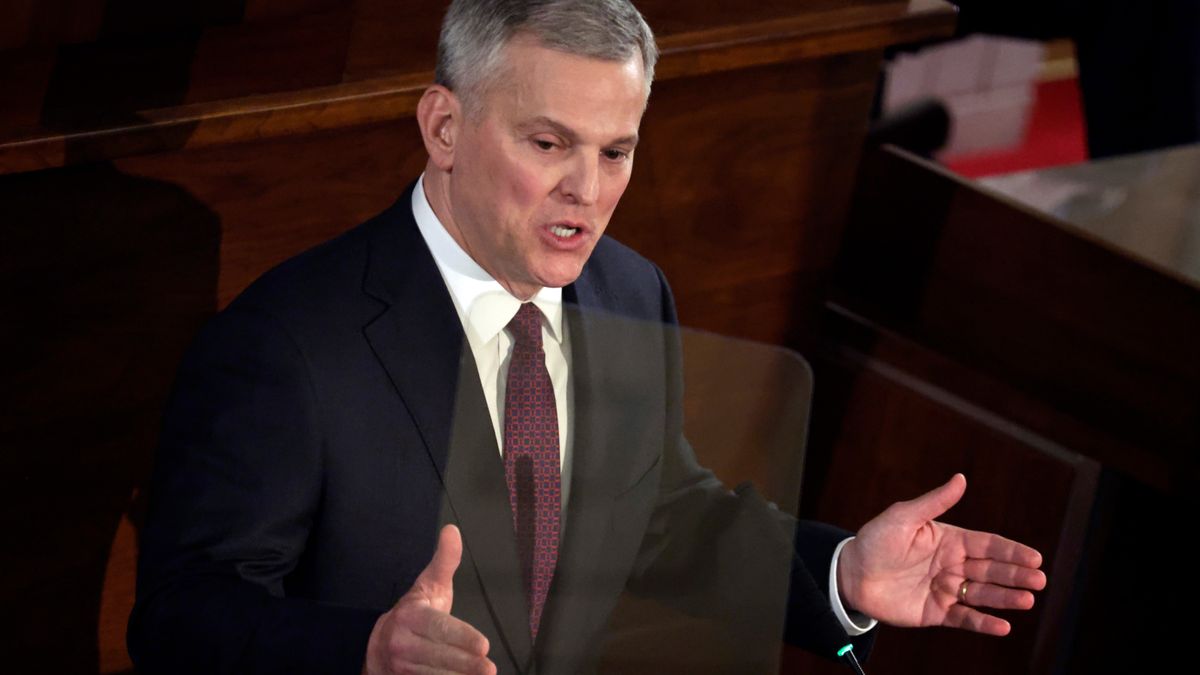
The lawsuit pits North Carolina Gov. Josh Stein against top state lawmakers. Stein, a Democrat, argues that North Carolina Republican lawmakers violated the state constitution in late 2024 when they passed a law taking control of state election administration from the Democratic governor, giving it instead to the incoming Republican state auditor. The shift, implemented last year, came after nearly a decade of previous failed attempts by Republican lawmakers to give themselves power over elections.
Other WRAL Top Stories
Stein wasn’t in court Tuesday, nor was Republican State Auditor Dave Boliek, who now leads elections in the state. But each spoke with WRAL, defending why they believe they should be in charge of elections.
Boliek says it’s possible to operate independently while being affiliated with one political party. He pointed to a new, bipartisan advisory commission made up of professional election staffers, political appointees from both major parties and academic experts tasked with modernizing how North Carolina conducts elections. He said the office of auditor, while partisan, is less explicitly political than governor.
“I was elected in a partisan election,” Boliek said. “But in completing the job, I represent and work on behalf of all North Carolinians, regardless of their political party. And when it comes to voting, voting is sacred in this country. It is sacred in this state.”
Stein pointed to recent votes by the GOP-majority on the State Board of Elections to reject college campus polling places and eliminate Sunday voting, in certain counties, for this year’s primary elections. Sunday voting is disproportionately popular with Black voters, who lean heavily Democratic. College students and professors also tend to lean more Democratic.
Stein said it was an example of Republican elections officials, under Boliek, intentionally making it harder for certain types of people to vote.
“The idea that having fewer early-voting locations on college campuses is somehow promoting democracy, is wrong,” Stein said. “The idea that you would take away options for people to vote on Sunday, when that may be the day they prefer to vote, making it less convenient for them to participate in our democracy — that is a backward step.”
Boliek’s office disputed Stein’s statement, pointing to two new early-voting locations, one each at N.C. State University and Duke University. State elections officials, however, rejected proposals for adding three other early-voting sites at UNC-Greensboro, North Carolina A&T and Western Carolina University.
Overall, there will be 319 early voting sites in North Carolina for the March primary, up 6% from the May 2022 primary, according to Boliek’s office. Seventeen counties increased the number of early voting sites from 2022 to 2026, while seven reduced the number of sites, according to his office. Boliek’s office said that a reduction in Sunday early-voting hours is offset by an increase in Saturday voting hours.
In court on Tuesday, lawyers for Stein, Boliek and GOP state lawmakers were equally at odds — although their arguments focused not on who would be better at running elections, but rather on the bigger question of whether the legislature should be allowed in the first place to strip powers and duties from the governor and reassign them to other politicians.
Oral arguments
Matthew Tilley, a lawyer for GOP lawmakers, acknowledged Tuesday that legislative leaders’ arguments are "unique" in this case, but he defended the legal logic behind them. Their arguments hinge on the fact that the governor and auditor are both members of the executive branch.
Lawmakers and Boliek argue that even though the state constitution explicitly says the governor is in charge of executing the state's laws, and the governor has controlled the state elections board for the past century, they believe that really any of the governor's powers can be transferred to any of the state's 10 elected officials who make up the executive branch.
The judicial panel hearing Tuesday's arguments consists of two Republican judges, April Wood and Valerie Zachery, and Democrat John Arrowwood. Zachery asked whether the GOP argument would essentially make any executive branch office "fungible" with few set powers that the legislature couldn't take away and reassign to some other politician. Arrowwood suggested the GOP argument goes even further than that and would also seek to block the courts from being allowed to rule on any lawsuits over such moves in the future.
Tilley said that is correct. This is purely a political question that should be immune from judicial oversight, he said, with the legislature allowed to assign powers among executive branch offices as it pleases.
“The General Assembly has made the decision,” Tilley said.
Eric Fletcher, a lawyer for Stein, said that makes no sense either legally or practically. Allowing this new interpretation of law would create a system in which voters have no idea what they're truly voting for whenever they elect executive branch officials every four years, he said — since the party that controls the legislature could simply shift any powers around to hang to power and avoid facing any political consequences from voters.
If the governor is in charge of elections, he said, voters can oust the governor if they’re upset at how elections are run. The same goes for accountability on the state pension plan, run by the State Treasurer, Fletcher said, or agriculture policy under the state Agriculture Commissioner. But under the system proposed by the legislature in this case, Fletcher said, voters would have no certainty — and no way to hold politicians accountable.
"It's inconsistent with the popular sovereignty that is the source of all political power in our state," he said.
Fletcher added that the implications of a GOP win in this case go far beyond election control and could lead to chaos and political meddling in all manners of state government.
"The legislative position is that there are no limits on their power to assign executive duties on the Council of State," he said, referring to the group of the state’s top executive office holders. "They say that they can assign, tomorrow, election administration to the Commissioner of Agriculture. That they can send agricultural policy to the Commissioner of Insurance. And they can assign road-building to the Superintendent of Public Instruction."
Lawyers for the legislature and Boliek didn’t dispute that characterization. The power of the legislature to assign duties within the executive branch should be nearly unlimited and immune from judicial review, they told the judges.
"Are we going to litigate every duty assigned to a member of the Council of State? Of course not," said Alex Dale, Boliek's lawyer. "What this really shows is, this is a non-justiciable political question. It's a policy decision."
History of disputes
The governor's control of the State Board of Elections had, for a century, gone largely unquestioned until 2016, when Democrat Roy Cooper defeated Republican Gov. Pat McCrory. Republicans in the state legislature quickly passed a law stripping the power from the governor and giving it to themselves instead.
That effort was struck down as unconstitutional, so GOP lawmakers then asked voters in 2018 to amend the state constitution to allow them to get around that ruling. But 62% of voters opposed the idea at the ballot after every living former governor, Democrats and Republicans alike, urged voters to oppose the amendment.
In 2024, Stein defeated Republican Mark Robinson in the gubernatorial race. Democrats also broke the GOP’s veto-proof supermajority that year. But before those new Democratic lawmakers could be sworn in, Republicans rushed through a last-minute change to state law trying again to shift control of elections to the GOP. The law gave control over the elections board to the auditor’s office, which has never handled elections before but which was won in 2024 by Boliek.
Cooper and Stein sued. They say that although this newest attempt to take power away from a Democrat governor and hand it to Republicans accomplished the goal by shifting power within the executive branch, rather than handing the power to the legislative branch, it was equally unconstitutional.
Cooper and Stein won at trial last year. A bipartisan, three-judge panel ruled that the new law likely violated the state constitution and should be blocked from going into place.
But an all-Republican panel of state Court of Appeals judges blocked that decision in April, despite not hearing arguments in the case. That allowed the state elections board, as well as all 100 county boards, to switch to GOP control, despite that trial court ruling against it.
Republicans immediately moved to fire the state’s elections director, Karen Brinson Bell, who had been hired under Cooper, and replace her with Sam Hayes, who had been the top attorney for Republican state House Speaker Destin Hall. Other new hires in top roles overseeing state elections include Robinson’s former chief of staff Brian LiVecchi, who publicly resigned during Robinson’s gubernatorial run, and former North Carolina Republican Party boss Dallas Woodhouse, who Boliek put in charge of election integrity efforts.
The case has been in limbo for the 10 months since then, leading up to Tuesday’s oral arguments.
Regardless of which side wins, the case will almost certainly be appealed to the state Supreme Court where Republicans hold a 5-2 majority. In recent years, under both parties’ control, state Supreme Court rulings in political cases have almost always come down strictly along party lines.
WRAL reporters Caroline Yaffa and Liz McLaughlin contributed reporting to this article.