Farming is in Sandra Garner’s blood.
Garner told WRAL News that her family has been in the farming business long before the American Revolution, and she’s spent several years traveling from Snow Hill to the North Carolina Farmer’s Market in Raleigh, selling what she grows.
Other WRAL Top Stories
“Farming’s been in my family since 1746, and I’ve been coming right here [for] 23 years,” Garner said.
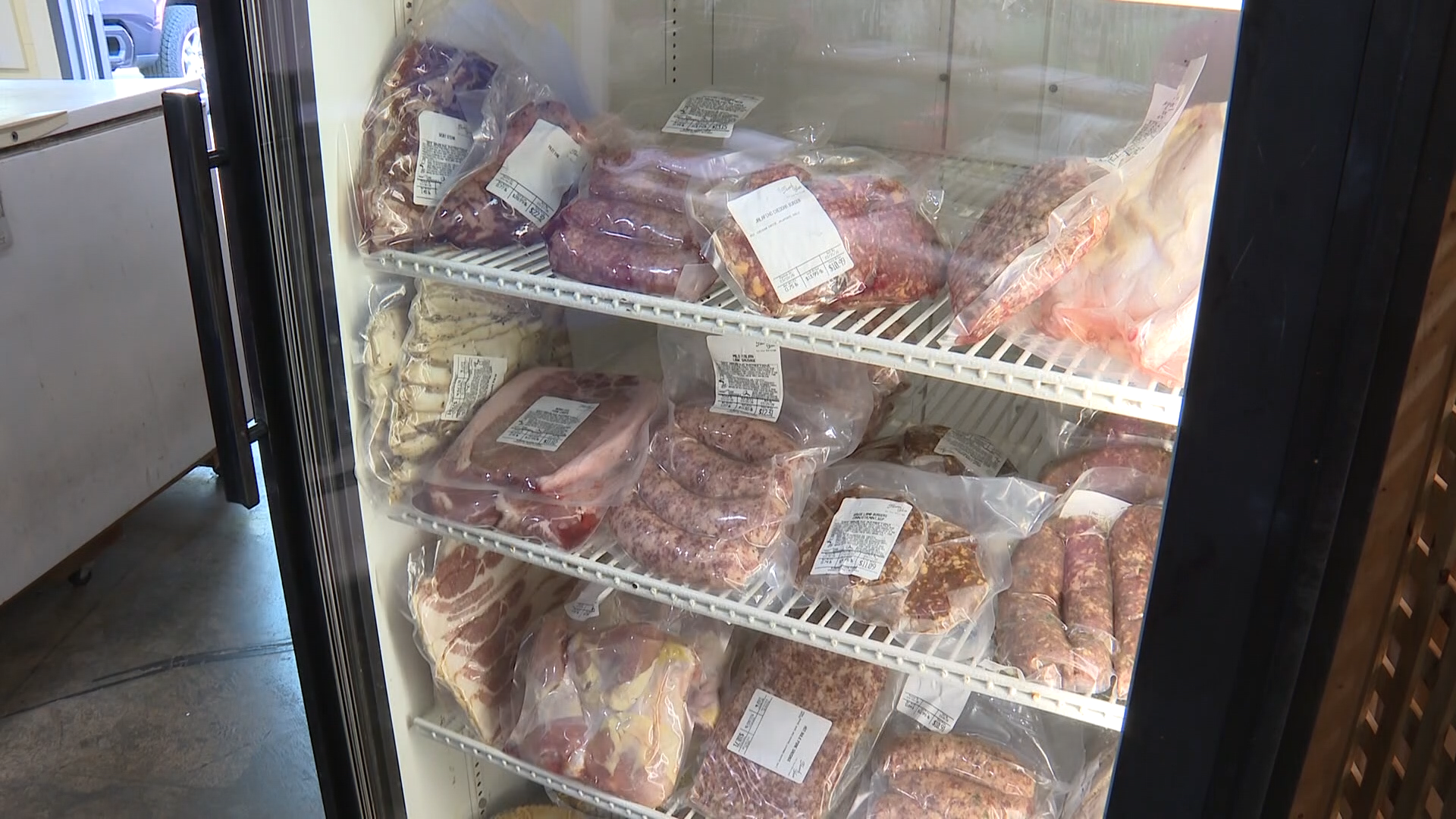
Her freezers full of beef, pork, chicken and lamb are a huge hit for customers, but now the war in Iran is causing her generational livelihood to take a hit.
“Coming to the market…about 75 miles one way, so it’s very expensive,” Garner said. “Then your electricity, your heat…everything has just gone up tremendously.”
The war with Iran has put a squeeze on oil prices around the globe. As of Sunday, gas prices around North Carolina have jumped by an average of $1 to $3.94 per gallon since the war began on Feb. 28.
In Raleigh, gas prices averaged $3.71 per gallon, up 98 cents over the last month.
Oil is used in many industries beyond generating electricity, such as fertilizer and plastics production. In the United States, nitrogen fertilizer has increased by more than 30% since Iran began attacking ships aligned with the United States and its allies that pass through the Strait of Hormuz.
For Garner, the biggest difference is the cost to transport the meat from her farm in Snow Hill to Raleigh, adding that she drives a van that gets 16 miles per gallon, and her daughter drives a diesel truck.
“She said it was way over $100 to get a quarter of a tank of diesel,” Garner said. “People don’t have but so much money to spend.”
Judy Montague, who runs Homeplace Farm with her husband, said she’s also feeling the impacts even though her farm and Garner’s sell different products at the Farmer’s Market.
“My husband has a diesel truck, and diesel is now $5 a gallon, so it does hurt,” Montague said.
The cost of fuel for farmers could rise if the war drags on.
While President Donald Trump has suggested that the United States was “winding down” military actions, Iran has threatened to close off the Strait of Hormuz completely. On a typical day, ships carrying about a fifth of the world’s oil sail out of the Persian Gulf through the narrow passageway between Iran and Oman toward the Indian Ocean.
The war with Iran means it’s effectively closed, hemming in more than 90% of that crude and refined products, according to the International Energy Agency.
Garner said she wants to continue keeping her products at the same prices, adding that the current spike in gas prices isn’t the worst she has seen in her time as a farmer.
“I’ve seen diesel very high, much higher than it is right now, [and] I’ve made it through all the years,” Garner said. “We’re trying to hold the prices down to what they’ve been for the last year or two, and it’s difficult.”
Montague said she’s had to “cut back on other things” in order to continue going to the Farmer’s Market.
Garner said that while she could raise her prices to offset her rising costs, it likely won’t make a difference until the war in Iran ends.
The Associated Press contributed to this report.