Rocky Mount's state of economic distress is entering another chapter - one where ideas around rate raises and spending cuts are starting to take shape.
In a special city council meeting on Thursday, councilmembers discussed ways to generate revenue and make necessary cuts to services to dig itself out of a hole. A state-led audit released earlier this month showed former City Manager Keith Rogers Jr. operated "unchecked" and went "unaccountable for years."
Other WRAL Top Stories
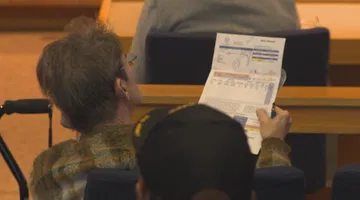
Representatives led discussions around raising residential electric rates, gas rates, and the sewer and water rates. The electric rate would see an $18 to $19 increase on average for Rocky Mount customers. For gas, customers would see a $15 increase, on average, for three months.
A vote on the budget proposal will take place during a Monday meeting.
Also on the chopping block are services that residents have come to rely on. The council has agreed to largely leave the recreation center untouched, but many non-profits that depend on supplemental funding from the city won't see it.
United Community Ministries runs two shelters in the area - one for families and the other for adults. It's one of the few shelter options for families in this part of the state and it allows kids of any age or gender to stay with their parents.
"We’re not going to throw in the towel. We’re doing to do everything that we can to try to keep these facilities open," said Linda Brinson who is the executive director.
The Bassett Center is the last stop for most unhoused families to stay together, keeping children out of the foster care system.
"We offer a lot to services to the community and without this, a lot of people will be either be hungry or homeless ... And then, if the shelter closes down, you're talking about the crime rate is going to go up," Brinson said.
Beyond its shelters, UCM provides brown bag dinners, a food pantry, soup kitchen seven days a week, and offers to connect clients with housing and teach them life-skills. Most, if not all, of that will be scaled back after learning it'll lose half of its budget that came from the city.
"Right now we’re working on a plan. When we lose the funding, not if, what are we going to sustain? Is there any part of united community ministries that we can sustain," said Cindy Worthy, who is chairman of the board.
They plan to launch a campaign to raise the $300,000 they have now lost, but realize it will be an uphill battle without the city's support.
In September, it was said that the city needed to reduce spending by at least $30 million over a 10-month period. In October, the city said it would have to layoff about 100 employees. Layoffs and furloughs were discussed on Thursday as well.
Proposed spending reductions that would take effect this year would be suspending a 3% contribution to the 401(k) for city employees in April 2026, eliminating downtown grants, suspending city-hosted public events, renegotiating agreements for prospective downtown major investment incentive projections, eliminating nonessential travel paid for by the city and department-identified reductions to operating accounts.
Councilmember Reuben C. Blackwell called the effort a phased approach, but the time for tough decisions is coming.
"The strategies that are incorporated have been done in consultation with the state," Blackwell said. "They made it very clear to us that we either do what we need to do or they'll come in and do it for us."
Councilmember Tom Harris also spoke to the urgency of the situation.
"I do not want the LGC (Local Government Commission) to come here, none of us do, but if they do, there's going to be worse decisions that are going to have to be made," Harris said. "It's incumbent upon us as a council to go and find where we can save money, and we've got to raise some revenue, and I hate that, personally, I hate that."