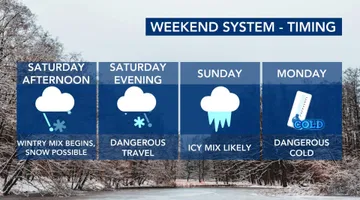
Across North Carolina on Friday, from the governor to local mayors to community leaders came calls for caution as a major ice storm approaches.
"If you don't have to travel, do not. It's not going to be safe."Marvin Williams, Durham director of environmental and street services
Other WRAL Top Stories
"None of us can control what this storm will ultimately look like, but each of us can get prepared," Gov. Josh Stein said. "Be ready to stay home for a few days, potentially without power. And know that we are taking this storm seriously, and we will do everything we can to keep you safe."
Officials prepare the roadways ahead of the storm
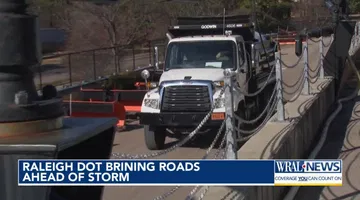
State officials are spreading hundreds of thousands of gallons of brine on roadways (300,000 to be exact), but that's unlikely to completely prevent ice from building up and turning roads dangerous.
"This storm could be something we haven't seen in years," North Carolina Transportation Secretary Daniel Johnson said. "For that reason, this storm has our full attention."
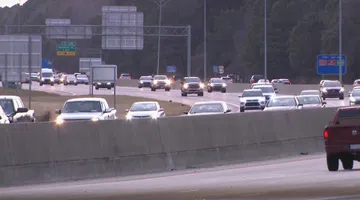
The State Highway Patrol has been warning truckers about highway spots that get particularly slick or steep. Elevated roadways and major interstate corridors throughout the state are most likely to cause problems during winter storms.
State emergency leaders are pre-deploying first responders and rescue squads in areas where they expect the most crashes.
"We've got these these hot spots and these quick response teams that are going to be set up and in place," said First Sgt. Chris Knox of the State Highway Patrol.
Truck drivers say they often rely on updates from Highway Patrol, NCDOT, and other drivers to know which routes to avoid. But with fewer troopers on the road, some worry those warnings may not come as quickly.
A recent report from the State Auditor found that 12.4 percent of the Highway Patrol workforce is vacant, including hundreds of unfilled positions statewide. The North Carolina Truckers Association says that means fewer “eyes and ears” monitoring changing road conditions during severe weather. Without a new state budget, there is currently no additional funding to address the vacancies.
Highway Patrol said despite the shortages, they’ll respond to winter storms the same way they always do -- coordinating with other agencies to protect the public. And they will work extra hours to ensure the safety of the state.
Brining now, plowing later
Marvin Williams, the environmental and street services director for the city of Durham, said his team will have at least 25 trucks out to brine and prepare the roads. He mentioned that they will also be pre-treating fire and police departments to ensure their vehicles can get out.
"It gets to the point that if temperatures are really low, salt really isn't going to be effective," Williams said. "It's really going to be a need for rain and warmer weather."
Williams has a team of 35 to 40 people ready to sacrifice their weekend to help keep others safe.
"We're the unsung heroes in my opinion," he said.
Ice could weigh on branches, knock out power
If you haven't begun taking this storm seriously, now is the time. That is the message from Duke Energy spokesperson Jeff Brooks.
"This is going to be a significant storm based on the forecast that we are seeing today," Brooks said. "And that could be potentially extended outages for some customers.”
Trees will be a major focus throughout the weekend during this storm. Not only can they take out power lines, but crews will need to work quickly when they fall into roads, blocking emergency routes.
Thousands of trees are scattered across the area. But officials and residents are growing nervous about how the ice could affect them. Snow is no problem for these trees, but the ice cakes onto them and won't let go until it gets warm enough to melt, and that weighs heavily on the branches.
While the healthy trees can withstand the added weight, those trees that have seen better days could be in for a makeover this weekend.
In Rob Mosely's Raleigh neighborhood, residents are looking up at what could come down.
He remembers the sound of trees splintering, cracking and falling after the ice storm of 2002.
"It was a horrific experience before, and you know, not a lot you can do about it," he said.
In Durham's Trinity Park neighborhood, where towering trees are one of the defining features, residents know firsthand the damage and the power outages that could come.
Joanna Darby lost two cars in a single storm.
"That tree dropped limbs that actually speared through the window and the dash and then the top of it flipped off and hit our other car behind it and then totaled it," she said.
This time around, Darby will park one car in the garage and cross her fingers.
In Raleigh, Zach Manor offered similar advice.
"Don't park under the tree," said Manor, a spokesperson with the city of Raleigh Urban Forester. "Sort of adjust things around your house, just in case there is a failure. Can you still get out? Can you get access? Those kind of things are really what we're sort of recommending."
Stein urged people to get prepared as quickly as possible, before the storm hits, and to check on their friends, family and neighbors during the storm. Stein says it's important to stay informed, get prepared, and make a plan relating to food, water, heating and power.
Due to the potentially icy conditions, the chances of power lines coming down have increased.
Brooks said people who rely on electricity or refrigeration for medical products need to come up with a plan in case of an outage, because the clock is ticking.
“We know that we are going to see physical infrastructure damage, so that could mean an extended period of time based on the road condition and other things before we can get your power on,” Brooks said.
>> Take these steps to prepare your home, stay warm if power goes out
Will Ray, the state's director of emergency management, offered several tips Thursday for how people can stay warm in their homes if they lose power, without also risking their lives to fire or carbon monoxide accidents. Those included:
- Ensure that generators are operated outside and away from open windows or doors to prevent carbon monoxide poisoning.
- Never burn charcoal indoors or use a gas grill indoors.
- Properly vent kerosene heaters and make sure that all heaters have space around them to reduce fire risk.
- Use battery-powered sources of light instead of candles.
- Make sure that you have plenty of warm blankets and clothing available.
"This storm could be something we haven't seen in years," said NCDOT secretary Daniel Johnson. "For that reason, this storm has our full attention."
People looking for tips on emergency preparedness can visit the state government's website for that, www.ReadyNC.gov.
WRAL reporters Willie Daniely, Shaun Gallagher, Sarah Krueger and Carolina Yaffa contributed to this report.