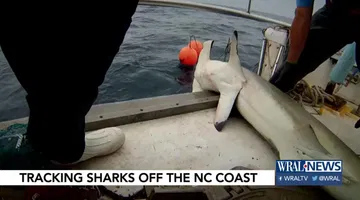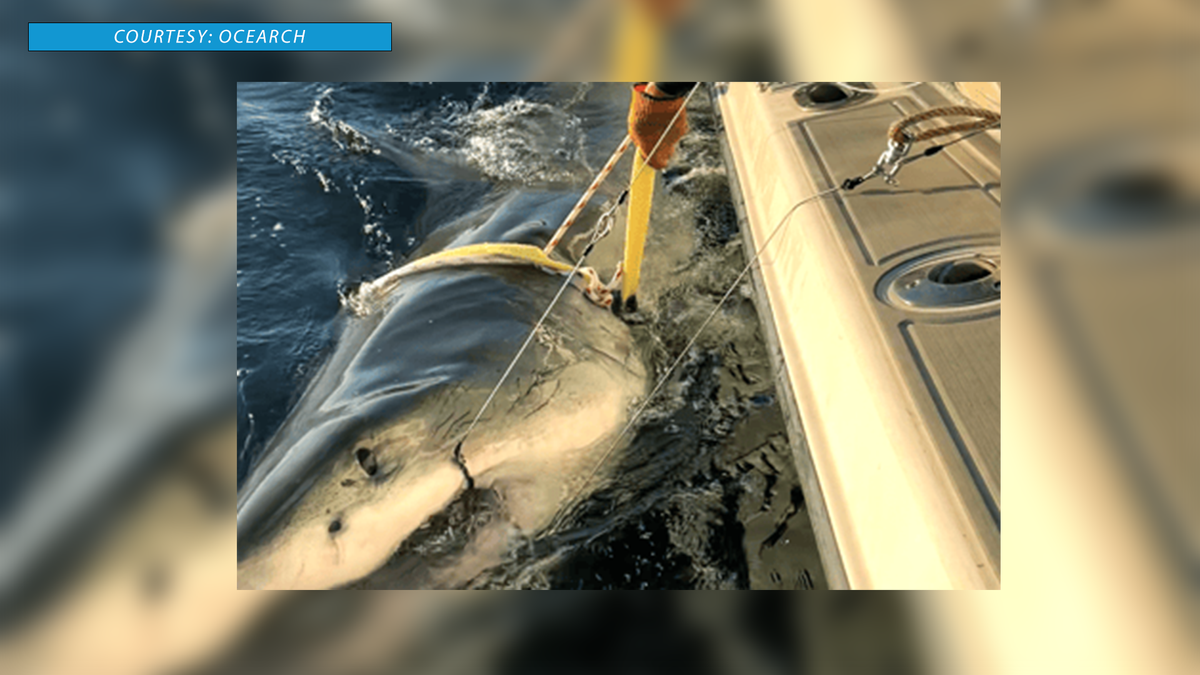
It may not be beach weather just yet, but it’s a great time to go shark‑spotting. Better still, you don’t even have to get into the water (not that you’d want to, of course).
Non‑profit OCEARCH is monitoring several sharks — including the largest male great white the group has ever tagged in the Western North Atlantic. That fish weighs in at 1,700 pounds. He was tagged off the Florida–Georgia coast, and now he’s pinging near Cape Fear. OCEARCH named him Contender after the group’s Florida‑based partner, Contender Boats, Inc.
Other WRAL Top Stories
Currently, there are at least six tagged white sharks of various sizes and ages swimming off the North Carolina coast.
Great white sharks have a notorious reputation mostly because that was the species featured in the 1975 film Jaws. That shark was supposed to be 24 feet long, but the largest recorded great white was spotted off the coast of Western Australia — it measured 19.5 feet.
By comparison, Contender is only 13 feet, 9 inches long. That’s still a mighty big fish, however.
OCEARCH data scientist John Tyminski says Contender is a valuable part of the group's research into white shark behavior.
"Based on some indirect evidence, we think that mating occurs somewhere in the southeast United States around late winter, early summer period," Tyminski said. "So he's offering some clues, and we're going to be watching his movement along with mature females like another one we have tagged Goodall to see if we can better hone in on the area where they may be getting together."
Despite their fearsome reputation, sharks rarely bite humans, and those attacks are almost always by accident. Marine biologists say humans are not part of a shark’s diet, so even after a bite, sharks typically swim off with a bad taste in their mouth.
In 2020, WRAL anchor Gerald Owens compiled a report on OCEARCH and their mission in tracking sharks.