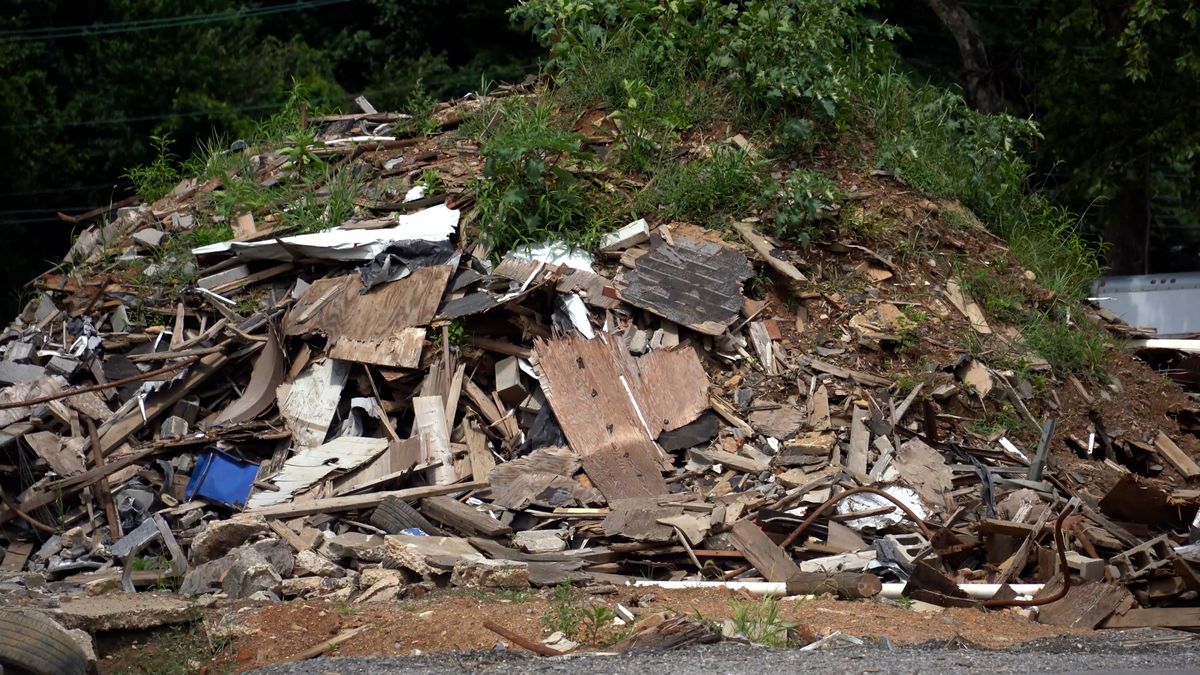
Community activists from western North Carolina traveled to the U.S. Capitol on Monday, adding their voices to a growing chorus of complaints about the slow pace of Hurricane Helene recovery, which they blame on the federal government.
They were joined by U.S. Sen. Andy Kim, a Democrat from New Jersey. He said the problems facing North Carolina are being felt in many other states, including his own. Part of the problem, he said, has been Republican President Donald Trump’s efforts to dismantle the Federal Emergency Management Agency.
Other WRAL Top Stories
“The action that we should be taking is not to get rid of it, but to fix it,” Kim said.
Kim and the activists he met with from North Carolina and other states Monday aren’t the only ones feeling frustrated. Also meeting on Monday was Gov. Josh Stein’s Advisory Committee on Western North Carolina Recovery, a bipartisan group of state and local officials tasked with Helene recovery goals. They didn’t hold back on their feelings about the response from Trump and FEMA or the larger department that oversees it, the Department of Homeland Security.
A spokesperson for the Department of Homeland Security didn’t respond to a request for comment on the complaints lodged against it. A FEMA spokesperson and a White House spokesperson each rejected the premise that aid has been slow to reach North Carolina, with the White House calling Helene aid a "transformational recovery effort" under Trump.
Don Campbell, the chief of staff for North Carolina’s Division of Emergency Management, provided an update Monday on numerous delays coming from FEMA as a whole, as well as some he said have been personally caused by Trump's Homeland Security Secretary Kristi Noem — complaints that have also been made previously by Stein, a Democrat, as well as by North Carolina Republican U.S. Sen. Ted Budd.
Campbell, Stein, Budd and others have criticized Noem for creating a policy that no spending over $100,000 can be authorized without her personal approval, a decision they say has slowed down Helene relief work substantially. On Monday Campbell also listed off a litany of issues the state has been experience with rank-and-file FEMA officials.
After Campbell finished his presentation, Kevin Leonard, who leads the North Carolina Association of County Commissioners, credited Campbell for what he described as his “diplomatic” tone but said he wanted to make his own frustrations loud and clear.
“We're going to go back to Washington in the first part of the year and start banging on doors again,” Leonard said. “Because this has to change.”
Asheville Mayor Esther Manheimer chimed in to add that she'd tag along and help him knock on doors up in Washington to get more attention. Meanwhile in Washington on Monday were community activists from groups including Down Home North Carolina and Appalachian Voices, as well as Swannanoa Communities Together, a group formed in the aftermath of Helene to focus on recovery.
Speakers at the event in Washington complained of the perceived politicization of FEMA’s decisions on which communities should or shouldn’t receive fast assistance. Similarly, members of the governor’s advisory committee said Monday that they’ve often been stonewalled until Budd or North Carolina’s other U.S. senator, Thom Tillis, have personally intervened with Noem to fast-track one grant or another out. Budd and Tillis are Republicans, as is Noem.
But even in cases where the state’s GOP congressmen have helped move things along, Campbell said, North Carolina’s recovery efforts often run into further roadblocks seemingly aimed at stopping or delaying the work — particularly from the Department of Governmental Efficiency, or DOGE, which Trump created earlier this year to reduce government spending.
Campbell said that in addition to the relatively low amounts of money being approved in the first place, the DOGE process called “Defend The Spend” was frequently adding 30 to 90 days to the process for any money to make it to North Carolina. But he added that state officials have recently figured out some keywords to add into documents that appear to speed up the process; much of the DOGE work in the Trump administration has been carried out by staffers using artificial intelligence tools, according to national media reports.
Leonard, the head of the state county commissioners group, said FEMA is ignoring the complaints from North Carolina on the slow pace of recovery. He said the agency seems to be intentionally making the process slower and more cumbersome.
“It's like they doubled down on increasing regulations that create increased red tape for reimbursements for the people in our communities, for our local governments,” Leonard said. “And that's going to stifle recovery growth in North Carolina even further.”
Everything combined — the holdups from Homeland Security and its agencies, the holdups from DOGE — have meant that many cities and counties who paid for Helene cleanup, with the expectation that the federal government would reimburse them as is normal, are still waiting on that money. And other projects, such as rebuilding and improving homes and infrastructure to be more flood resilient, are on hold.
Part of the multibillion-dollar Helene recovery effort is disaster mitigation, to make sure western North Carolina is better prepared in future storms. FEMA has identified $2 billion in needs for western North Carolina, Campbell said, adding that so far the state has been awarded grants totalling less than $10 million of that $2 billion — including nothing for infrastructure like local roads, bridges and dams, despite the state having submitted many such grant requests.
“We have not been given any guidance from FEMA as to why many of them have not been approved,” he said.
The Trump administration had previously ordered a halt to billions of dollars in FEMA grants aimed at disaster mitigation. But Trump lost a lawsuit over that decision Thursday, with a federal judge ordering the funding be restored, ruling the executive branch had no authority to stop the program that had previously been authorized and funded by Congress.
North Carolina was among the states that had sued to get the grants restored. Attorney General Jeff Jackson, a Democrat, has also sued Trump over separate decisions to try cutting federal funding to public schools as well as to scientific research.