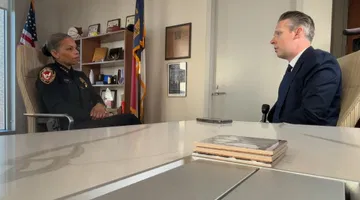
Shaun Gallagher, WRAL: Chief Andrews, so you made the announcement last week that you were going to retire at the beginning of May. Why now?
Durham Chief of Police Patrice Andrews: Now, gosh, I have been in law enforcement a long time, and most folks in law enforcement will tell you that, if anything, 30 years, that's a long time to be in this profession. And plus, I have children that I want to, you know, follow them around the country and do what a mother does and stalk them. So I can't do that when I have a full-time job. Also, just specifically for me, this department is at a place where they don't, they don't need me anymore. We have tremendous staff. Our executive team is ready to take the helm at any time, any one of them, and so I feel good in knowing that now is the time, and this department will be left in very good hands.
Other WRAL Top Stories
WRAL: You know, this summer would have been 10 full years that you held this top position, I mean, and then, you know, the years before that, that you were, you know, an officer as well. What do you think is, you know, your biggest success from your time as chief?
Andrews: Gosh, you know, for me, it's not just one thing, it's probably several different things. Well, one is, is being able to reconnect with the officers, with our staff, right? I was very, very purposeful in the way that we went about doing that and really getting their input on stabilizing the organization. So improving morale, certainly recruiting and retention has been huge, stopping the bleed, so to speak, so that that's been a success for the organization. It's very hard for me to take credit for any one thing, but what I will say is think the vision was that we would accomplish a reduction in violent and property crime. We would also accomplish a reduction in the number of officers leaving the agency to go to other agencies, but also increase the amount of people that were interested in applying and becoming Durham police officers.,
WRAL: To have the pandemic in the middle of that. I mean, how did that kind of, you know, impact your goals along the way?
Andrews: So in the height of the pandemic, you know, I was in Morrisville. I think, you know, it's the same connection is very difficult when you have a pandemic, that stands in the way of making those, those connections with staff, plus there were very pivotal moments in law enforcement during the pandemic, and then you couple just mental health with that, and people just all around feeling very disconnected and not really knowing what to do in this new world that we are, we are in now and even today. But I think coming here and coming back here, we did still have a little bit of that, not much though. I think then when I came back in was the rebuilding process, was identifying the fact that we have people, that law enforcement officers that are leaving the career, not just in Durham but nationwide, simply because the years of the pandemic was certainly a very hard time, very tough time for law enforcement.
WRAL: What could you have done better?
Andrews: I always will say that I could have been more present. You know, I feel like I could have been more present in my community and been more present with my officers. That's me. I feel like I could always have done more, what that more really looks like, but also being able to balance my personal life as well. I will give everything I have to this profession and this agency, and I have often to the detriment of my own personal health and well being. So I think for me, I always could have done more for them.
WRAL: Was that personal sacrifice worth it?
Andrews: Oh, wow, these questions are tough. I needed more than a moment to think about that.
I would say personal sacrifices for your profession are never worth it, right? Because that's time that you can't get back, those are moments that you won't be able to get back. However, for me, I believe that what we received from having those moments away helped a broader community because it wasn't about me or any one person. It was about improving the experience as a Durham police officer and a member of our team, for both sworn and non- sworn staff, but also our community, and how we responded to our community.
WRAL: It's a tough question, to weigh, you know, that personal sacrifice for the good that you seem done as well, you know. I mean, kind of playing off that you know, as you, you know, leave this part of your life, your professional life, what is your legacy as the chief of the Durham Police Department?
Andrews: I am hopeful that, as I told my officers in a letter that I sent to all of them, that I'm leaving behind a department that feels better about the direction, of officers that feel better about their place and position within the agency. I'm hopeful that our non-sworn staff feel seen and heard and valued for their contributions, no matter how small they might think it is. Their efforts and their work is very critical to what we do here in the city of Durham. So I'm hopeful that I have, my legacy is, you know, been one of rebuilding and reinvigorating them and inspiring them to think bigger than what you could ever even imagine, and also not being afraid to tell others about your ideas and what you feel. Finally, a legacy of our executive team and our ranking staff members and also our non-sworn managers to really embrace the idea of always learning. And sometimes your biggest lessons come from those who don't have rank, come from those who don't have manager or, you know, or chief in their title. And that's really what I'm hoping,
WRAL: What has been the most difficult part of your job as Chief?
Andrews: So, you know, professionally, I will say that the most difficult part is seeing how my staff really have shouldered a lot more than what they should have, a lot more work than what they should have, and actually seeing the mental toll that it has taken on them. You know, we are fortunate to have a peer support group here for not just our sworn staff, but our non-sworn staff. And we, you know, the city provides tremendous benefits that we can, you know, officers can, non-sworn staff can receive therapy and things like that.
But I really do believe that watching, watching them work every single day, embracing the hard work and not having a break that has been very hard for me, the community, right? The violence in our community certainly is something that has been really hard too. This is not who I am. This is what I do for a living and who I am as a mom, and I'm also a member of the Durham community. I have a two children, a boy, well, he's not a boy anymore. He's a man. He's soon to be a 21-year-old man and a 30-year-old daughter, who are living their own lives. And what happens here in this community certainly does affect me, because I see them in some of the things that I see here.
WRAL: You know, we've reported on some of the friction that you've had in trying to do your job, namely with the district attorney's office. I guess first on that that regard, has that relationship played any role in your decision to step away?
Andrews: Oh, no, no, not at all. So this is what I will say. There is never a perfect relationship, right? We agree to disagree, and that's okay, and we move forward.
With my own team, we don't always agree. I don't ever want to surround myself with people that think exactly like I do, because nothing gets done. What I can say is that it is my hope that with some of the dialog that we've continued to have with our district attorney and members of the district attorney's office, you know, I hope that we can start making some progress and headway on many of really the toughest cases that we have here in the city of Durham.
WRAL: What are those cases to you?
Andrews: Oh, my gosh. You know, it's the violent crime, right? But also there's, there's a property crime element too, where, oftentimes, and you hear me say this in the quarterly report, we talk a lot about violent crime and seeing reductions in those but it lately, the trend has been much of our property crime are often turn into gateways of our violent crime. So with our stolen vehicles, stolen motor vehicles, motor vehicle break ins, that affects people in other ways as well. Property crime certainly is not one of those crimes that you can just say, phew, it was just a break-in because it's not. People are victimized there too.
WRAL: When you talk about that, we've reported at length about Ryan Camacho story out of Wake County where he killed this teacher. Just awful story. But we've seen how it happened here as well, that there were property crimes that happened. And there's been criticisms about (District Attorney Satana Deberry's handling of that. When we asked her about it, she had said the evidence in Mr. Camacho's cases did not support felony conviction. Prosecutors can only deal with the facts before them. Your department is responsible for presenting those facts before them. How does that reflect on the work of your department?
Andrews: So what I will say is that my investigators and my officers, when my investigators go have these tough cases, whether it's a major property crimes case or a violent crime case, we always include the District Attorney's Office in on the conversations around the facts, the evidence, oftentimes before even charging. So that is it, that is, for us, a positive because it helps us prepare the best case possible, because they are very aware every single step of the way of what the evidence is in the case, and if there's more that they need, we trust that they will tell us that there's more that they need. Ultimately, it is our job to prepare a very good case, to present it to the district attorney's office for prosecution. It is a district attorney's job to decide what cases they will or they won't prosecute, or they will plea, or they won't plea, and their job to determine the reason behind it. Our job is to prepare the case, which I will tell you, you know, I don't, I don't review every single case, but I can tell you that I know the work of this team, and I know our work that we do. We prepare complete cases, and if there's a case that comes up that, you know, that kind of shocks us all as to why there was a dismissal, we always want to know why. Because if we are, if we had a hand at that, if we didn't present or provide the evidence needed, we want to know why, right? I want to want my investigators to to reach out and say, Listen, was there something we could have done different? Because ultimately, we all want to be able to learn so that it does not repeat itself.
WRAL: Already, you've talked at length about how much you care about your officers and, you know, their, you know, well being and their morale. How does something like that when you know you put in the hours for these cases, how does it affect morale when they see that it's pled down to a misdemeanor in this case?
Andrews: Well, so I think that might be a question for them, but what I can say is this is our message has been, it's not our job to worry about what happens at the district attorney's level. There is a reason for everything, right? Our job is to prepare and present the best case we can for prosecution. That is our job. Our job is we are the first ones on the scene when the person has experienced the worst day of their life. It is our responsibility to make sure that we do everything that we can to identify the persons or persons responsible, and then bring forward the best packet we can for prosecution.
WRAL: Are you satisfied with how the justice system handled Ryan Camacho in Durham County,
Andrews: I don't have an opinion on that
WRAL: Understood. Overall today, how is the morale of your officers considering all the things that we've been talking about that have happened in Durham?
Andrews: So I can only tell you, I never want to speak for my officers, because I think their insight is tremendous. Only they can speak to how they feel. One of the things that I look forward to every year is is meeting with all of my staff, and we start this in January, and we start with our uniformed patrol officers on the weekends, and we literally just have a conversation about what's working, what isn't working. What are the ideas that they have? What would they like to see moving forward so that we could make adjustments where we need to and make it happen? My hope is that the morale has improved. I certainly have heard from officers since I announced my retirement that they are they are very grateful, very thankful for the work that our team has done since I have been here. But I think that's a question for for them. My hope is that the morale has proved has improved. I feel that the morale has improved. It feels different here. Right doors are open. There's no, you know, quiet in the hallway, signs hanging up, quiet in the elevator. I encourage my officers to be who they are, because that's why they're here for their individuality and to be who they are, and so my hope is that morale has improved, and because, gosh, they've been bringing forward a lot of very, very out of the box, innovative ideas that I don't think would have happened before.
WRAL: Will you be involved at all in the search for the person that will be in this office after you?
Andrew: You know, I don't know. I'm always willing to give my two cents, you know, always willing to slide my two cents in there. You can ask my kids. But certainly, it's my hope that at least I'll be able to lend a little bit of of my insight into how the agency is running. Certainly, our manager, I'm fortunate, and we're very fortunate, that before he was the manager of the city, he was the Deputy City Manager over public safety, so he was very involved in, really what we do here in day to day operations. So he has a lot of knowledge of not just the operations, but where we have, where we started from, and where we are now. And so I'm hopeful that, you know, in the next couple of weeks, we'll probably have a will be meeting, and we'll, we'll work through that, and he knows that I'm, I will be available anytime he needs, if he needs me to assist with that, that overall process.
WRAL: So what would your advice be for that person that's going to be sitting behind that desk in a few months?
Andrews: Oh, yeah. So I will say that your officers are not just people in the car. They're not just people investigating cases. Your non-sworn staff, they're not just people in offices playing a very critical, supportive role. They need to be seen, they need to be heard, and they need to be valued, and they need to be allowed to do their job. The next person that comes in should come in with no agenda. Be your genuine self, be who you are. Don't bait and switch. Don't be one person just for the interviews, and then you come in here and you ruin this department, because these officers have worked very hard. My non-sworn staff has worked very hard to get us in a place where we are improving, and we are making improvements every single day, and we need a leader at that desk that's going to support those operations, but is also going to be a positive contributor to the agency.
WRAL: I saved this for last, just because it's great, the end of it. But I mean, what are you doing? What's going on after this?
Andrews: Well, let's see here. I am going to take a little bit of time to figure it out. You know, I joke around with some of my girlfriends, and, you know, I've only, I will always be a mom. So I've only ever been a mom, and then when I've not been, been actively being a mom, I've only been a police officer. I've never done anything else. So the great part is that retirement, you know, for at this time in life, doesn't look like what it looked like for retirement for our parents and my grandparents, right? I'm looking forward to just doing something different. I'm not going to be a chief anywhere else. I am not going to put on another uniform. I'm looking forward to just doing something, something different, so we'll see what that is. I mean, I, you know, I might, I don't know. I'm just gonna see where the road may lead. My steps are already ordered. And I think you know, the way that my faith and my belief that God had a plan for me all the way even in 1997 when I started here, that was my plan. That was his plan for me. I don't I feel and I have faith that that's still true today, so we'll see
WRAL: To be continued. I know you say done with law enforcement, yeah, but what about public service? I mean, can we see Patrice Andrews running for something?
Andrews: I mean, yeah, maybe not closing the door, not closing the door on that. I am a, I'm a public servant by heart. I love this community. There are things that happen here that I don't necessarily agree with or like and but, but I do believe that whether it's me being supportive of another public servant or another politician or another or I might become what I don't know, but I know that I have not closed the door on that portion.
WRAL: I wish you could express more.
Andrews: I want to hear why I well if, if, like I said, I have a lot of just scattered thoughts in my head.
WRAL: We'll see how it goes. Are you staying in Durham though?
Andrews: Yes, yeah.
WRAL: Why?
Andrews: I love Durham? I mean, I love Durham. I, I, I, her growth is tremendous. The way, this way Durham has grown. I remember 1997 just you downtown. There was no downtown life. It was dark. It was, there was not, there wasn't much happening. And now you can go, you go anywhere and have amazing food. You can go catch a show. You can go to, you know, watch a, you know, go to the ballpark. You can go to Carolina theater. I think there's just so many things to do in downtown Durham, but there's so many things to do in overall, the city of Durham, all and it's growing tremendously. So I'm just looking forward to seeing the next couple years.