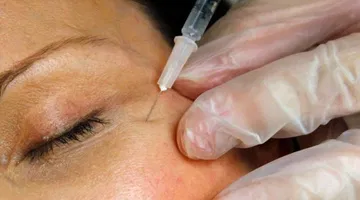
A cosmetic injectables training company has partnered with the UNC School of Nursing in Chapel Hill to offer hands-on instruction for nurses and clinicians learning Botox and dermal filler techniques.
The UNC School of Nursing partnered with LexRx, a nurse practitioner-owned and operated aesthetic injectables and skincare brand founded in Boston in 2015. LexRx has four locations in Massachusetts and launched a sister company, Inject with Lex, in 2018 to train the next generation of injectors.
Other WRAL Top Stories
“Our differentiator is that we’re not just injectors, we’re not just nurse practitioners, we are truly educators,” said Alexa Nicholls Costa, NP, founder and CEO of LexRx.
Costa said the company wanted to stand apart from private training programs by building university-based education for aesthetic dermatology.
“Prior to 2023, when we launched our partnership with Boston College, there were no university-based training programs for esthetic dermatology, specifically in injectables,” Costa said. “Learning Botox dermal fillers, that was a skill that you had to learn in a private setting.”
LexRx has since expanded to additional university partners, including Columbia University and now UNC-Chapel Hill — its first expansion into the South.
According to the 2024 annual report by the International Society of Aesthetic Plastic Surgery, botulinum toxin remained the most common non-surgical procedure for both men and women worldwide.
The report found Botox injections in the U.S. increased 4% from the year prior, with roughly 10 million injections reported in 2024. Hyaluronic acid (HA) fillers saw another 6.9 million patients, with nonhyaluronic acid fillers accounting for 930,000 more.
Despite the growth, there is no national standard for training.
“The industry of esthetic dermatology, specifically the specialty of injectables, can be perceived as the Wild West,” Costa said.
Costa said the rapid growth of the industry has also created confusion for both patients and clinicians, with pathways into the industry varying by state and provider license.
“The answer is, it depends,” Costa said. “It really is a wild industry in that there’s not a nationwide expectation or set of criteria to offer esthetic injectables treatments at your practice. There is not a current federally regulated expectation for education when it comes to Botox and fillers.”
North Carolina does not require a specific Botox certification course. However, nurses administering cosmetic injections must provide documented knowledge, skill and competency to perform injections safely, and the procedure must be ordered by a physician, nurse practitioner or physician assistant.
“The goal with our programs and partnering with the highest caliber universities, is to raise that bar and become the standard, because there was no standard,” Costa said.
The UNC School of Nursing and LexRx first partnered for a training course in December. Costa said the first class was intentionally kept small, with three providers, while the newest course drew 26 clinicians in training.
“We sold out this class, and I think it really speaks to the consumer clinician that wants a quality education in this industry,” Costa said.
The course combines anatomy education with hands-on experience using mannequins and volunteer patients.
“When it comes to hands-on experience outside of the didactic lecture, it’s really important that they find a program that invests in that hands-on skill set,” Costa said. “What we’re doing here today is treating it like a real clinic.”
She continued, “We are seeing many supervised models come through in a very safe, evidence based-approach at bedside,” she said. “When we leave today, we have providers that feel competent, safe, and ready to enter practice.”
The curriculum is also designed to prepare clinicians for complications and adverse events, ranging from minor bruising to more serious problems.
“The more complicated adverse events are things like vessel occlusion, which can happen with dermal filler,” Costa said. “The real differentiator is understanding anatomy and having a deep respect for facial anatomical differences from one person to another.”
Costa said providers also need to know when not to inject.
“It really starts with a full facial assessment,” she said. “A patient may come into a practice requesting one thing, and then the provider does a deep dive on their history and their anatomy and says, ‘You know what? I actually think you might not be a candidate for that.’”
Botulinum toxin is one of the most powerful toxins known to science, capable of causing life-threatening paralysis even in small doses, according to the U.S. Centers for Disease Control and Prevention.
The rapid growth of Botox and fillers has also come with concerns about counterfeit or mishandled products that can lead to harmful reactions.
The FDA recently warned consumers about illegal marketing of Botox products.
In 2024, 19 people from nine states had harmful reactions after getting Botox injections that were administered by people who were unlicensed or untrained, or in non-medical settings, according to the U.S. Centers for Disease Control and Prevention.
The FDA has approved cosmetic botulinum toxin products including Botox, Daxxify, Dysport, Jeuveau, Letybo and Xeomin.
Costa said patients should treat cosmetic injections like any other medical procedure and ask questions before moving forward.
“It can feel like a retail concept, and almost diminish the value in that these are medical procedures,” Costa said. “They should be treated as such, and the training has to be held to that level.”
“The same way your provider should be doing a health history, a medical history understanding your anatomy, you should also be interviewing your injector,” Costa said. “You should feel confident and feel okay asking them, ‘Where did you train? Was it university based?’”
She said any well-prepared injector should be comfortable answering that question.
“I would say, if you were met with hesitation or resistance from that injector, I may consider a different location,” Costa said.
Leah Frazier, a PhD student with the UNC School of Medicine who volunteered to take part in the providers’ practice, said seeing the training program in action offered reassurance.
“This is my first time doing this,” Frazier said. “I actually 100% knew that North Carolina did not have the same safety regulations as other states when it came to injection, and that was the reason why I decided to do it here.”
The CDC recommends that consumers do the following to stay safe when getting these types of injections:
- Ask whether the botulinum toxin product is approved by FDA and was obtained from a licensed source.
- Ask whether the provider has a valid healthcare license and is trained to give the injections.
- Ask the provider to show you the vial of FDA-approved botulinum toxin product.
- Ask the provider to draw the toxin from the vial into the needle while you watch.
While rare, botulinum toxin can cause serious symptoms. Seek medical attention if you experience:
- Blurry or double vision
- Drooping eyelids
- Difficulty swallowing
- Difficulty breathing
- Muscle weakness