While the Federal Aviation Administration is facing an air traffic controller staffing shortage, it’s also testing a modern alternative to the traditional air traffic control system called a digital remote tower.
The head of Johnston Regional Airport wants to be “first in flight” once this remote tower takes off.
Other WRAL Top Stories
“From an effectiveness standpoint, the expectation is that it will be much more effective than a human being in a tower with a set of binoculars,” said David Harris, director of Johnston Regional Airport in Smithfield.
Right now, neither Johnston Regional nor Raleigh Executive Jetport in Sanford have air traffic control towers. The general aviation “reliever” airports rely on pilots to self-manage the takeoffs and landings, of which there are about 300 each day at Johnston Regional.
“It’s very similar to, as if you removed all of the stop signs and all of the stop lights from downtown Raleigh and expected the drivers to effectively and efficiently and safely get to where they’re going,” Harris said.
Both airports have received FAA approval to get an ATC tower, at an estimated cost of between $10 million and $20 million to build, much of which would be paid for by taxpayers.
In contrast, Harris estimates that a digital remote tower – which he believes is more efficient and safer than a traditional ATC – costs half the price.
“There’s no doubt about it, the technology’s there, and it’s just a matter of getting it approved for this country,” said Bob Heuts, director of Raleigh Executive Jetport.
A digital remote tower uses live video, radar and high-tech cameras as the eyes on the skies. The data collected from those technologies gets sent back to human air traffic controllers.
Because cameras are doing a lot of the work, digital remote towers need fewer air traffic controllers. And one remote tower could handle air traffic at numerous airports, theoretically saving airports – and taxpayers – millions of dollars.
For example, Harris said Johnston Regional Airport could house a digital remote tower that manages air traffic control for both the Smithfield and Sanford airports.
Digital towers are used in Europe, Australia and other parts of the world, and a remote tower program was even trialed in Leesburg, Virginia, before the FAA pulled the plug in 2023.
At the time, Leesburg officials praised the remote tower program, both for safety and economic reasons.
“From the start of the program in 2015, airport traffic has grown more than 25% and the airport has added an additional flight school, a second Fixed Base Operator, and a U.S. Customs office for receiving international traffic,” the town said in a statement.
“We are proud that Leesburg Executive Airport was chosen as the first municipal airport in the country to operate a remote tower, which operated successfully from 2015 to 2023,” Leesburg Executive Airport Director Scott Coffman told WRAL Investigates in a statement.
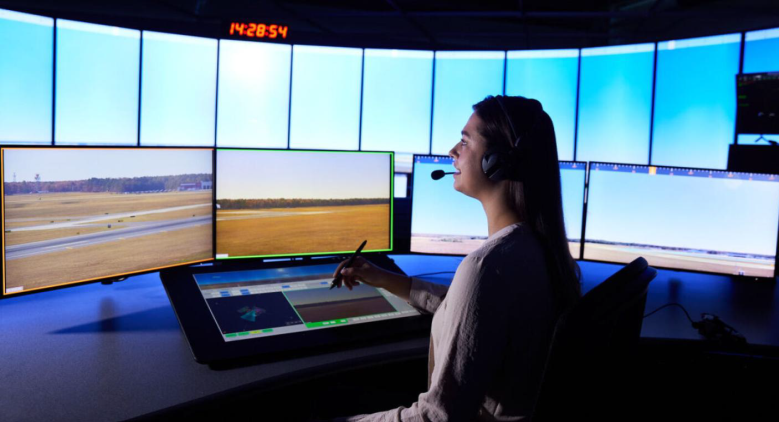
The FAA is currently testing digital remote tower systems at a site in Atlantic City, New Jersey.
Harris hopes that the FAA will clear the remote tower program for takeoff soon. Until then, he and his counterpart at Raleigh Executive Jetport must proceed with plans to each build a traditional air traffic control tower.
When WRAL Investigates reached out to the FAA for comment on the remote tower program, the agency sent an automated response: “Due to a lapse in funding, the FAA is not responding to routine media inquiries.”