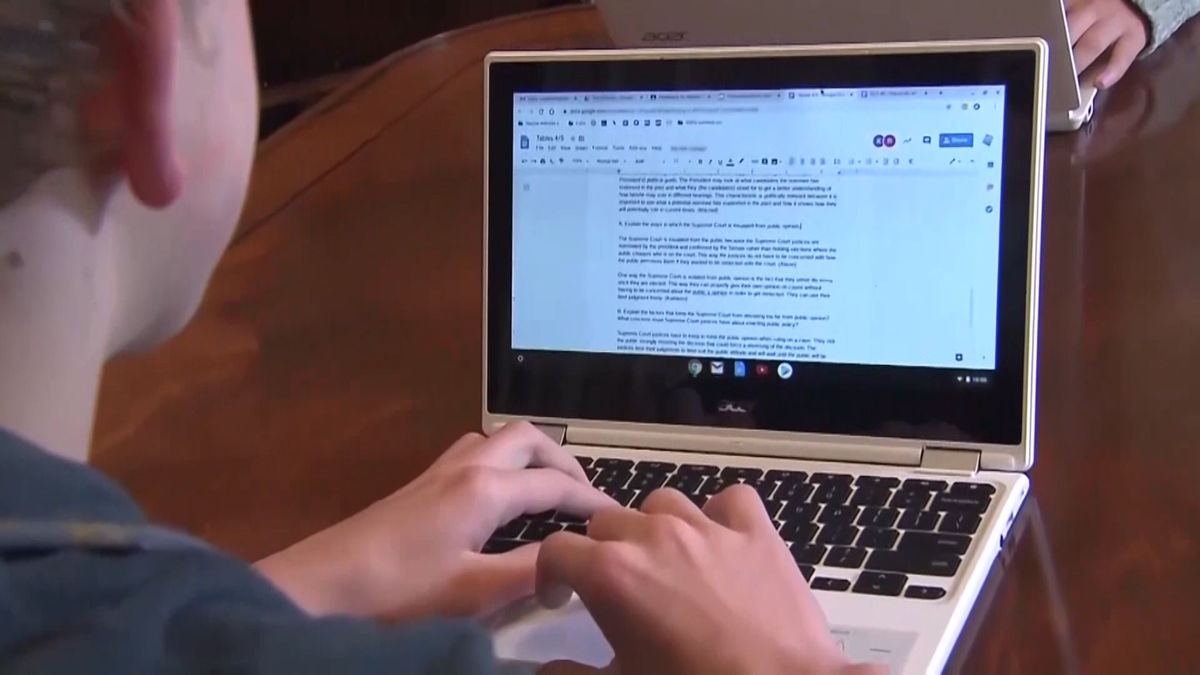
Four proposed new virtual schools for North Carolina will have to wait at least another month to learn whether they can open next school year, after some State Board of Education asked for more information about the schools' applications.
Dozens of school districts and charter schools offer what the state calls "remote academies," used by thousands of families desiring a more flexible education or dissatisfied with their child's school experience. But policymakers are raising concerns about the quality of the education they provide.
Other WRAL Top Stories
State Board of Education Chairman Eric Davis moved Thursday's planned vote on adding four more virtual schools --- operated by Brunswick, Northampton, Wayne and Asheville school districts --- to next month's meeting at the earliest. The schools expect to enroll as many as 525 students among them.
On Wednesday, some board members questioned why the state is still adding so many after they learned during the Covid-19 pandemic that remote learning didn't always work.
Davis noted Wednesday, and against Thursday in an interview with WRAL, that it can work when implemented properly but questioned whether it was always going to be implemented properly.
"Before we authorize virtual academies, we'd like to better understand how those districts are going to make sure that the product that they're delivering to our students will meet our students' needs and will promote their education," more so than in other lower-performing virtual schools, Davis said Thursday.
Most students don't thrive in virtual environments, he said.
On Wednesday, he said he would not have approved the four schools as presented that day.
"I'm not convinced we're going to meet students' needs," Davis said. "I fully respect parents' views on it, but our job is to make sure that the program we're offering will deliver, and I'm just not convinced that it will."
A rejection of the applications for the four virtual schools would be a shift from the state board's past and recent approval of such schools. Approval lasts five years, and many schools will be up for re-approval in 2028. Without re-approval, they'd have to close.
Davis said Thursday his thoughts on virtual schooling hadn't changed but noted a growing number of virtual schools, including virtual charter schools --- which the board no longer oversees.
The board's concern for virtual schools Wednesday comes five months after they approved a report showing average to lower school performance grades at most of the existing schools, though the board has in the past criticized those grades for inadequately conveying school performance and being artificially harsh on many schools.
While many virtual schools don't post high academic achievement, it's unclear how their students were testing before they enrolled in the virtual schools.
The state Department of Public Instruction plans this fall to start analyzing schools' approach to teaching, how they're operating, whether they're hiring local or contract teachers, and many other things.
State law passed in 2022 authorized virtual schools, while limiting charter schools' and traditional public schools' ability to conduct remote learning more than five days in a year. Since then, dozens of charter schools and traditional public schools have applied to have standalone virtual schools, though many of them have in-person elements and even requirements, as well.
The law allows schools to pull a student back into a traditional classroom if an evaluation of the student's performance indicates the virtual setting isn't working.
Many families enrolled in the virtual schools, such as at Crossroads Flex High School in Wake County, desire more flexible schedules because of their children's extracurricular activities. Families at other schools have told WRAL News over the years that they chose a virtual school because of bullying, health reasons or because their child with a disability was refusing to go to school or received what they felt were inadequate special education services.
State Department of Public Instruction officials offered similar explanations Wednesday when asked by board members why families were choosing virtual school, if it was general knowledge virtual learning wasn't as effective.
"Sometimes it's convenience around children's schedules, and sometimes they feel their child isn't being served in the regular face-to-face setting," said Michael Maher, DPI's chief accountability officer. "Kids have all kinds of needs."
School districts say they need a virtual offering, said DPI Chief Information Office Vanessa Wrenn. Schools may be trying to compete with the virtual charter schools that are opening up, potentially enrolling some of their students, she said.
The state's Charter School Review Board has approved two standalone virtual charter schools in recent months, as well as virtual schools under an existing charter school.
Charter schools, virtual or in-person, that don't perform adequately academically can be forced to close. The Charter School Review Board evaluates academic performance as a part of its process in deciding whether to renew a school's charter, and certain academic measurements can limit a school's ability to renew for a certain number of years.