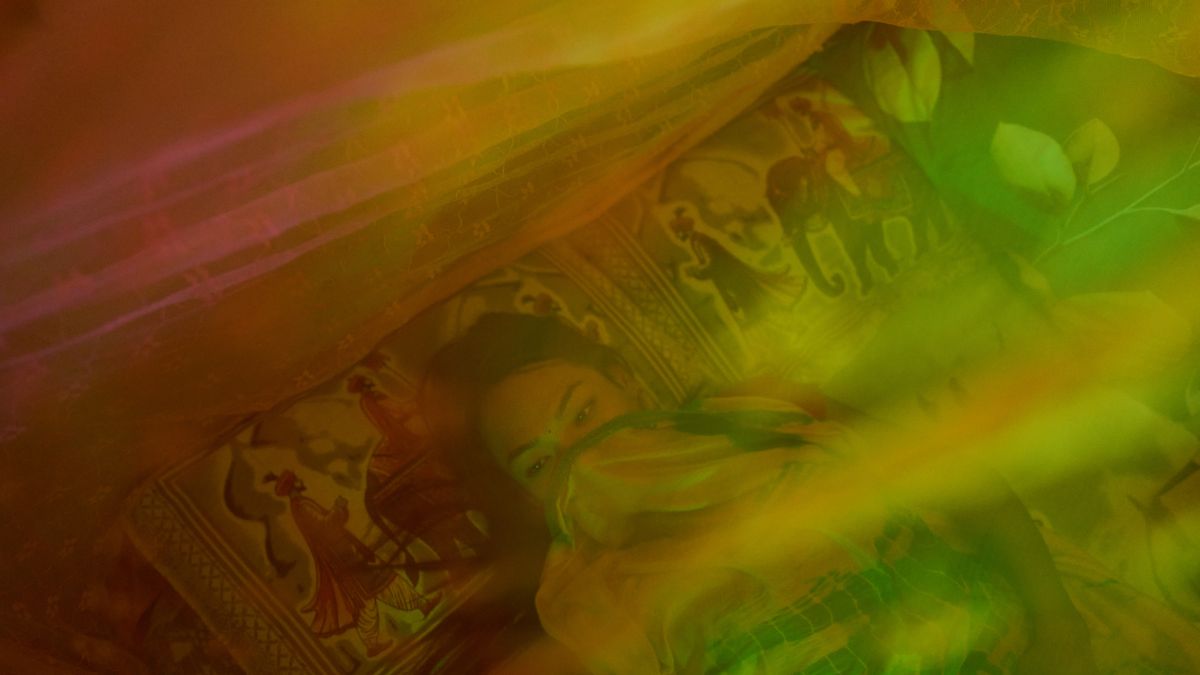
HETAUDA, Nepal (AP) — She paces the side of the darkened highway in central Nepal, just enough light from the trucks roaring past to illuminate her painted face to the men rolling in on rickshaws and motorbikes. She knows that every stranger who pays for her body could end her life. But she also knows their money is the only thing preventing her death.
This spot, littered in condom wrappers and fringed by jungle, is familiar to her. Rubi Lama once came here not as a sex worker, but as an aid worker who helped sex workers.
Other WRAL Top Stories
For nine years, Lama — who is transgender — had devoted her life to conducting HIV outreach in Nepal’s marginalized communities, including the LGBTQ+ sex workers who wait by this highway each night. But after the United States slashed its foreign aid funding last year, Lama and more than 280,000 aid workers worldwide found themselves out of a job.
Much has been written about the devastating impacts the U.S. foreign aid cuts have had on the millions of people the funding once helped. Far less is known about the impacts on the helpers themselves.
In impoverished Nepal, where a conservative culture leaves openly transgender people with few legal job options, the impact on aid workers’ lives was particularly crushing. Starving and scared, Lama and around 100 other LGBTQ+ aid workers left jobless by the funding cuts have turned to sex work to survive, walking the streets alongside the very people they once fought so hard to help.
The public health implications are vast. With the U.S. funding cuts also eliminating access to HIV prevention medication in Nepal, health experts fear a spike in HIV prevalence among the surging ranks of sex workers, as well as members of the LGBTQ+ community.
On the side of the highway, the night is a cacophony of blaring horns and the shouts of drunken men. Lama, 28 years old, softspoken and shy, walks quietly among them, equal parts desperation and dread. Beyond her fear of HIV is her fear of violence, which she and nearly all her former colleagues who have taken to the streets have endured.
She’d give anything to go back to the nonprofit where she once cared for society’s most vulnerable. Now she is the one in need of care, but there is no one left to provide it.
It is 11 p.m. and she’s had two customers so far, who each paid her $3. Rent and food this month will cost her $80.
And so, her slight frame nearly swallowed by the shadows, she waits.
Lives on the line
Just a few minutes down the road, in Lama’s old office, stickers bearing the logo of the U.S. Agency for International Development still cling to laptops that lie unused on barren desks, and to the empty condom distribution containers collecting dust.
This is the headquarters for the formerly USAID-funded non-governmental organization called Friends Hetauda, which offered HIV testing, counseling and prevention services to central Nepal’s LGBTQ+ community. All of that ended in January 2025, when U.S. President Donald Trump froze funding for USAID, once the world’s leading donor of humanitarian assistance. Trump later dissolved the agency after calling it a waste of money, even though the U.S. spent just 1% of its budget on foreign aid.
In a statement to The Associated Press, the U.S. State Department said the Trump administration had reinvigorated its assistance programs to focus on efficiency, effectiveness and partnership. The department also said the U.S. spends more on health and humanitarian assistance than any other country.
“The rest of the world needs to contribute more and share the burden,” the department said.
Of the more than 281,000 jobs lost due to Trump’s dismantling of USAID, just 23,000 were American, says Sadie Healy, who runs a global health consulting firm and has been tracking the job losses worldwide. The rest were overseas — many of them belonging to impoverished locals living in conflict zones or economically depressed regions where other employment options are scarce.
In Nepal alone, an estimated 35,000 aid workers lost their jobs amid the USAID cuts, says NGO Federation of Nepal President Arjun Bhattarai. With the country already facing high unemployment, the fallout was devastating.
The Blue Diamond Society, an umbrella organization for NGOs like Lama’s former employer, received 85% of its funding from USAID and was staffed largely by people who were themselves gender and sexual minorities. They served as counselors, health assistants, data collectors and outreach workers. They ran 20 clinics across Nepal, dispensing antiretroviral medication to people with HIV along with PrEP, a medication taken by HIV-negative people to prevent infection. They offered free HIV tests along with condoms and lubricant, which reduce the risk of HIV transmission.
The funding cuts shut down the society’s services, leaving more than 1,200 clients without access to PrEP medication and 262 of the group’s 350 staffers without work.
Outside of NGOs, legal work for openly transgender people in Nepal is virtually nonexistent, executive director Manisha Dhakal says. Which is why between 35% and 45% of the society’s former staffers turned to sex work, she says.
The risks are immense, she says, for both her former employees and the public. Too fearful of discrimination to go to hospitals for antiretroviral drugs, many transgender people have stopped taking them — significantly increasing their risk of transmission. Lubricant and condoms are expensive, so some are having unprotected sex. And PrEP distribution has been halted to everyone but pregnant and lactating women.
“One decision from one powerful country — all these services are cut,” Dhakal says.
She sits at the society’s now-hushed headquarters, the bookshelf behind her lined with framed certificates from USAID, commending her organization for saving lives. Now, she says, those lives are on the line.
“The Trump administration’s executive order will cause people to die,” she says.
Her fears are echoed by Dr. Sarbesh Sharma, director of Nepal’s National Centre for AIDS and STD Control. Viruses like HIV, he warns, do not respect borders.
“Borders are for humans,” he says. “We have a lot of migrant workers, we have a lot of overseas students, we have an open border with India. So those make it not only a Nepal concern, it can become a global concern.”
As a result of the drop in global aid, HIV testing fell by 22% in countries with high infection rates, while funding for condoms was cut by more than 90% in some places, according to data released in June by the United Nations agency that fights HIV.
All 15 aid workers-turned-sex workers interviewed by the AP recognize the risks. One, who is HIV positive, says she lives in fear of transmitting the disease, yet still hits the streets nearly every night to stave off starvation.
Most of the workers spent months trying to find other jobs, frequently being rejected the moment the employers realized they were transgender. Many have been forced to have unprotected sex with clients. Nearly all have faced violence, including gang rape.
None see a way out.
Aashika Tamang, who spent 16 years working in HIV prevention, longs for the days where she liaised with volunteers and social workers. Now, she says, she is abused at least once a week and largely liaises with addicts.
There’s a surreal whiplash when she bumps into fellow sex workers who once came to her for help.
“I used to meet them during the day,” she says. “Now I meet them during the night.”
___
This story was funded by a grant from the Pulitzer Center. The Associated Press is responsible for all content.
___
Sex work or starve
On her first night as a sex worker, Lama sat in her apartment, frozen by indecision and fear. Her makeup was on and her wig was in place, but her mind was in meltdown.
How had she gotten here?
Brainy and warm, with a gentle smile and soft brown eyes rimmed by glasses, she — like most of her former colleagues — had battled so many barriers on her path to aid work. Raised by a conservative family amid crippling poverty, she spent her childhood selling eggs in the local market to pay for her first years of school, where a teacher sexually assaulted her.
Lama finished high school thanks to a government scholarship for impoverished students. She then studied education at a university, but was unable to finish her degree amid harassment from teachers and classmates.
Her salvation came in 2016, when she was recruited by Friends Hetauda, named for the industrial transit city where it is based. Lama searched for, counseled and tested those at high risk of HIV, including the sex workers who service a stream of travelers.
Her father, furious over her job and gender identity, kicked her out. But Lama had found her calling; she knew she was saving lives. A series of promotions eventually netted her around 30,000 Nepalese rupees ($200) per month — enough to rent a one-room apartment.
And then one day in February 2025, she walked into her office and ran into Friends Hetauda’s coordinator, Kiran Thapa. The group’s funding, Thapa told her, was gone. Of its 17 staffers, the U.S. aid cuts had left Lama and 13 others out of a job.
Lama was terrified. She couldn’t go home; her father had made that clear. How would she survive?
In the months that followed, she watched with worry as her peers’ mental health worsened and as more began testing positive for HIV.
She applied for local government jobs she was initially told she had, only to be rejected once she showed up in person. A hotel manager offered her a position as a cleaner, then grabbed her breasts during a training session. The job was hers, he told her — but only if she had sex with him and his friends. Lama refused and was dismissed.
She started skipping meals and could no longer afford medicine or rent. Her landlord threatened to throw her out.
And so she began talking to her former colleagues about their new roles in the sex industry. Of the 14 Friends Hetauda staffers who lost their jobs, between 8 and 10 moved to sex work, says Thapa.
Lama realized it was sex work or starve. She knew where to go: the dark spot by the highway where she’d once tested sex workers and their clients for HIV.
For two nights, she hung back and observed. On her third night, she committed herself to landing a client. She began getting ready around 8 p.m., putting on her makeup and wig, along with a traditional white kurta and red leggings. By 9 p.m., she looked the part, but didn’t feel it.
And so she sat, paralyzed, in her apartment.
At 11:30, she forced herself down to the highway. After two hours, the first man approached. “You wanna go?” he asked. She didn’t, but climbed onto his motorbike anyway, after he promised to pay her 1,000 rupees ($6.50).
At his home, she was sick with fear. “Why do I have to do this?” she thought. “Is this really my path?”
When it was over, he shortchanged her, paying her just 700 rupees ($4.50), and dropped her along the highway.
Back at home, she washed off her makeup and crawled into bed. But sleep wouldn’t come.
Gripped by anxiety, her body grew hot and her thoughts grew dark. She thought about death, and whether it was the kinder alternative.
She thought, too, about her old job. That work had been her life’s purpose.
What was her purpose now?
Terrorized and traumatized
In the unlit alleys, dense jungles and private homes where the workers service their clients, safety does not exist.
“All of my sex worker friends, including myself, who are involved in this profession are victims of violence,” Lama says.
Ironically, the workers say, it is their powers of persuasion and knowledge of the risks — skills honed through their counseling and outreach roles — that sometimes save them.
Lama’s training helped her remain outwardly calm the night a man pulled a knife on her, held it to her throat and threatened to cut her unless she had sex with him. She bought time, telling him he’d be at risk of HIV if he raped her, given how many other customers she’d been with. Then she shoved him and ran to a bathroom near a gas station, hiding there until friends rescued her.
A few hours’ drive to the north, in the capital, Kathmandu, Sujata Chaudhary frequently draws on her 11 years of work in HIV prevention to explain the dangers of unprotected sex to clients who try to force it upon her. Sometimes, she says, the men back down. Sometimes they don’t. She contracted syphilis as a result.
One night, she managed to talk her way out of a house where two men were threatening to release their large dogs on her. Another night, she confronted several police officers who had beaten her with their batons as she stood near a tea vendor, calling on her knowledge of the law to challenge them.
But often the abuse is impossible to stop. Two men once picked up Chaudhary and a friend and drove them against their will to a hostel an hour away, where more than a dozen other men were waiting. Chaudhary, slender and sensitive, with a tattoo on her arm that says “Aama,” or mother, in honor of the woman she likens to God, was no match for them. She begged them to stop, but was raped by at least eight men. She and her friend were eventually released, and forced to walk hours back to town.
She refuses to go to customers’ homes or hotel rooms now. But she has to keep working. Her father died years ago, leaving her family dependent on her income. She cannot bring herself to tell them, including her Aama, how she earns it.
Barsha Magar, who served at Friends Hetauda for 16 years as a peer educator, outreach worker and data collector, feared she would be killed when she transitioned to sex work. Two months into the job, she nearly was. Two soldiers who initially seemed kind took her into the jungle, held her at gunpoint and raped her while holding her mouth shut to stifle her screams.
She wipes away tears as she recalls the terror of that night. For two weeks, she was too traumatized to return to the streets.
For Bharati Thapa, a former Friends Hetauda field supervisor and peer educator, the violence started the very first night she stood along the highway. Two Indian tourists picked her up and took her to a guest house, where another eight men were waiting, all of them drunk. She was physically assaulted and raped before fleeing the house, clothing torn, body covered in scratches, and screaming for a guard to let her out through the locked gates.
She sits one recent evening in the darkened office of Friends Hetauda.
“My life is at risk now,” she says softly. “I fear that I may contract HIV and sexually transmitted infections. I fear being beaten up and harassed by customers. I fear the police taking me away at night. How can I not be afraid? There is risk from all sides.”
No way out
Back on the side of the highway, Lama has landed another customer and disappeared into the dark.
It is Friday, the busiest night of the week. Around 1 a.m., the police arrive, wielding long batons. The sex workers scatter, including Lama. It is time to go home, she says. She has made a total of 1,600 rupees ($10.50) from five clients. It’s a relatively good haul; sometimes she goes home with nothing.
“I wish it was fair,” she says. “I wish I could live with my identity. I wish I could walk in the way that makes me happy. I know what is right and wrong. I am aware of the road I am taking.”
But without a new funding source, she says, there is no way off this road. And so this is where she will return, night after night, to stand alongside the women she once tried to save, in a bid to save herself.
___
Journalist Tulsi Rauniyar contributed to this report.