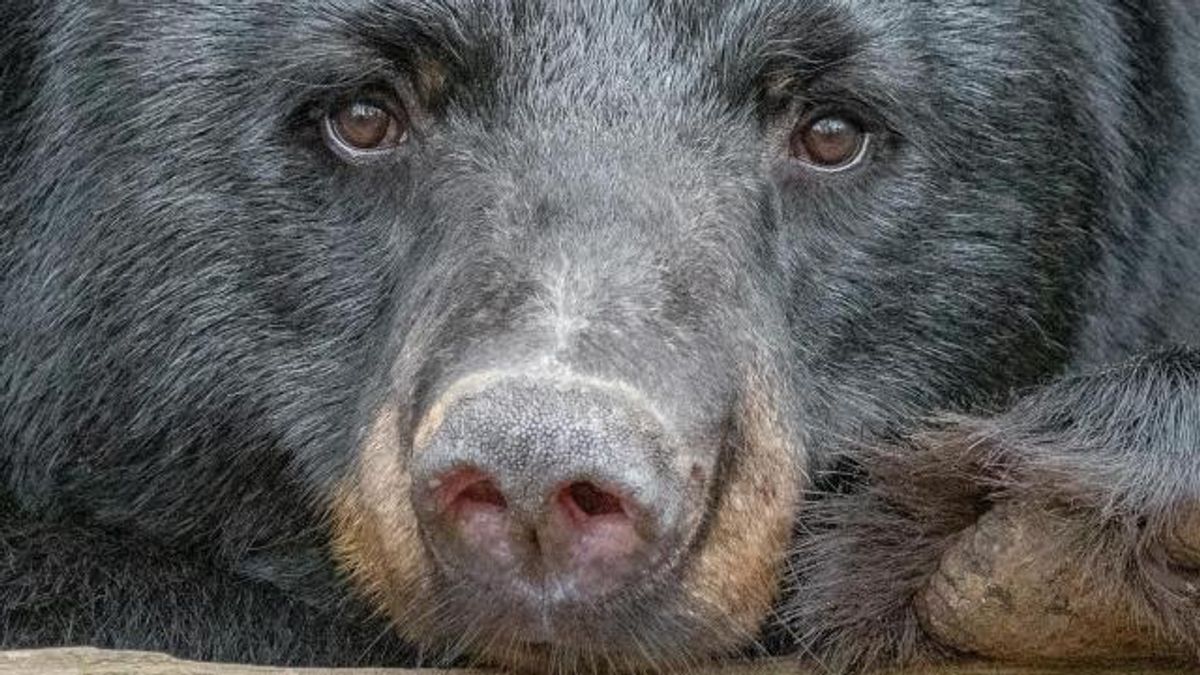
North Carolina regulators are proposing to open three western bear sanctuaries to hunting.
The state Wildlife Resource Commission is considering a rule change to allow limited permit hunting in fall 2022 in sanctuaries in the Pisgah National Forest, Standing Indian and the Panthertown area in the Nantahala National Forest. Public comment on the proposal is open until Jan. 30.
Other WRAL Top Stories
State wildlife officials say they’re asking for the change at the request of the U.S. Forest Service, which has reported increasing numbers of “negative human-bear interactions” in recent years at the Panthertown-Bonas Defeat wildlife area. The state added the Pisgah and Standing Indian sanctuaries to the proposal due to higher numbers of interactions in those areas as well.
According to Adrianne Rubiaco, state spokeswoman for the U.S. Forest Service, the definition of a negative interaction includes “bears getting into backpacks and/or tents, taking down food hanging from trees, if a bear approaches a single person or large group of people and is not afraid, and if a bear remains in the area despite visitor efforts to scare the bear off using loud noises and big movements.”
The U.S. Department of Agriculture, the parent agency of the Forest Service, requested in 2018 that the state allow permit hunting at Panthertown to reduce bear populations, which had grown by the thousands since the 1970s. But the state didn’t make the change at the time.
As the bear population has risen, so too has the human population around these parks, leading to more opportunities for bear-human interactions.
In summer 2021, due to black bear activity, the Forest Service banned camping for weeks along an eight-mile stretch of the Appalachian Trail in Pisgah.
State and federal wildlife officials recently launched a new public safety campaign, “BearWise,” aimed at teaching hikers and campers to keep themselves safe. But visitors to the parks increased with the pandemic, and not all heed the guidance.
More tourists
Longtime hiker Rachel Huehls has lived near the town of Black Mountain for 20 years. She hikes in the Pisgah Bear Sanctuary about three times a week, often by herself. She says she’s never had a negative interaction with a bear in the forest. She rarely sees them there, but she does see them frequently around trash cans in town and in the parking lots at the forest.
Despite all the warning signs at the park, the trash cans and the parked cars often contain food, so they attract bears looking for an easy meal. She’s even seen tourists throw food to bears to try to entice them closer to get better photos of them.
“It's the same thing that happens out west—you see people trying to get too close to bison and take their picture, and then they get charged,” Huehls said. “It's not the animal’s fault that the human is messing up their natural environment.”
Huehls says she wears a bear bell on hikes to alert bears that she’s in the area. That’s just one of many adjustments people who live near Pisgah have learned to make to safely coexist with bears. But most visitors don’t come from areas where bears are common, so they don’t always know what to do.
“You might encounter a bear in the woods, but their range might take them to the outskirts of town, somewhere where they have access to dumpsters,” she said. The dumpsters “smell like trash and food, but also smell like people. And so that all links together, and then they become problem bears in the woods as well.”
More bears
State wildlife regulators say bears are increasing in numbers in western North Carolina. That was the goal of the sanctuary system, which was established in the 1970s, when largely unregulated hunting had nearly driven bears out of the state.
According to Brad Howard, chief of the wildlife management division of the N.C. Wildlife Resources Commission, the sanctuaries were the brainchild of then-state bear biologist John Collins, who sought to create population reservoirs in large areas off-limits to hunting.
“The purpose of these areas was to allow the bear populations in those areas to fill, and then of course, dispersing bears from those populations would populate surrounding areas,” Howard explained. “It worked. It worked wonderfully.”
So well, in fact, that the black bear population is now restored, he said. “Our estimates have it at somewhere approaching 20,000 bears from lows probably less than 2,000 or 3,000, maybe less than that in the 70s.”
However, while the coastal bear population has stabilized due to increased hunting in those areas, the western population continues to grow at an estimated 6 percent a year. And adult bears in North Carolina have no predators to keep their numbers in check other than hunting and car strikes, which, Howard says, are also increasing.
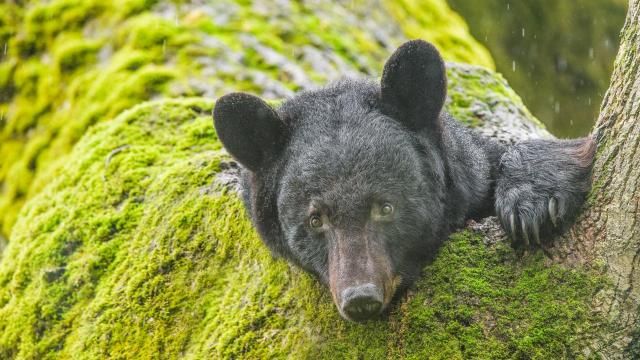
“That's certainly putting more bears on the landscape at the same time we’re putting more people on the landscape,” Howard said, ”so we're inevitably going to experience more and more human-bear interactions, many of which will be perceived as negative.”
Attacks by bears are rare, but not unheard of. Since 2010, there have been at least 12 incidents in which a bear made contact with a person resulting in either major or minor injuries, according to state wildlife biologist Colleen Olfenbuttel. Half of those occurred between 2018 and 2021, and all were in the western part of the state.
Attempted break-ins by bears are also on the rise, Olfenbuttel said. In a five-month period during 2021 in western North Carolina, there were at least nine reports of bears breaking into multiple homes in several different towns, including several homes where the residents were present, she said. Nobody was harmed in those incidents.
More homes
According to the 2020 census, the population of Buncombe County—home to Asheville and the public gateway to the Pisgah National Forest—grew 13.1 percent since 2010. It’s now home to well over a quarter-million people.
Other counties around Buncombe have seen growth as well. Macon County, home to Standing Indian, another bear sanctuary proposed for hunting, has grown 9.1 percent over the past decade. And Jackson County, where the Panthertown sanctuary is located, grew by 7 percent. Many of the surrounding counties in and along the two national forests also added population, unlike dozens of other rural counties in the state.
The population growth has come with increased development. New housing subdivisions are squeezing out green space in Buncombe and other counties. Retirement communities have sprouted up throughout the area, fueled by affordable land prices and the temperate climate.
Howard doesn’t think it’s pushing bears out of their habitat. “Bears have proven that they can certainly live in highly developed areas,” he said. “I hear it a lot: ‘Oh, we're taking their habitat.’ They seem to adapt quite well to living around us. We have more trouble adapting to living around them.”
He commended Asheville and other communities for education campaigns to teach new residents how to coexist with bears. But, he added, the growing bear population in the area remains a concern.
“Our bear management plan does call for us to take the necessary actions to try to stabilize our population,” Howard said. “We don't want to decrease the bear population. We feel comfortable at the densities that we have, but we do have certain specific areas, such as these areas, where we think we need to put a little bit more pressure on the number of bears.”
More hunting
The Wildlife Resources Commission is proposing to allow limited permit hunting in the sanctuaries, with permits drawn by lottery. Howard couldn’t say how many bear hunters would be allowed to kill. He said that’s a decision the commission’s black bear biologist will make closer to the time of the hunt if hunting is permitted.
Even without opening the sanctuaries, thousands of bears are already legally killed in the state each year.
According to bear hunting data provided by the commission, the 2020 harvest, as it’s called, was 3,748 statewide. That’s the highest number since record-keeping began in 1976.
Of the total, 1,429 bears were killed in the Mountain Bear Management area, which includes western North Carolina, the second-highest harvest there on record.
To Bill Lea, that’s already too many.
Lea is a retired Forest Service employee who served as an assistant ranger in the Pisgah National Forest district for many years, where he was in charge of the service’s wildlife program. Now a photographer and author, he is opposed to the proposal to allow even limited permit hunting at the three western bear sanctuaries.
Lea blames the rising number of negative interactions on humans’ lack of education about bears and bears’ increasing exposure to humans.
“A lot of times they get reports of an aggressive bear, and the bear is simply walking in a particular direction. And they see a person, and they just don't react and they keep walking,” Lea said. “Well, the bears have had to learn that people are everywhere, so a lot of times they don't pay people any attention. And that is often interpreted by somebody who's afraid of bears as aggressive behavior.”
Lea believes the WRC’s move to open the sanctuaries and sell permits to hunt in them “is an easy way to reward their clientele, the bear hunters.”
“A lot of people believe wildlife agencies are there for animals, but their primary goal for some species is to produce a sustainable annual harvest that hunters can kill,” Lea said. “This generates a lot of the revenue that pays their salaries.”
Howard says his agency is the steward of the state’s wildlife resources, which by law belong to all citizens in the state.
“The challenge of wildlife management is making sure that we keep our wildlife resources healthy and balanced with the habitat,” Howard said, “and balancing those needs with the needs of people.”