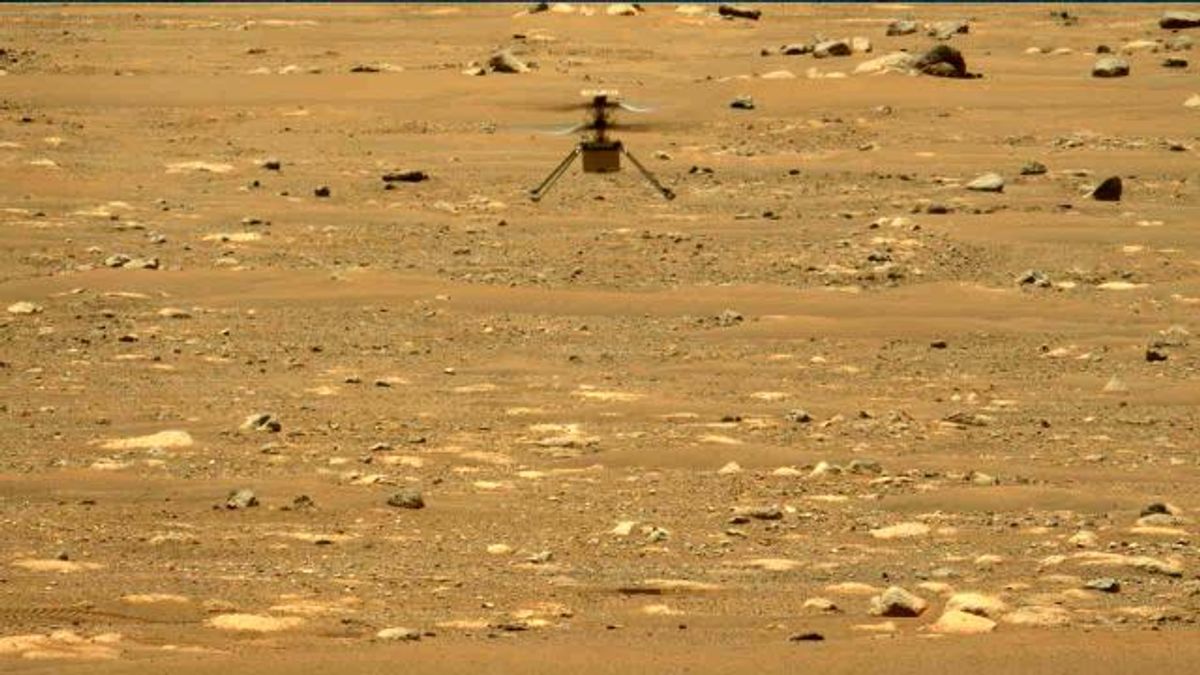
The Mars Ingenuity helicopter successfully completed a second, more challenging flight Thursday morning. The flight began at 5:33 am EDT (12:33 p.m. local Mars time) and lasted 51.9 seconds and added several new challenges.
While Flight One topped out at 10 feet (3 meters) above the surface, Ingenuity climbed to 16 feet (5 meters) this time. After hovering, it accelerated its rotors, tilted a bit, and moved sideways by 7 feet (2 meters).
Other WRAL Top Stories
“The helicopter came to a stop, hovered in place, and made turns to point its camera in different directions,” said Håvard Grip, Ingenuity’s chief pilot at JPL. “Then it headed back to the center of the airfield to land. It sounds simple, but there are many unknowns regarding how to fly a helicopter on Mars. That’s why we’re here – to make these unknowns known.”
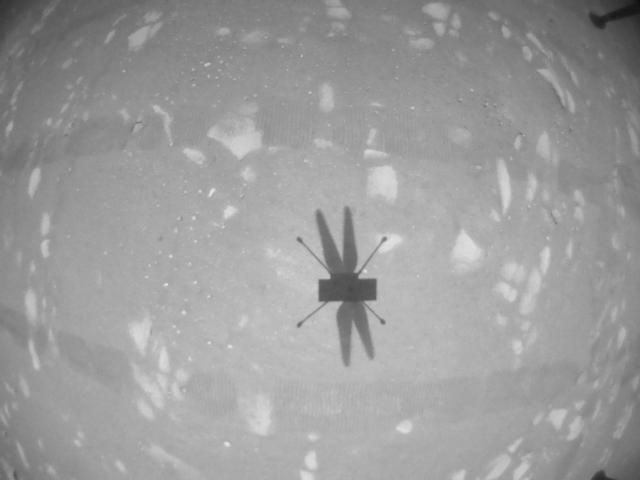
The software that makes the helicopter fly
Shortly after that first flight, NASA/JPL extended thanks to the nearly 12,000 developers from around the world that contributed to open source C++, Python and other software that is part of the Ingenuity mission.
Those projects vary from "F Prime", a flight control framework written in C++ to Python packages in wide use beyond NASA including boto which helps integrate with cloud computing services like Amazon Web Services (boto), to numpy, scemath, and scipy which handle complex math and science calculations.
Python packages such as MatPlotLib, Pillow, OpenCV which help with data visualization, imaging and computer vision caught my eye because they've helped put together ariticles here on the WRAL Weather Blog.
“Much like the first image of a black hole, most of these developers are not even aware that they helped make the first Martian helicopter flight possible.” said Nat Friedman, CEO of software repository GitHub. Working with NASA/JPL, GitHub added a badge to the profile of every developer who contributed to one of the 59 open source projects leveraged by Ingenuity, including the Linux operating system itself.