Did you know Apex was once called Log Pond?
Log Pond was neighbored by other tiny rural communities – like Frog Town, New Hill, Green Level, Swift Creek, Bonsal, Seaforth and Pea Ridge.
Other WRAL Top Stories
While some of these communities were flooded during the creation of Jordan Lake, many still exist today – their names found on schools and street signs around Apex. In the 1800s, places like 'Green Level' were given names based on geographical descriptors or prominent homes or businesses nearby.
Log Pond was named after a literal pond, roughly half an acre large.
"Frog Town was just down the road, where frogs were so noisy you could not carry on a conversation in downtown Apex at night," said Warren Holleman.
Holleman, who grew up in the area, serves as a writer and historian for the communities around Apex.
There was one community whose name represented something far deeper than the description of the landscape – the small community of Friendship, North Carolina, where the 'friendships' were decades ahead of the rest of history.
The origins of Friendship
Many people in Wake County would be surprised to learn that prior to the Civil War, decades before racial segregation was brought to an end, a small unincorporated community near modern-day Apex was breaking down barriers.
"Friendship was located at a strong economic and demographic crossroads," said Holleman.
Economically, the community was at the ideal location for financial success in the mid-1800s. It was built on the crossroads of two major stagecoach roads – one leading from Raleigh to Haywood, the other from Durham to Smithfield.
"Those roads connected some of the most vibrant towns of the early 1800s," said Holleman. "People traveled by horse, wagon, stagecoach. So that crossroads was a place to put a tavern for people to spend the night."
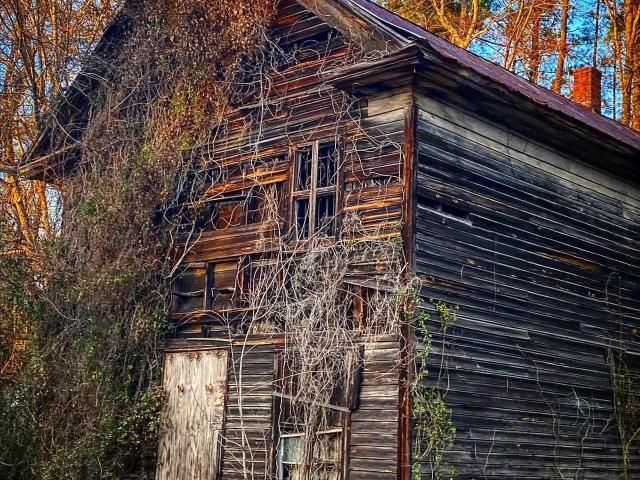
Today, the iconic tavern that served as the center of the community is rotting and decomposing – nearly unrecognizable for its historic importance and standing on private property.
Just as Friendship sat at an economic and geographical crossroads, it also became a crossroads for various racial groups – even before the Civil War.
Friendship became a place where Black families, white families and indigenous families from the Tuscarora tribe all lived alongside each other. It was an integrated community, standing in a time period when segregation was still the cultural norm.
According to Holleman, there were free people of color living alongside white families who held slaves. Likewise, there were white families who didn't hold slaves living alongside Black families who were still enslaved. The Tuscarora tribe had already been occupying that land long before colonists arrived, and some of those indigenous families lived in Friendship as well.
"The story that developed and was passed down to us was that, with all of these people coming together into one place, there was great potential to have racial conflict," said Holleman.
However, the community leaders got together and decided to build Friendship instead.
“They decided, 'It just makes sense to get along and live in harmony,'" said Holleman. "They decided to call themselves Friendship."
The oral tradition of Friendship's history goes one step further. Many in the community tell the story of a member of the Tuscarora tribe who moved into the area in the 1840s – roughly 20 years before the Civil War – and helped organize a traditional pow-wow for the leaders of the community.
"According to the story, they all smoked a peace pipe and agreed to live in harmony," said Holleman.
History and culture of Friendship
To put the timeline in perspective: Friendship was officially formed in the 1840s. The Civil War ended and enslaved people were emancipated in the 1860s. School segregation was 'officially' ended almost 100 years later, in Brown vs. the Board of Education in 1954. However, school segregation continued throughout the 1960s as Black families fought for equal access to education.
Friendship was integrated for around a century, while the rest of North Carolina caught up.
Does this mean life was perfect in Friendship?
"No. They had problems from the KKK and problems from some very corrupt Apex policemen, and Wake County Sheriffs," said Holleman.
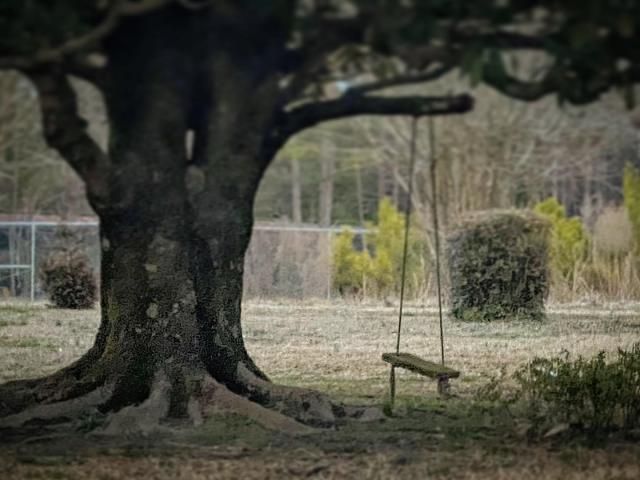
One tree on Kildaire Farm Road still bears marks from a dark history – when former police chief Sam Bagwell, a man with a reputation for racism and brutality, arrested a Black teenager named Lynn Council in 1952, accusing him of robbing a store alongside several other teenagers – a crime they all denied committing.
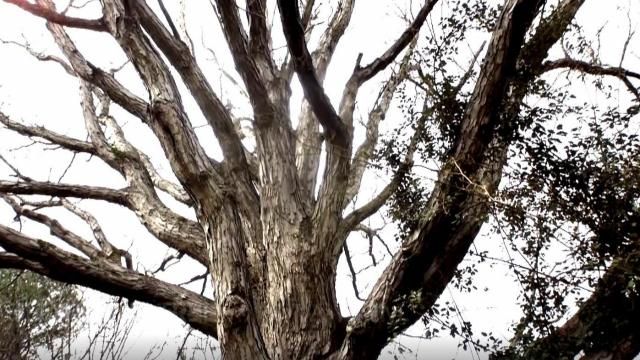
Council said two deputies hanged him from an oak tree, hoping he would confess to the crime. He says they let him down when he didn't talk.
However, in the context of scary and unjust times, Holleman said Friendship was a community where Black families had potential to thrive.
Born in 1955, he remembers, "In my youth, Friendship was one of the communities in Western Wake that was predominately African-American. It was rural, mostly farmers. Families in Friendship had potential for economical success."
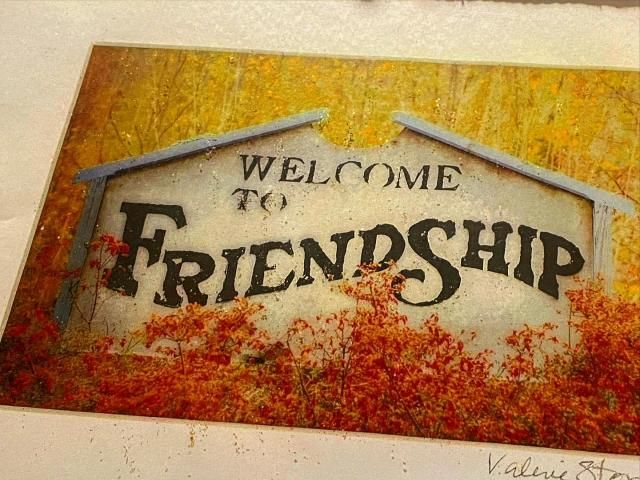
The missing 'Friendship' sign
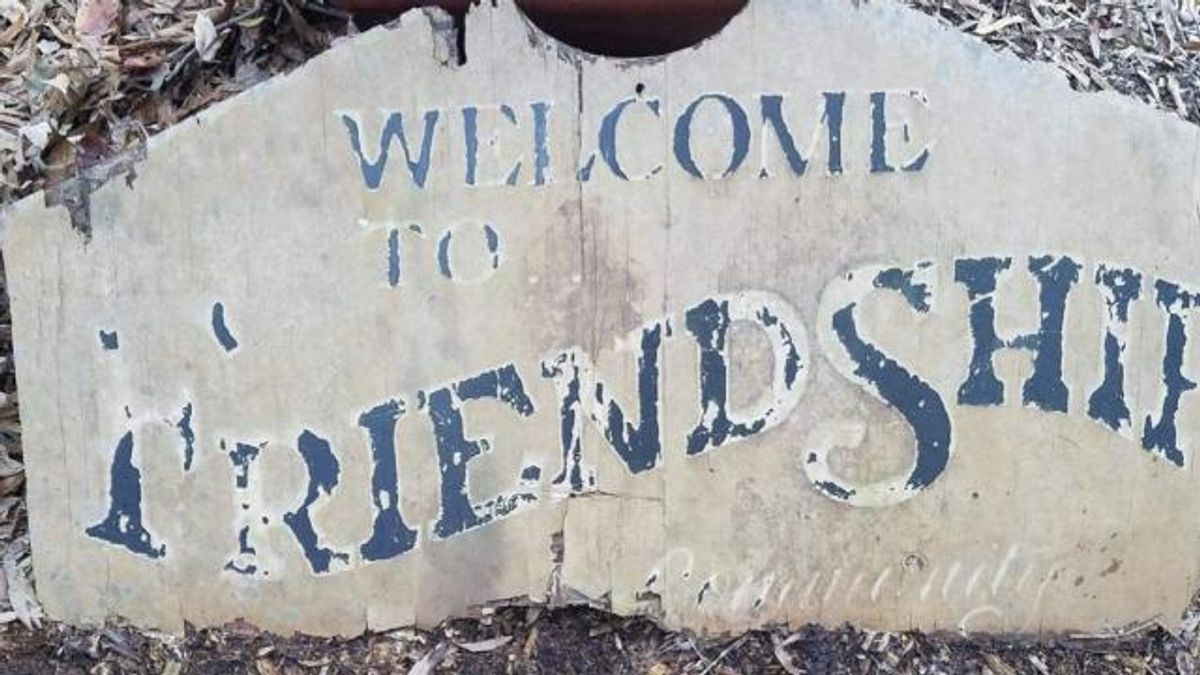
Several photos of a 'Welcome to Friendship' sign indicate there were at least two signs marking the community at one time.
In 2007, photographer Val Stone Creager recalls photographing one of the signs while driving "out in the country" on one of her early dates with her now-husband.
"We saw that sign and fell in love with it because of the colorful wild flowers around it and because of the friendship we were developing," she said.
She went back to snap a photo of the sign and give it to him for his birthday.
That was over a decade ago, and they have not been able to find the sign again.
"Recently we were driving around that area and tried to find the sign. We couldn’t quite remember exactly where we had seen it and we never found it. I don’t know if we were just confused about where it was because everything has changed so much out there or if it’s because it’s no longer there," she said.
Whether the sign has been lost, or whether Friendship has been completely changed by developers -- the missing sign is a sad symbol of the fading history of Friendship.
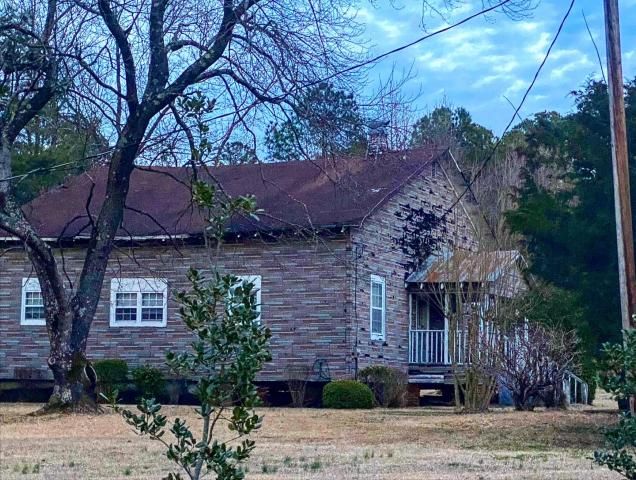
Pieces of Friendship still standing today
There are a few remaining pieces of history standing in Friendship today.
A Rosenwald school founded in 1922 still remains today. Rosenwald schools were built to provide access to education for Black students, especially in the South. Very few remain today.
Of those remaining, many either stand empty, or have been converted for other uses. A Rosenwald school in Raleigh has been converted into a park. The Friendship School, today, would be nearly unrecognizable as a historic school – appearing like a home alongside the road.
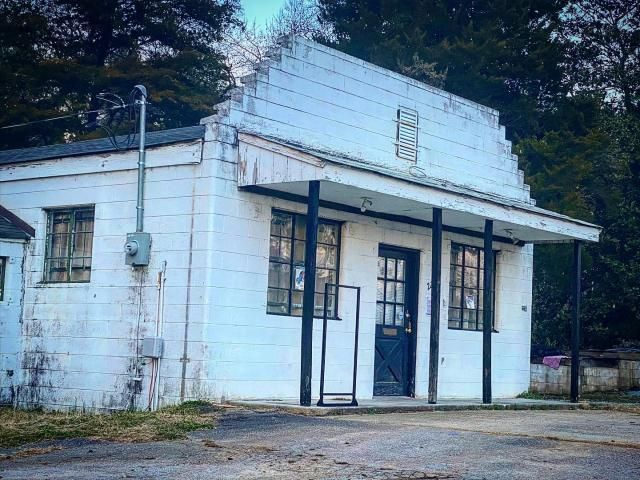
The churches are also a historic remnant from Friendship's past.
Greater Chapel Christian Church sits on the site where Black churches came together for the first time.
"Prior to that, it was against the law for Black people to organize," said Holleman.
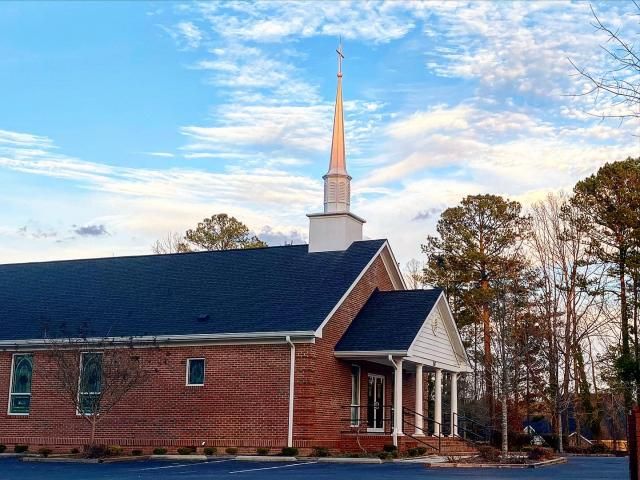
The fact that Friendship was the first site where this kind of organizing happened indicates the historic importance of Friendship.
To this day, the community of Friendship is proud of its heritage, diversity and culture – even gathering together to hold a regular parade in honor of their community.
Despite its significance in Wake County history, the story of Friendship has been mostly unknown to people around Wake County.