The state Department of Transportation will lay off hundreds of temporary workers and contractors in the coming weeks because storms and lawsuits have drained the agency's funding, officials said Wednesday.
Full-time DOT employees and current highway projects won't be affected by the move, said Robert Lewis, DOT's chief operating officer.
Other WRAL Top Stories
State law requires DOT to maintain cash reserves of 7.5 percent of its annual state appropriations, or about $282 million, Lewis said. Right now, the agency has about $300 million on hand, so officials are looking to cut expenses in operations and maintenance areas where not much work is expected in the coming months, he said.
DOT managers are looking at about 1,100 workers, and about half of them will be laid off, he said.
"Our efforts are merely about controlling what we can control form now to December," he said.
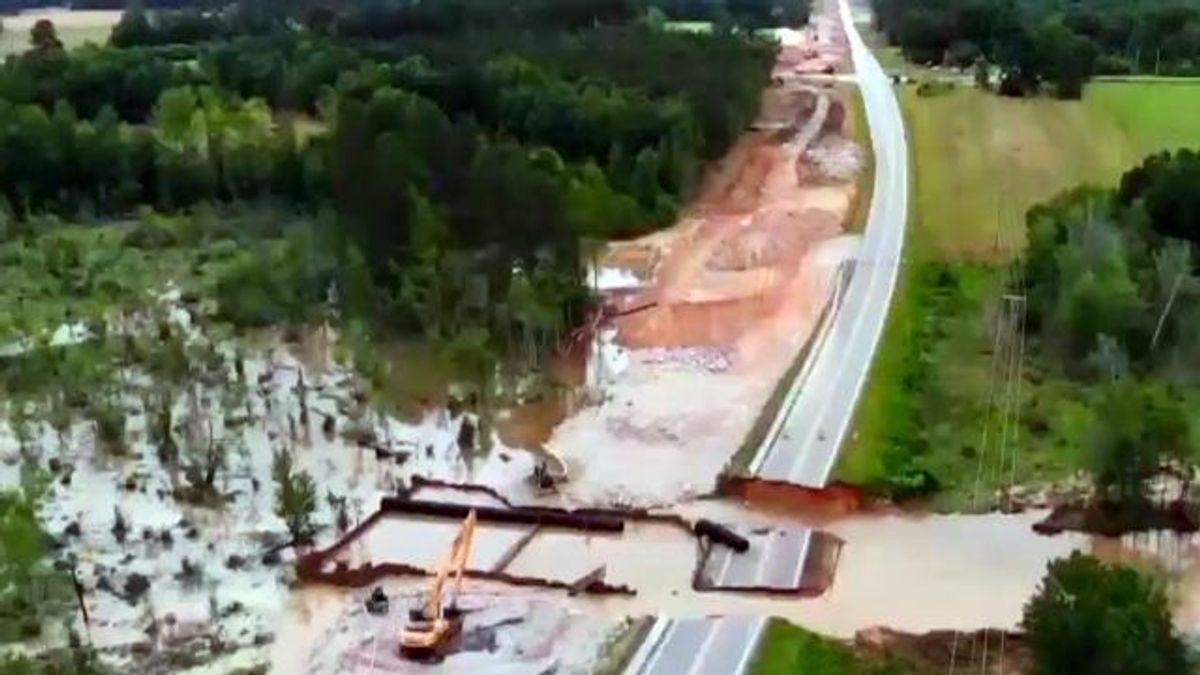
Responses to major storms, such as Hurricane Florence last fall, and even rock slides in the mountains cost DOT about $300 million in the fiscal year that ended June 30, Lewis said. In years past, the annual bill for such work averaged about $65 million, he said.
"There is certainly an increase in frequency of storms, and there is certainly more costs to those storms, whether it is material costs or just being able to respond quickly and doing it fast, there is a cost to that as well," he said.
DOT also has had to pay about $311 million so far to defend lawsuits over the Map Act, he said. The Map Act, which lawmakers repealed this year, prohibited people from developing property in corridors set aside for future highway construction. After residents in Wake County and elsewhere sued, the North Carolina Supreme Court ruled that DOT must pay landowners for essentially taking their property without compensation.
Rep. John Torbett, R-Gaston, the House's chief budget writer for transportation, said lawmakers will work to fix the problem next week.
"We have to figure out how it happened and make sure it can never happen again. That’s the most important thing," Torbett said. "But also, if there’s holes that we can plug, we can find ways to plug through additional revenue or different source of funds to take care of those immediate needs."
The budget impasse between Gov. Roy Cooper and the General Assembly isn't a factor in the layoffs, DOT spokesman Steve Abbott added.
But slow reimbursement from the federal government for highway repair costs following Hurricane Florence and Hurricane Matthew in 2016 is a major factor, he said.
Lewis said the state has received only about 50 percent of its Matthew-related spending so far from federal highway funds, and only 11 percent of Florence-related spending.
DOT should be able to access some of the $1.8 billion in the state's "rainy day" reserve fund, which the agency could later pay back once federal reimbursement money comes in, Torbett said.
Even with the belt-tightening measures, another big hurricane this fall could pose a problem for DOT, he said.
"We are very limited on how we can respond. That is why we are trying to reduce our expenditure now," he said. "We know we have an obligation to the people of North Carolina to keep the roadways safe, so we are trying to do all we can to make sure we can respond at some level."
The DOT will continue to put about $2.5 billion in highway projects out to bid in the coming months, Lewis said. Those projects will be funded by state and federal bonds and federal grant money and won't affect DOT's cash balance, he said.