
The skies over Japan turned a deep purple last week ahead of the arrival of Typhoon Hagibis.
The powerful storm pounded central and northern prefectures over the weekend. Villages along more than 20 rivers were flooded as more than three feet of rain fell over 24 hours in some areas. The East Japan Railway Company reported that 10 of the 30 famed high-speed Shinkansen bullet trains have been damaged by flooding as the Chikuma River overflowed near Nagano in central Japan.
Purple skies like these are seen as a harbinger of violent weather, and there is some science to support it.
Sunlight is white, or more specifically all colors from the longer wavelengths of red light to the shorter wavelengths of blue, to the shortest violet waves, combined together. That light travels in a straight line unless until something gets in the way. Under normal conditions, the sky appears blue to us because those shorter wavelengths of light are scattered by nitrogen, oxygen and other gas molecules as well as other small particles.
Atmospheric conditions around the time of storms like Hagibis amplified the scattering of light in the shortest wavelengths. So why do skies turn purple instead of even bluer? Actually these storms and the extreme amount of moisture they bring to the atmosphere reveal the true color of the sky.
The sky isn’t Carolina blue. It is really more of an East Carolina Pirate purple. Our eyes usually can’t see it though.
Atmospheric conditions around the time of storms like Hagibis (or Hurricanes Dorian in September or Michael in 2018) intensify scattering of violet light sufficiently for our eyes can see it.
Other WRAL Top Stories
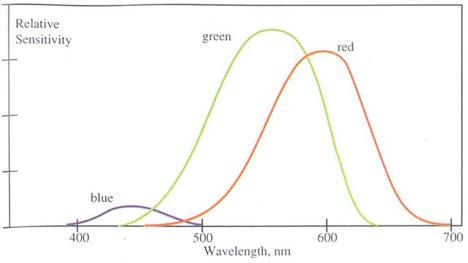
Our eyes are made up a network of about 100 million rods and about 5 million cones Rods are sensitive to low levels of light but provide no color information and cones containing pigments which enable the absorption of long (red), medium (green) and short (blue) wavelengths of light. Our brains combine information together from the the all these rods and cones to create vision.
In a paper in the July 2004 issue of the American Journal of Physics, Georgia Tech physicist Dr. Glenn Smith described how those short wavelength cones have a peak sensitivity around 420 nanometers (blue) and struggle to detect shorter wavelengths near 400 (violet).
The extra moisture in the atmosphere before and after major storms amplifies scattering of this really short wavelengths sufficiently to produce enough violet light for our eyes to detect.
Purple skies are also seen after storms pass. They were seen in Florida after Hurricane Michael in 2018 and again in September as Hurricane Dorian passed.