A few weeks ago I wrote about the impending death of software as a service (SaaS). The thesis is straightforward. Agentic AI enables enterprises to build their own purpose-built tools, and when software can be assembled dynamically around a company’s exact workflows, those tools will inevitably outperform vendor-built platforms designed to serve the masses. Generic software was an economic necessity in the cloud era. Scale demanded standardization.
Since publishing that piece, I have felt a bit validated. Variations of the same argument are surfacing across analyst reports, tech media and investor commentary. The idea that agentic AI compresses software layers is gaining traction.
Other WRAL Top Stories
I assumed the story would end there.
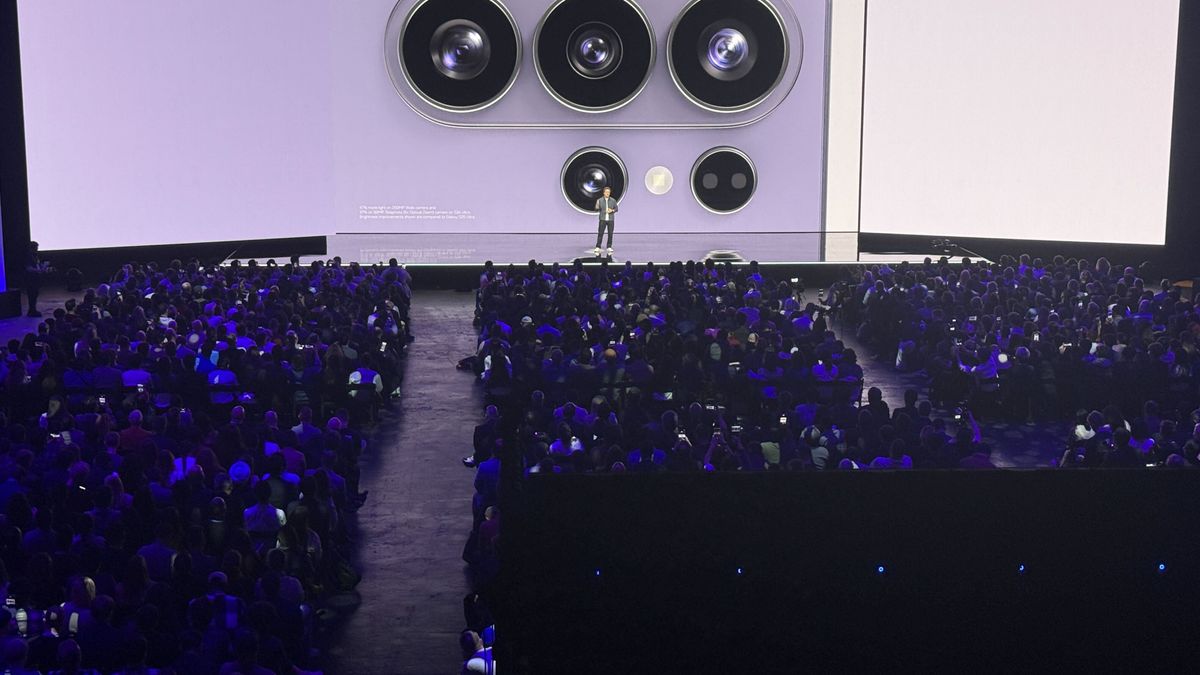
But after watching Samsung unveil the Galaxy S26 this week, I am no longer sure the disruption stops with SaaS. If agentic AI can destabilize enterprise software, it may also be coming for the app economy. Apps might be destined for a similar grave.
Consider an everyday use case, like using your phone to order dinner. You may open one app to browse reviews. Another to check delivery times. A third to apply a coupon. A fourth to track the order. Each interface presents its own logic, its own layout and its own friction. Yet none of those apps actually cook the food. None of them grow the ingredients. They are intermediaries sitting between intent and fulfillment that we have grown accustomed to.
From apps to intent
So what is so special about the Galaxy S26? It isn’t that it is being marketed as an “agentic AI phone.” That phrase could easily be dismissed as marketing hyperbole. The architectural shift underneath it is what’s meaningful. For the first time in a mainstream release, multiple AI agents are integrated at the operating system level, capable of acting across apps and orchestrating multi-step workflows on a user’s behalf.
This phone changes the unit of interaction.
For the past 15 years, the unit of interaction on mobile devices has been the app. If you wanted something done, you opened a vendor’s environment. Transportation meant Uber. Travel meant Expedia. Music meant Spotify. Banking meant your bank’s portal.
Now the interaction begins with intent. You can state what you want and the OS agent determines how to accomplish it. The app still executes the task, but it fades into the background. It becomes infrastructure rather than interface.
That change is not cosmetic, but structural.
Today’s abstraction layer
At present, this agentic layer functions as an abstraction layer. The OS agent still calls Uber. It still routes through DoorDash. It still taps into OpenTable. Vendors remain deeply integrated in the transaction chain. What changes is the human experience. Instead of navigating multiple dashboards, the user interacts with a single conversational layer.
We are already seeing the same pattern in enterprise environments. Agents now sit on top of CRM systems, ERP platforms and HR software, performing actions without requiring a human to click through multiple screens. The dashboards persist, but they are no longer the primary surface of interaction.
Once software becomes plumbing, however, its permanence is no longer guaranteed.
Do we need the middle layer?
Here is where the speculation becomes uncomfortable. Phone manufacturers control the hardware. They control the sensors that define digital experience: GPS for location, cameras for visual input, microphones for voice, biometric systems for identity and increasingly powerful edge processors capable of running advanced AI models locally. They also manage authentication frameworks and payment credentials.
Apps are software constructs designed to access those hardware capabilities and connect them to external systems. They are wrappers that translate user actions into API calls.
If that is the case, why does the chain of interaction need to flow like: operating system → app → vendor API → merchant system?
Why not move directly from an OS-level agent to the merchant?
Imagine a near-future scenario. You say, “Order my usual sushi.” Your phone’s AI agent places a call to the restaurant. The voice is natural and fluid. It confirms your identity, negotiates pickup time, processes payment securely through credentials stored at the OS level and sends you a confirmation. There is no need for a delivery marketplace or third-party interface or app icon.
Restaurants are already deploying AI phone systems to handle reservations and orders. Voice models improve every quarter. Edge compute on mobile devices grows more capable each product cycle. Payment and identity systems are deeply embedded at the operating system level. Each building block already exists in some form.
The S26 does not eliminate apps. But it demonstrates the first credible step toward reducing their necessity.
The robot-to-robot economy
Let’s extend the thought experiment further. It is easy to envision a restaurant that answers with its own AI system. Your agent speaks to their agent. They authenticate one another, confirm inventory, adjust timing, finalize payment and log the order into the restaurant’s internal system.
There is no human intermediary, marketplace fee or manual navigation.
If agentic AI can assemble custom enterprise tools and diminish the need for generalized SaaS, it can just as easily collapse consumer software layers that exist primarily to mediate transactions.
When agents broker intent, the middle layer becomes optional.
A pattern we have seen before
Technological history offers a familiar rhythm. Physical storefronts yielded to websites. Websites yielded to apps. Each transition reduced friction and centralized orchestration. Each compressed layers of interaction.
We are now watching a new compression. SaaS was built for a world where humans clicked dashboards. The app economy was built for a world where humans tapped icons. Agentic systems are emerging for a world where humans simply state outcomes. When the interface dissolves into intent, the layers between desire and fulfillment narrow dramatically.
The Galaxy S26 does not mark the death of the app economy. But it signals that the app may no longer be the inevitable endpoint of mobile interaction. As edge processing improves and AI agents gain autonomy, the rationale for maintaining countless purpose-built interfaces weakens.
The hurdle we haven’t discussed yet
There is, however, a second story here. And it may be the more important one.
The app economy has generated hundreds of billions of dollars. Apple and Google do not merely host apps; they extract value from them. The long-contested 30 percent transaction fee has been the subject of litigation for years, including high-profile challenges from companies like Epic Games right here in the Triangle. Entire legal battles have been fought over who controls distribution and who collects the toll.
If agentic operating systems reduce reliance on traditional apps, what happens to that revenue model? Why would Apple or Google willingly cannibalize one of the most profitable structures in modern digital history? Would they simply reposition themselves to collect commissions at the agent layer instead? Would new economic agreements need to emerge before such a shift becomes mainstream? Probably so. But there may be a different forcing-function.
I think the more provocative scenario to consider is this. Samsung builds the hardware. Samsung controls the sensors. Google builds Android, but Google does not manufacture most of the phones that generate Android’s data exhaust. If real-time sensor data is the true infrastructure of the Data Economy, why wouldn’t hardware manufacturers eventually assert more control over the value stack? Could agentic AI give them leverage to reshape their dependence on pure software platforms? If software loses privileged access to hardware-generated real-time data, the balance of power shifts.
For now, the signal is clear. The S26 release represents more than a new phone. It represents a directional shift toward intent-driven computing. The technical capability is forming. The business efficiency logic is compelling. The friction between desire and fulfillment continues to compress.
Whether the economic gatekeepers allow the final layers to collapse is a story for next week.