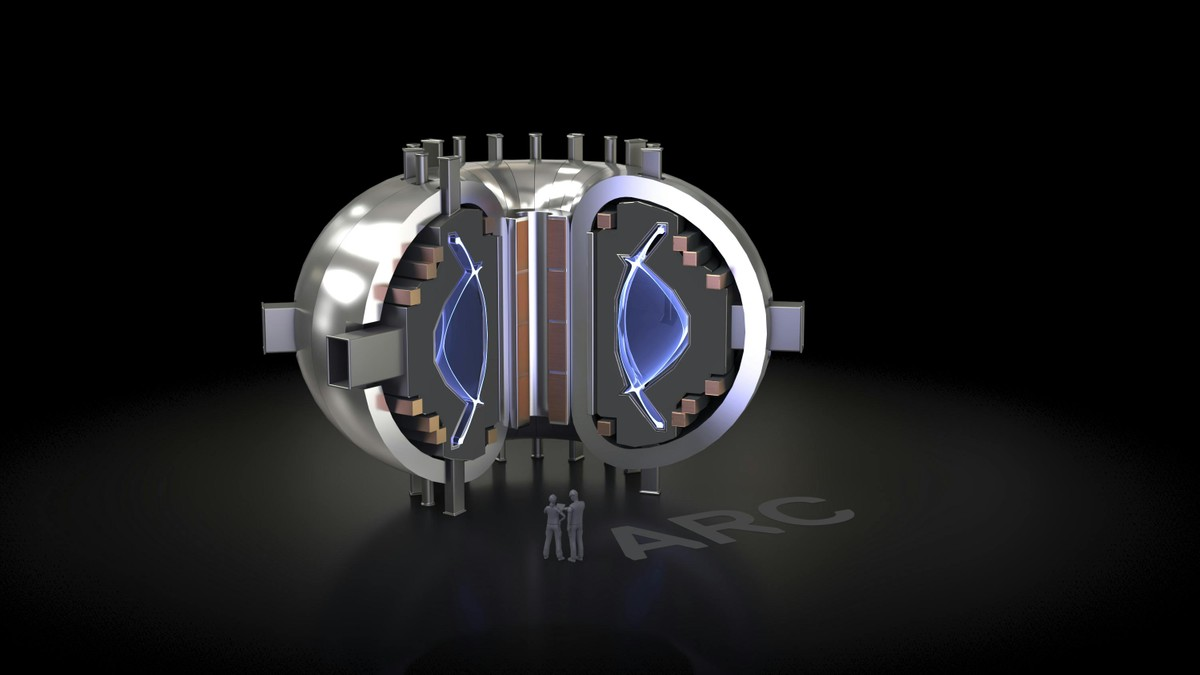
Whereas some believe commercially-available nuclear fusion energy is still decades away, Commonwealth Fusion Systems (CFS) hopes to be the first company in the world to achieve this by the early 2030s.
In December, the company announced its plans to build a nuclear fusion power plant in Chesterfield County, Virginia, with the goal of generating 400 megawatts of energy, which could power roughly 150,000 homes or some form of industrial complex.
Other WRAL Top Stories
Rick Needham, the chief commercial officer of CFS, is a Harvard graduate with a background in energy, including training on nuclear plant design and operation. He is also a former energy and sustainability director at Google.
In an interview with WRAL News, he spoke with excitement as he explained the goal of one day seeing thousands of CFS plants built that could fulfill the energy needs of the masses.
With companies such as Zap Energy and Helion pursuing their own nuclear fusion endeavors, Needham addressed any skeptics who believe CFS wouldn't achieve its goal let alone be first in the world to do it.
"Fusion has been happening the last five, six decades, and the performance of fusion has actually been faster than Moore's law," Needham said. "The problem is the performance criteria is very hard, but we've scaled many orders of magnitude towards this magical moment where can you get more power out than in. And tokamaks, these magnetic donuts, we're really right at the cusp of doing that."
But he noted another issue: building one of these donuts to be big enough to ensure the energy put out is greater than the energy put in required a particularly strong magnet, which the company managed to achieve several years ago.
Before the project in Virginia is underway, CFS worked on a test facility outside Boston called SPARC. Engineers there are tasked with trying to "get more heat out than in" in the fusion reaction, according to Needham.
As for why Virginia was selected for the site of the nuclear fusion plant, which will be called ARC, Needham says it has the workforce, infrastructure and support from leaders there. Throw in a partnership with Dominion Energy Virginia, and CFS has the building blocks needed to purse its nuclear fusion goal.
Needham also notes Virginia has a particular need for energy, and that could likely grow in the future.
One concern Needham addressed is the drastic changes the world could experience once nuclear fusion power is made commercially available. Ramifications could include less dependency on other energy sources, including oil from other countries.
That could affect the livelihoods of the people who work in that and other areas of the energy sector, but Needham says the way to think about this is about the independence it would bring.
"Think about all the countries in the world today that don't or have aren't blessed with natural resources," said Needham. "Whether it be coal or gas or what have, you have to import all that. If they build a fusion power plant, they need fuel for that. Where does that fuel come from? It's filtered sea water that's basically available everywhere. It's limitless, basically, in terms of the amount of power that could provide through fusion power plants."
Which, Needham says, means a country could own its own energy; clean energy that could be a gamechanger in the fight against climate change as greenhouse gases are released into the air from combustion engine cars, various factories and the recent explosion of the use of AI.
As energy needs are going up, Needham said nuclear fusion can address those needs.
As the International Atomic Energy Agency (IAEA) points out, "nuclear fission power plants have the disadvantage of generating unstable nuclear; some of these are radioactive for millions of years."
IAEA also points out the "[nuclear] fusion on the other hand does not create any long-lived radioactive nuclear waste."
It's also worth noting there's no chain reactions with nuclear fusion, meaning no chance for a meltdown at an energy plant.
"It's not like the next power source," said Needham. "It is the final one. If you master fusion, that's it. I mean, there's nothing. The only thing that will be the future fusion power plant is a better fusion power plant."
President-elect Donald Trump has talked about creating American "energy dominance" and will establishing a national energy council. With Trump's previous interest in drilling for more American oil, it's unclear if nuclear energy will be a focus of the council.