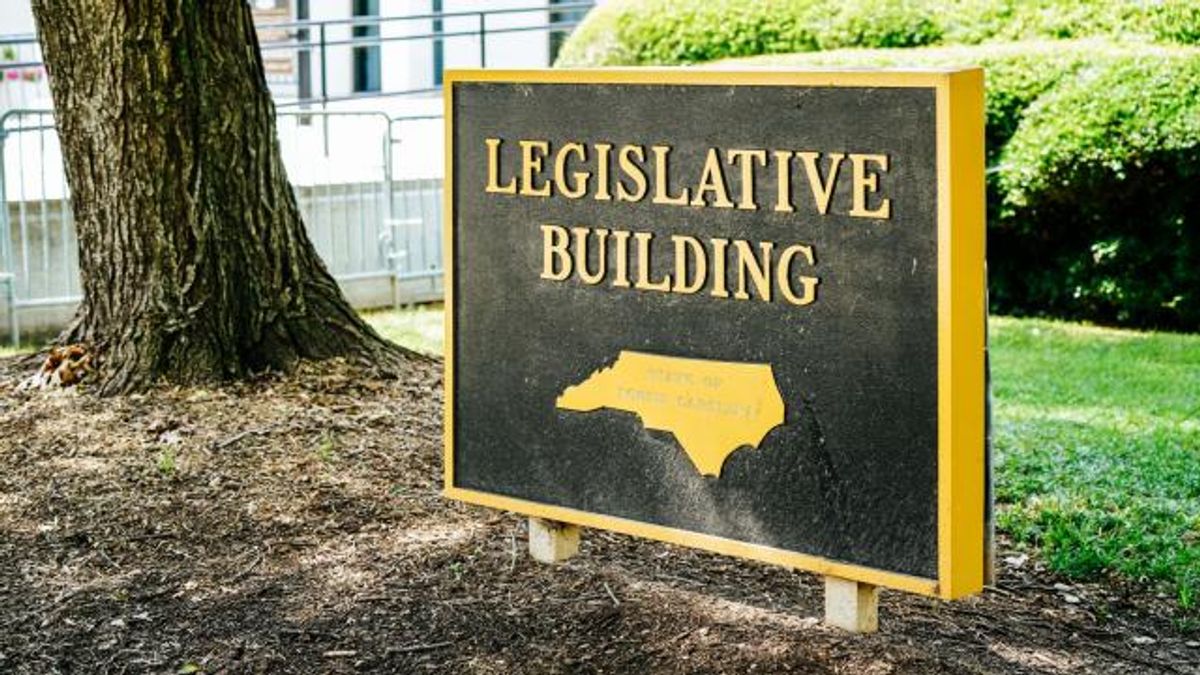
A bill to reduce the number of state government jobs that require a four-year college degree breezed through committee Tuesday, signaling bipartisan support as the state struggles to fill key positions.
Senate Bill 239 runs along the lines of an executive order Democratic Gov. Roy Cooper issued Monday, which is also meant to encourage more applicants. Vacancy rates in many state agencies are at 10 year highs.
Other WRAL Top Stories
The bill would require the State Human Resources Commission to do four things:
- Regularly assess requirements for every position in state government.
- Decide when "practical experience and training, such as military service, an apprenticeship or a trade school education" is a better qualification for a job than a four-year college degree.
- Identify positions where a range of job requirements can be reduced.
- Remove language "to the extent practicable" from job descriptions requiring unnecessary four-year degrees.
The measure cleared the state Senate's State and Local Government Committee Tuesday with little discussion, but the State Employees Association of North Carolina is worried changes like this might make lawmakers less likely to approve larger raises.
"Changing standards won’t get us out of this mess," SEANC Executive Director Ardis Watkins said in an email. "Paying and respecting employees with a real investment in salaries and bonuses is the only option that will work."
Watkins said the state, which has repeatedly run multi-billion-dollar surpluses in its budget, has had enough money for several years now to "make significant strides in state employee pay and simply hasn’t gotten it done."
Top legislative leaders have indicated plans this year to address vacancy rates with salary increases, but how much they spend on that remains to be seen. The House's version of the state budget is due out in early April, with the Senate planning to release its version in mid-May.
Sen. Kevin Corbin, the bill's lead sponsor, said nothing in it precludes significant raises.
"This bill has nothing to do with raises but everything to do with getting qualified people to state jobs," said Corbin, R-Cherokee.
Last year lawmakers provided agencies with some money to raise pay and provide managers with more flexibility to offer signing and retention bonuses, including a 1% boost earmarked for recruitment and retention efforts, an effort that cost a total of $67 million.
Thousands of jobs remain open across North Carolina’s state government, hampering its ability to offer basic services to one of the fastest-growing states in the nation. It comes as workers are harder to find in many sectors, not just government, leading to competition for talent as the state’s unemployment rate hovers near a 10-year-low, WRAL previously reported.
At the start of the fiscal year, at least 20 state departments, offices and boards were grappling with the highest number of vacant positions in five years, according to data from the state Office of Human Resources. Vacancies in at least a dozen of those groups were at 10-year highs, including some that saw vacancies increase by more than 1,000 positions since the middle of 2021.
Cooper in his executive order indicated that degree requirements could be an impediment to filling those positions. “You don’t necessarily need to have a degree to be great at your job and North Carolina is in need of talented people who can get things done,” Cooper said in a statement. “This order makes it clear that we recognize the value of work experience and don’t want the lack of higher education to be a barrier to starting or advancing in a state career.”
He ordered the state Human Resources office and cabinet agencies to review job classifications that don't allow experience to substitute for education. State HR personnel are also expected to work with agencies to eliminate certain management preferences for degrees. About 75% of state jobs don't require a higher education degree.
Republican Lt. Gov. Mark Robinson, who is expected to run for governor in 2024, also recently underscored that a higher-education degree shouldn't be necessary for success. In his response to Cooper's State of the State address last week, he touted funding for apprenticeship programs for the rural parts of our state.
"I am proud of the university system that we have in North Carolina; it is among the best in the country, and it is crucial to the economic growth of our state," Robinson said in his prepared remarks. "... However, we must denounce the misconception that the only way to success is through a four-year degree."