Authorities have had to rescue at least 20 people from dangerous rip currents at Wrightsville and Carolina Beach, according to lifeguard reports and the National Weather Service.
Lifeguards reported 10 rip current-related rescues at Wrightsville Beach and another 10 at Carolina Beach, WRAL meteorologist Kat Campbell said. According to the NWS, despite the high number of rescues, Wrightsville and Carolina Beach were only at a moderate, or yellow, risk for rip currents Monday.
Other WRAL Top Stories
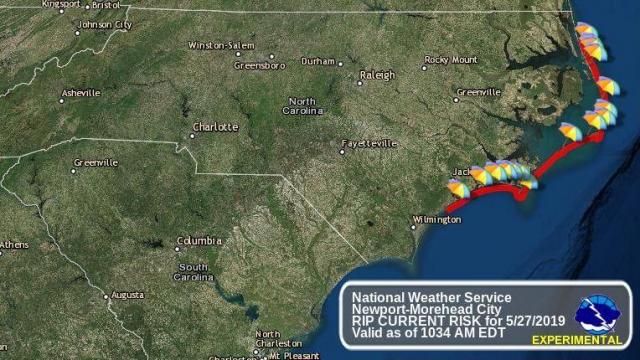
Along Morehead City beaches and most of North Carolina's coast, the rip current risk on Monday was high, according to Campbell. However, no information about rescues in that area had been released Monday afternoon.
Summer is just under a month away, but rip current-related deaths are already rising in North Carolina.
A man drowned Sunday after he was apparently caught in a strong rip current off of Memorial Park beach in Carteret County, authorities said. It was the second reported death this weekend attributed to rough seas.
A Virginia man with a home in Dare County along the the Outer Banks was killed Saturday after he apparently became caught in a rip current.
At least eight drowning deaths have been reported along the central North Carolina coast in the past month, with rip currents blamed for at least six of the deaths.
- Wake Forest High School seniors Ian Lewis, 18, and Paige Merical, 17, were caught in a rip current on April 19 while on spring break in Emerald Isle. Lewis' body washed ashore three days later, while Merical died at Vidant Medical Center in Greenville six days after the accident.
- Justin Andrew Hinds, 28, a Marine stationed at Camp Lejeune, was pulled from the water off Emerald Isle on May 4.
- Austin Potter, 24, of Kenly, and a 5-year-old boy he was playing with in the surf were pulled out by a rip current off Atlantic Beach on May 14 and died.
Rip current survival tips
- If caught in a rip current, remain calm to conserve energy and think clearly.
- Don’t fight the current. Swim out of the current in a direction following the shoreline. When out of the current, swim towards shore.
- If you are unable to swim out of the rip current, float or calmly tread water. When out of the current, swim towards shore.
- If you are still unable to reach shore, draw attention to yourself. Face the shore, wave your arms and yell for help.