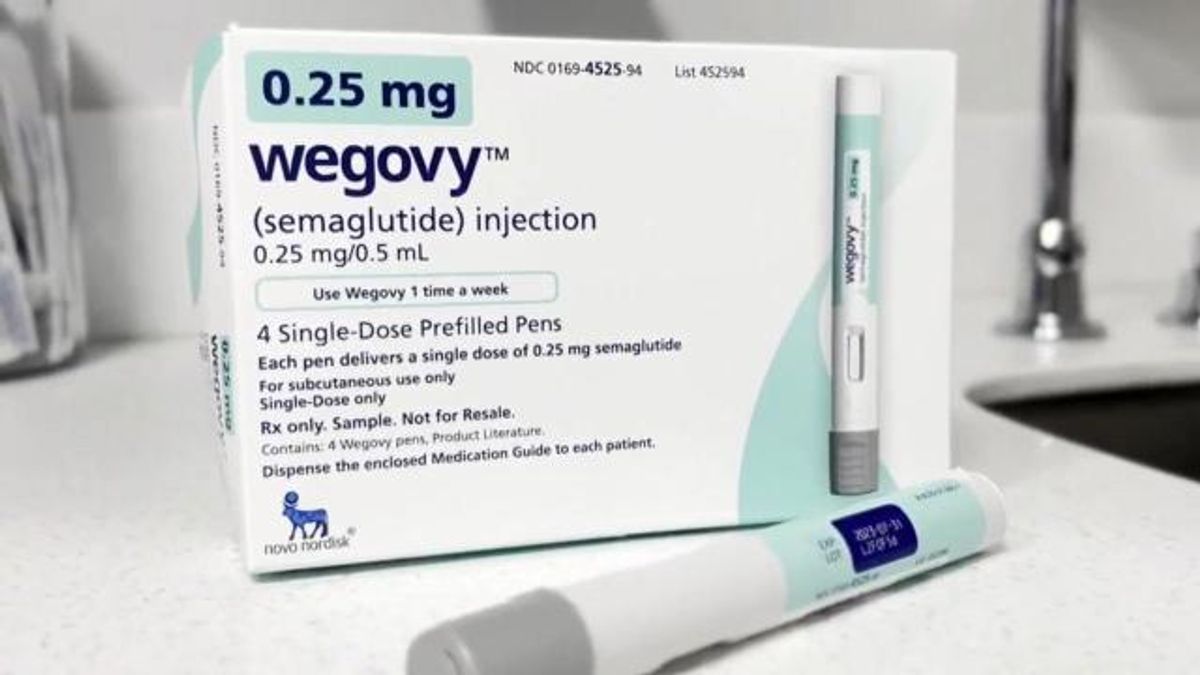
(CNN) — Americans can now purchase the starter dose of blockbuster weight-loss drug Wegovy as a pill, drug maker Novo Nordisk announced Monday. Other strengths will be available as pills by the end of the week.
The daily pill, available with a prescription, generally costs less than the weekly injection for self-pay patients willing to buy directly from Novo Nordisk and forgo insurance. The GLP-1 drug’s original steep price tag made it unaffordable for many people seeking to lose weight, since many commercial insurance plans do not cover it for obesity.
Other WRAL Top Stories
The 1.5 mg starter dose of the pill costs $149 a month for patients who pay cash, as part of a recent deal Novo Nordisk made with the Trump administration. The 4 mg dose costs the same amount until April 15, after which the price will increase to $199. However, the 9 mg and 25 mg doses cost $299 a month, according to the manufacturer.
The injectable version carries a $349 monthly price tag for self-pay consumers, though new patients can receive two months of the lowest two doses for $199 each until March, according to Novo Nordisk.
Patients whose insurance plans cover the drug for obesity could pay as little as $25 a month for the pill or injection under a savings program offered by Novo Nordisk. The pill is available in pharmacies, certain telehealth providers, NovoCare Pharmacy and other locations.
Dr. Sarah Ro, medical director of the UNC Health Medical Group Weight Management Program, said more competition in the weight-loss drug market is a good thing when it comes to driving down costs. However, she said many employer-based insurances still don’t cover GLP-1 medications.
“I think with many different options on the horizon, the cost will continue to come down, which is great,” Ro said. “So many of my patients are still unable to pay $300 out of pocket, so access to our most socially vulnerable patients is going to continue to be an issue in 2026.”
Wegovy is also approved to reduce the risk of heart attack, stroke or death in adults with overweight or obesity and established heart disease.
The US Food and Drug Administration approved the daily pill version in late December. The oral Wegovy drug showed roughly similar weight loss and side effects in clinical trials as the shot, according to Novo Nordisk.
The pill uses the same active ingredient – semaglutide – that powers the original Wegovy, along with its sister drug for diabetes, Ozempic. However, the daily pill comes with food restrictions, unlike the injectable.
“The shot you could take any time, usually on the same day once a week, and doesn’t have any food restrictions,” Ro explained. “The once-daily pill, you take it in the morning on an empty stomach with less than four ounces of water. It has to be swallowed whole, and cannot be crushed or split.”
Ro advised people using the daily pill for weight loss also need to wait thirty minutes before eating and warns it is usually not advised to take the pill alongside other medications.
“The oral Wegovy is still a peptide. They added this chemical that enhances absorption and neutralizes the stomach acids, so that’s why [there are] some food restrictions,” the physician said.
Rival Eli Lilly, which manufactures the diabetes drug Mounjaro and obesity drug Zepbound, is also developing an oral GLP-1 medication, which is called orforglipron until it receives a brand name. It is expected to be approved by the FDA by summer and will also be available for the $149 starting price under the Trump agreement. Additional doses of orforglipron will cost up to $399 if patients are paying cash.
Ro told WRAL if the Eli Lilly pill is priced right, it will be “the GLP-1 for the masses.”
“A lot of obesity physicians are looking forward to the orforglipron, which is not a peptide. It is a small molecule which you can take any time,” Ro shared. “It does not have any restrictions. It binds to the same receptors and because it is a small molecule, it is easier to manufacture and cheaper to manufacture.”
GLP-1 medications have become uber popular since hitting the market several years ago. About 1 in 8 US adults say they’re currently taking one of the medicines, according to KFF, a health policy research group.
The Novo Nordisk and Eli Lilly pills haven’t been compared head-to-head in a clinical trial, but in separate studies, the Wegovy pill showed average weight loss of 14% over 64 weeks, compared with 2% for a placebo, while orforglipron showed 11% weight loss over 72 weeks on its highest dose, compared with 2% for the placebo group.
Wegovy injection showed weight loss of 15% in its key trial, versus 2% for placebo, while Zepbound showed 21% on its highest dose, compared with 3% for those on placebo.
Gastrointestinal issues such as nausea and vomiting are the most commonly experienced side effects with GLP-1 drugs, which was seen in studies of the pills as well. Overall, 7% of participants in the Wegovy pill trial stopped treatment because of side effects, versus 6% on placebo. In orforglipron’s study, up to 10% of patients stopped treatment, compared with 3% on placebo.
Ro advised some weight gain is also expected after stopping both the weight-loss pill or injections.
Taking weight-loss medications is not a “quick fix” and requires a long-term approach in consultation with a licensed physician, Ro warned. She also noted the medications need to be taken in conjunction with lifestyle changes.
“Obesity is a very stubborn disease,” the physician said. “We need support in dietary aspects and behavioral aspects. Combining those two, I think, is the key. Going to a telehealth company and just getting a prescription – I don’t think that’s the best option because obesity is a chronic, stubborn, relapsing disease that needs comprehensive care.”
The-CNN-Wire™ & © 2026 Cable News Network, Inc., a Warner Bros. Discovery Company. All rights reserved.