State elections officials are clearing the way for counties to eliminate Sunday voting — a decision that came on Wednesday after a contentious debate during a meeting of the newly Republican-led North Carolina State Board of Elections.
Officials punted on another political debate, however, deciding not to take up a request from President Donald Trump’s administration to turn over voter data to federal immigration officials, at least at this time. In other action, they also came up with a plan for early voting sites in Fayetteville.
Other WRAL Top Stories
The decision to allow counties to eliminate Sunday voting only immediately applied to the 2025 municipal election voting plans. But it could foreshadow more widespread eliminations in the 2026 midterms.
It was met with strong criticism from Democrats on the elections board on Wednesday. They cited a 2016 court ruling from the last time North Carolina Republicans attempted to eliminate Sunday voting — part of a broader law passed by the state legislature in 2013 but later struck down as unconstitutional for discriminating against Black voters “with almost surgical precision.”
“We’re going down a dark path when we’re taking away Sunday voting,” said Jeff Carmon, a Democratic member of the elections board.
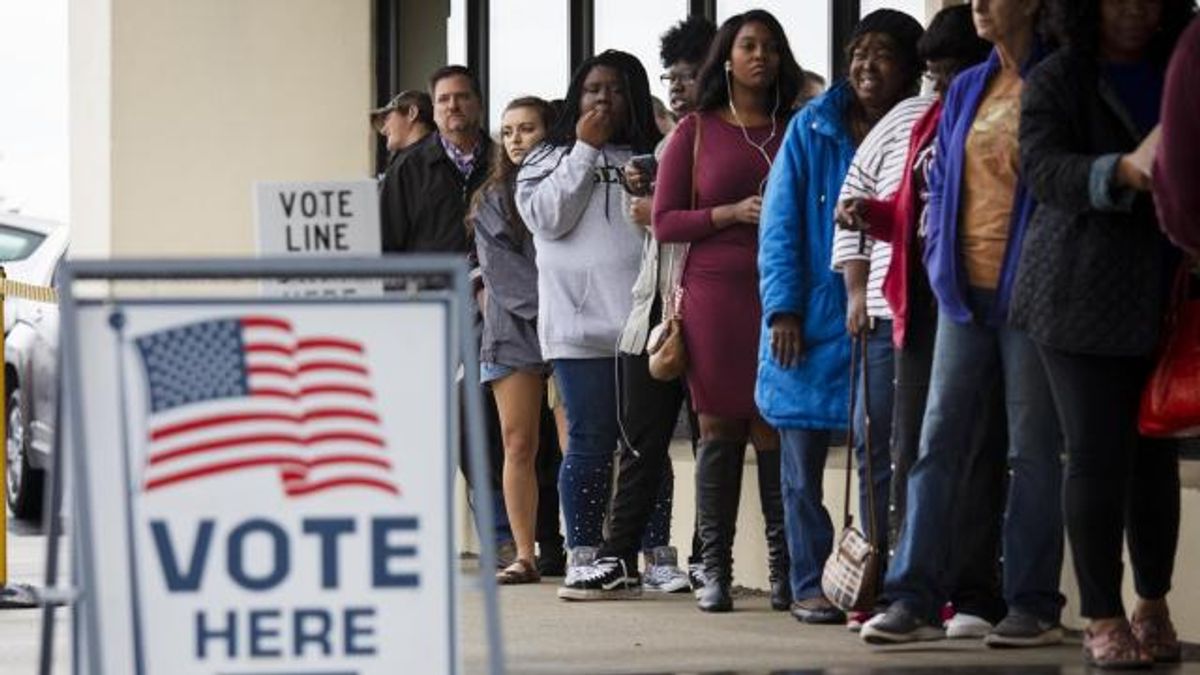
Most North Carolinians vote during early voting rather than on Election Day itself, and a particularly popular day of early voting for Black voters specifically has been Sunday. Black churches often lead “Souls to the Polls” efforts to encourage voting after church.
But Black voters lean heavily Democratic, and Republicans recently took control of the State Board of Elections as well as all 100 county election boards, due to a new law that stripped power from Democratic Gov. Josh Stein.
One of the first acts some of those new GOP county election officials undertook, ahead of the 2025 municipal election, was to vote to eliminate Sunday early voting options. But if the local Democratic board members objected, then the plan had to go to the state board to decide.
That’s what happened on Wednesday, leading the state board to call for an unexpected closed session to talk with their lawyers in private about legal ramifications.
After Republicans tried eliminating Sunday voting statewide in 2013, as part of the wider-ranging changes to election laws, the NAACP sued. During the lawsuit, GOP lawmakers admitted that they targeted voting methods used by Black voters, saying it was due to Black voters’ support of Democratic politicians. The judges struck down the law as unconstitutional and wrote that the legislature’s actions were “as close to a smoking gun as we are likely to see in modern times” of racial animus influencing state policy-making.
But Sunday voting elimination wasn’t the only way that state lawmakers in 2013 had targeted Black voters. And so on Wednesday, the elections board took a break to meet in private with their attorneys to discuss whether Sunday voting elimination by itself could also be seen as unconstitutional racial discrimination, based on that prior court ruling.
What they talked about with their lawyers remains confidential. But after coming back in public, Republican board member Stacy Eggers IV said that “each side has merits” and so he supports leaving it up to individual counties to decide whether to allow Sunday voting.
The rest of the board’s Republican majority went along, and two county-level plans with Sunday voting implications were quickly approved in party-line votes.
Arguments for, against Sunday voting
One of the county-level Republican election officials who spoke at Wednesday’s hearing was Dick Johnson from Davidson County. He said he had heard complaints about Sunday voting in Davidson County being too expensive and not particularly popular, so he supported ending it.
“Most people can get there sometime between Monday and Saturday,” he said.
But one of his Democratic colleagues on the county board, Belinda Clark, said the decision by the newly Republican-controlled board appeared politically motivated, coming ahead of what’s likely to be a contentious race in the City of Thomasville. And contrary to her counterpart’s claims, she said, Sunday voting is popular with locals: Davidson County averaged more than 160 voters an hour during Sunday voting in the last municipal elections, according to Clark.
“There are many individuals that work long hours, and they work weekends,” she said. “Sunday represents one of the few opportunities to cast their ballots without fear of losing wages or being forced to choose between their livelihood and their voice in democracy.”
After the board’s lengthy private debate, Eggers made a motion to let Davidson County eliminate Sunday voting. It passed 3-2, with the board’s Republicans in favor and the Democrats opposed. A similar plan involving Sunday voting disputes in Union County plan then passed in an identical vote.
“I do not want us to regress back to a previous time,” Democratic member Siobhan Millen said, adding to Carmon’s critiques.
Other than Eggers, who said ending Sunday voting might be good to help election workers get some rest, none of the board’s other Republican members explained their support for the change.
Trump immigration request
Elections officials had less appetite for a different political fight on Wednesday, choosing not to take up a request from President Donald Trump’s administration to participate in data-sharing with federal immigration officials.
Trump has for years pushed false conspiracy theories of widespread immigrant voter fraud, including in North Carolina, despite numerous audits and investigations that have found no proof for the claims.
North Carolina election officials did participate in a similar federal probe into immigrant voting suspicions in 2017, during Trump’s first term in office. It ended with dozens of legal voters being falsely accused of committing voter fraud, WRAL reported, and didn’t uncover any evidence of large numbers of immigrants illegally voting.
The state elections board offered little in the way of explanation Wednesday for why it wasn’t taking up Trump’s invitation to take part in a similar probe this year. After spending nearly two hours in a closed session to speak privately with their attorneys, the board’s chairman, Francis De Luca, said they need more information before agreeing to anything.
“We are going to put that off for another day,” De Luca said. “We're not dealing with that issue. We discussed some of the technical details in closed session and decided that we weren't ready to deal with that issue.”
Cumberland County early voting
The board also approved an early voting plan for Cumberland County, after the local board there had been at odds over whether to have only one early voting site in a heavily Democratic part of Fayetteville, as the city council had requested, or whether to also add another site in a more conservative part of town.
The state board ordered both those sites to be opened, plus another in downtown Fayetteville at the county elections office.
Stacy Eggers IV, one of the state board’s Republican members, noted that his home of Boone has three early voting sites. Fayetteville has more than 10 times Boone’s population, he said, and should also be able to handle opening three sites.
That vote was unanimous.