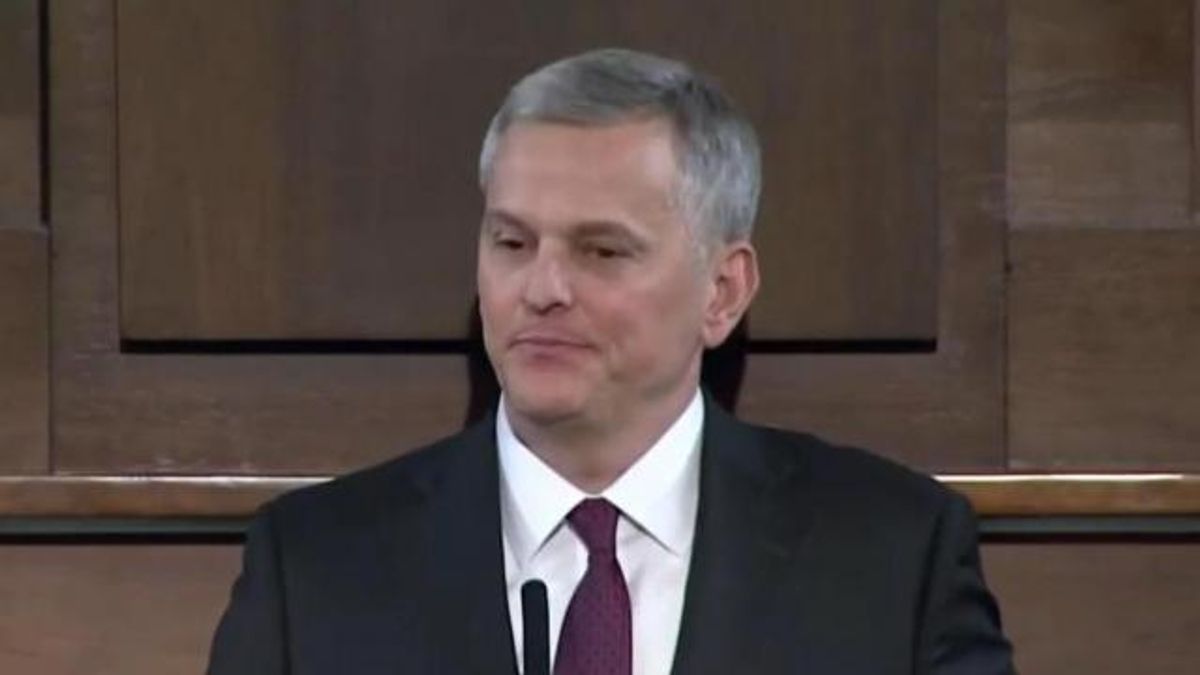
North Carolina Gov. Josh Stein signed a stopgap spending measure into law Wednesday — legislation the Democratic governor this week called a "Band-Aid" budget that keeps some state services running while lawmakers negotiate a full spending plan.
He also signed a bill aimed at cracking down on squatters and vetoed a bill to expand school choice, setting up another override battle with the GOP-led legislature.
Other WRAL Top Stories
Stein said Tuesday that he would approve the spending bill, which lawmakers passed last week to keep some state services fully funded even as they’ve failed to reach a deal on a full state budget. He has urged state lawmakers to pass a comprehensive budget soon.
"We've got teachers and students counting on real raises,” Stein said Tuesday at a monthly meeting of the Council of State, which consists of the state’s top executive office holders. “We've got law enforcement who need real raises so that we can address the vacancies that exist throughout state government and in local government. Inflation is real, and there are no pay raises for state employees in this mini-budget."
House and Senate budget writers haven't made progress on a full budget deal since going home at the end of June. The leaders of the two chambers disagree on tax cuts and other major policy items, but they say they’re still willing to negotiate toward a final budget deal.
Lauren Horsch, a spokesperson for Senate leader Phil Berger, R-Rockingham, said Tuesday that Senate budget writers spent June and July negotiating a full budget plan with the House. “After sending over a proposal that included keeping the 2023 tax package,” she said in a statement, “it became clear they were at an impasse. Senate leadership and budget writers remain ready and willing to negotiate a comprehensive budget.”
Demi Dowdy, a spokesperson for state House Speaker Destin Hall, R-Caldwell, said in a statement Tuesday that the House remains focused on a full budget that gives substantial raises for teachers and state employees and meets other funding goals. “If that takes longer to negotiate,” she said, “it’s worth the wait.”
Republican lawmakers last week reached a deal on the stopgap spending, which they've referred to as a "mini budget." It’s intended to fund the more basic functions of state government that are needed in the new fiscal year that began in July.
The spending plan cuts more than $300 million from the state’s Medicaid coffers, something Stein said he was deeply concerned about. But those concerns were outweighed, he said, by other necessary funding items in the budget — particularly for public education.
“With federal cuts on the horizon, the legislature’s forced $319 million cut to Medicaid will be particularly painful,” Stein wrote Wednesday. “Despite these serious reservations, I am signing this bill into law because it keeps the lights on.”
Public schools, colleges and universities are funded largely based on their enrollment numbers. Without updated numbers from the new mini budget, any growing schools would be forced to kick off the new school year with last year’s smaller, outdated budget — while the state would likewise find itself sending too much money to shrinking schools.
The mini budget also fully funds the state pension plan and pumps an additional $100 million into the State Health Plan. The State Health Plan is facing a $500 million shortfall and plans to raise premiums on members next year — premium hikes that will be lower now that the extra $100 million has been approved.
The legislation also includes a plan to create a new state office to scrutinize state government operations with an eye toward cuts. It instructs the state auditor, Republican Dave Boliek, to find state government jobs that could be cut — an undertaking similar to that conducted by the Department of Government Efficiency, or DOGE, in the federal government.
What had been introduced as the so-called DAVE Act — which creates the Division of Accountability, Value, and Efficiency — was rolled into the mini budget. The bill includes $6 million to fund auditor activities included in the DAVE Act, which has been a priority for Berger, the Senate leader. House Republicans agreed to include the DAVE Act in the mini budget as part of broader spending negotiations. It’s part of a broader effort to expand the auditor’s powers since last year, when Boliek became the first Republican to win the auditor’s race since 2004.
Despite Stein’s concerns over the Medicaid cuts in the spending plan, Republican lawmakers have said they continue to examine funding for the programs — adding that they could approve additional funding later in the year as part of a full budget or another spending bill.
“This fear mongering is disingenuous and unproductive,” Dowdy said in a statement on Wednesday. “While DHHS is claiming rapidly climbing costs, there is some disagreement on what the actual number will be in the end. Our members are also concerned we are seeing double digit increases in certain programs without any evident cost control or management.”
State Health and Human Services Secretary Dev Sangvai told WRAL in an interview Wednesday that the shortage of funding could mean cuts to services. He said the Department of Health and Human Services is working through different scenarios to see how the cuts can do the least damage.
School voucher donations rejected
Stein on Wednesday also vetoed a bill that would make North Carolinians eligible for a federal tax credit for donating to certain K-12 educational scholarship programs.
House Bill 87, passed late last month, seeks to allow the state to participate in a new federal program designed to increase funding for private schools, homeschooling and other educational expenses. The new federal program was established under congressional Republicans’ "One Big Beautiful Bill" — legislation implementing the Trump administration's tax and spending policies. The federal bill, passed last month, requires states to opt into the tax credit program and establish some rules for qualifying organizations that people can donate to.
In North Carolina, the State Educational Assistance Authority would establish the rules and keep a list of qualifying organizations. People wanting the full $1,700 dollar-for-dollar tax credit would only be able to get it by donating to one of those groups, called "scholarship granting organizations." The North Carolina House of Representatives approved the program 69-47 mostly on party lines Wednesday, after the state Senate approved it 30-19 on party lines Tuesday.
Supporters of the bill noted its potential to further the GOP-led General Assembly's prioritization of offering private school tuition vouchers at no cost to the state.
North Carolina is set to spend more than $500 million on its general voucher program, called the Opportunity Scholarships program. It opened last year to families of all income levels and current private school families, with voucher awards varying for income level, leading to a major surge in recipients who were already attending private schools.
Opponents say the program would effectively divert federal revenues to nonprofits without placing any accountability requirements on private schools that may ultimately receive the donated funds. They also noted that similar tax credit schemes don't exist for many other charitable organizations, such as disaster relief organizations.
“School choice is good for students and parents, and I have long supported magnet and accountable charter schools because public schools open doors of opportunity for kids in every county of the state,” Stein said in a statement Wednesday. “Congress and the administration should strengthen our public schools, not hollow them out. Cutting public education funding by billions of dollars while providing billions in tax giveaways to wealthy parents already sending their kids to private schools is the wrong choice.”
He said he sees opportunities for the federal scholarship donation tax credit program to benefit North Carolina’s public school kids. “Once the federal government issues sound guidance, I intend to opt North Carolina in so we can invest in the public school students most in need of after school programs, tutoring, and other resources. Therefore, HB 87 is unnecessary.”
In a statement Wednesday evening, Berger said he plans to override Stein's veto in the Senate.
"Either you support school choice, or you don’t," Berger said in the statement. "Gov. Stein could have made North Carolina a leader in school choice and parental freedom by signing the Educational Choice for Children Act, but instead, he's attempting to usurp the General Assembly's authority to set tax policy."
While Senate Republicans have the votes to override Stein's veto, House Republicans will need at least one Democrat to vote with them — and against the governor — in order to pass the bill into law. And when it originally passed the House last month, two Democrats voted for it: Reps. Shelly Willingham, D-Edgecombe, and Carla Cunningham, D-Mecklenburg.
Both Willingham and Cunningham have recently sided with Republicans on a handful of other veto overrides. Last month both cast votes to help Republicans override Stein's vetoes on a bill that Stein said will allow Duke Energy to raise rates on residential customers in North Carolina, and which Duke Energy said will help its financial stability.
Cunningham also sided with Republicans on veto overrides to ramp up immigration enforcement around the state. And Willingham sided with Republicans on a number of veto overrides including bills to allow guns on campus at private schools, and to limit the government's ability to pass environmental rules and other regulations.
Speaker Hall’s office released a statement on Stein’s veto from state Rep. Neal Jackson, a Moore County Republican who introduced the bill.
“Governor Stein's veto is a slap in the face to every North Carolina parent fighting for a better future for their child,” Jackson said in the statement. “I’m disappointed that Governor Stein has chosen to veto this commonsense bill and hold hostage a new pathway for families to access better educational opportunities and keep more of their hard-earned money.”
WRAL Capitol Bureau Chief Laura Leslie and WRAL state government reporters Paul Specht and Will Doran contributed to this report.