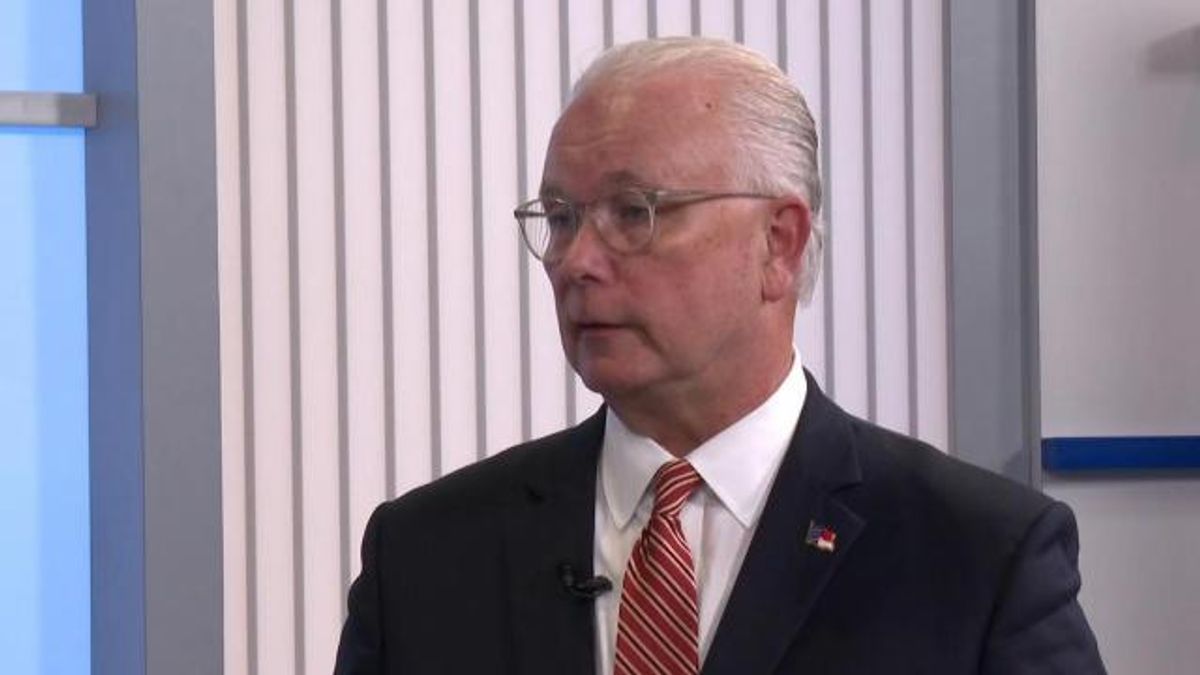
North Carolina’s state auditor now has more power to investigate individuals and private businesses or nonprofits after state lawmakers voted Tuesday to override a veto by Gov. Josh Stein.
State law already empowers the auditor to investigate state and local government agencies, as well as groups that receive state funding. The General Assembly voted to override House Bill 549, which clarifies and expands the auditor’s existing abilities to investigate state agencies and entities that are publicly funded.
Other WRAL Top Stories
Under the new law, the auditor can demand access to databases, datasets and digital records needed “for any purpose within the authority of the auditor, including performing audits of any type, assessing government efficiency, risk assessment, fraud detection, audit planning, and evidence gathering.” And it gives the auditor the power to seek court intervention when someone doesn’t comply.
Stein said he vetoed the bill because he worries it could affect the state’s economy.
“Giving the auditor this intrusive power may undermine our state’s efforts to recruit businesses to North Carolina,” Stein said. “Additionally, the bill would remove the Office of State Auditor from the state’s cybersecurity efforts led by the Department of Information Technology, putting North Carolinians’ personal identifying information at heightened risk of a breach.”
The state Senate voted to override Stein’s veto along party lines. In the House, where Republicans are one seat shy of a veto-proof majority, Democratic state Rep. Shelly Willingham of Edgecombe County cast the deciding vote to let the bill become law. He didn’t explain his position during the House’s debate of the bill, and his office didn’t immediately respond to a request for comment.
Republicans offered brief remarks supporting the bill on the floor of the House and Senate, noting that the legislation had been debated previously. In a statement after the votes, Boliek praised legislators for enacting the bill.
“The independent nature of this office is key to ensuring transparency and accountability in all levels of government,” Boliek said, adding that the bill protects the office’s independence and “enhances our ability to create a more effective, efficient, and accountable government.”
The DAVE Act
Separately, the legislature is poised to enact policy instructing Boliek to find state government jobs that could be cut — an undertaking similar to that conducted by the Department of Government Efficiency, or DOGE, in the federal government.
The so-called DAVE Act, which was introduced earlier this year but hasn’t become law, was rolled into a mini budget bill to fund some basic state functions. The state Senate approved it 47-2 Tuesday and the state House of Representatives is expected to pass it Wednesday. It would then go to Stein’s desk for approval.
The bill also includes $6 million to fund auditor activities included in the DAVE Act, which has been a priority for Senate Leader Phil Berger. House Republicans agreed to include the DAVE Act in the mini budget as part of broader spending negotiations, Berger said after the vote.
“If you're going to have personnel looking at state-level spending, state-level programs, you have to pay to do that,” the Rockingham Republican said. “The more that we can look at ways to save money, the more it will give us the capacity to do some other things.”
In a statement to WRAL, Boliek’s office said he wants the DAVE Act to pass because he is eager to “evaluate government efficiencies across North Carolina.”
Republican legislators have moved multiple times to expand the auditor’s powers since last year, when Boliek became the first Republican to win the auditor’s race since 2004.
Legislators last year gave Boliek’s office control over the state Board of Elections. The governor has been in charge of elections in North Carolina for more than a century, and multiple other GOP-backed efforts to take that power away from former Gov. Roy Cooper were either struck down as unconstitutional in court or shot down at the ballot box by voters. Stein is challenging the latest law in court, as well.
During debate of House Bill 549 on Tuesday, state Sen. Terence Everitt, D-Wake, said Republicans are expanding Boliek’s powers not in the name of government efficiency — but to expand the GOP’s oversight of state government.
“The current auditor is a member of the same party that holds a supermajority of this legislature,” Everitt said. “It isn't about good government. It's about creating a state where one party governs without checks or balances."