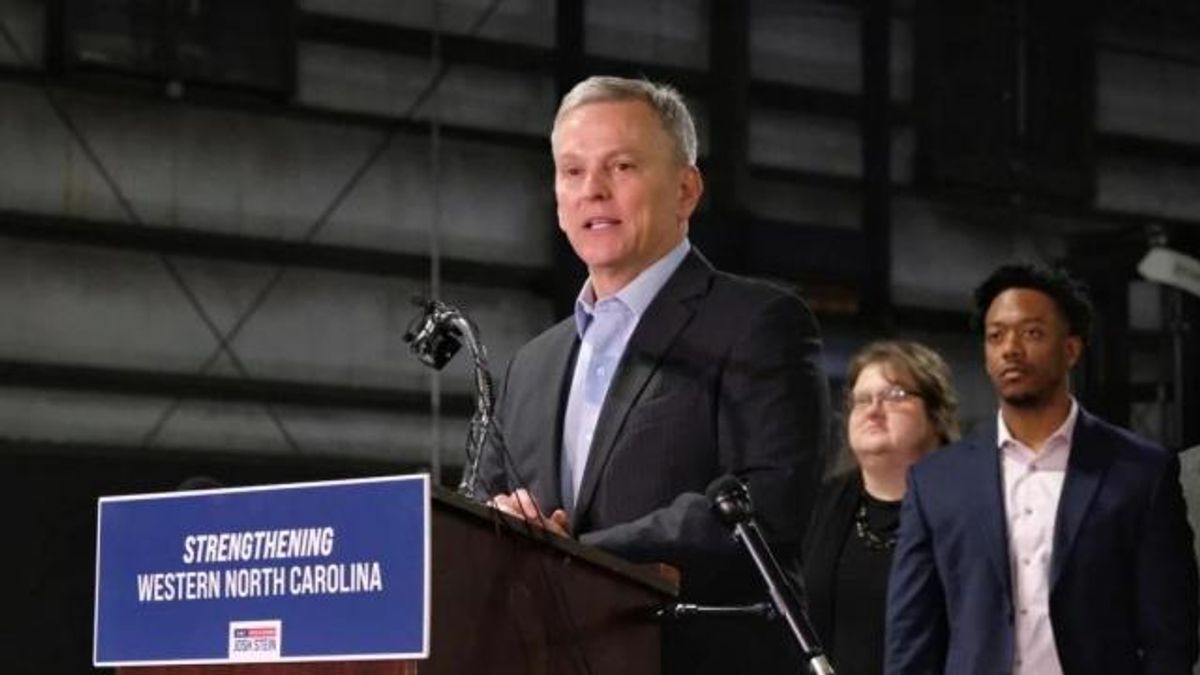
North Carolina still faces uncertainty over Helene relief aid, even as work continues to keep rebuilding key pieces of the region’s infrastructure, Gov. Josh Stein and other officials leading the disaster response said Friday.
“We need money to do work,” Stein said Friday at Western Carolina University during a meeting of the Governor’s Recovery Office for Western North Carolina, or GROW NC. He encouraged those in attendance to remind their state lawmakers of that point.
Other WRAL Top Stories
At the state level, legislators have said they want to spend an extra $500 million on disaster relief in Western North Carolina, on top of about $1 billion they approved last year. However, the 2025 aid bill has been held up for weeks as lawmakers have failed to come to an agreement on the details of what to spend the money on.
The federal government is expected to provide the vast majority of Helene recovery spending. And many questions still linger at the federal level — both short-term and long-term — about how much money North Carolina should expect to receive, how that money can be spent, and what kind of oversight the federal government will want to have over that spending.
Stein said the state legislature needs to hurry up and pass its Helene relief bill so he can sign it into law and get work started — particularly on rebuilding homes — even without an immediate injection of federal funds. He made a similar call to action Wednesday during his State of the State address.
“We need that money now,” Stein said in his speech Wednesday. “Heck, we needed it yesterday.”
Helene was the most destructive storm in North Carolina history, killing more than 100 people and causing an estimated $60 billion in damage from wind, flooding and landslides — all in a mountainous part of the state whose tricky terrain could make rebuilding harder than normal.
Details hold up negotiations
Republicans in the state House and Senate agree on the broad terms of the new Helene bill. It would spend more than $500 million to rebuild homes, farms and privately owned roads.
But they’re stuck on some smaller details, such as whether to include any money for small business grants or downtown revitalization projects. Stein is backing the grants proposal, but GOP leaders aren’t as keen on the idea.
“I don’t want to speak this into existence,” Stein said. “But in most storms, the majority of small businesses have shut their doors within two years. It’s a devastating reality. … Employees don’t get a paycheck, they don’t pay rent. Landlords start suffering. And then you can have a very vicious downward cycle.”
He added that there’s a silver lining: His administration has partnered with private groups to pay for small business grants even without the legislature’s help, although he noted the demand has far outpaced what they’re able to fund.
Stein has named a Republican state senator from western North Carolina, Kevin Corbin, as one of his top Helene advisors. Corbin told Stein Friday he has tried pushing for more state aid to help small businesses. But it’s a politically tricky proposal that faces opposition, he said, because the state didn’t pay for similar grants in the wake of past hurricanes that hit eastern North Carolina.
“What I’ve run into is precedent from other storms,” Corbin said. “They have not done grants in that way.”
The debate over grants is just one issue holding up the legislature’s negotiations over the bill. However, state Senate leader Phil Berger told reporters Thursday he hoped the disagreements could be resolved soon.
“We’ll get that taken care of next week,” Berger said, R-Rockingham.
Federal questions loom
At the federal level, Stein and other officials leading the recovery efforts said Friday, there are multiple issues
Former President Joe Biden, a Democrat, allowed North Carolina to receive a higher-than-normal share of aid for Helene relief efforts. Biden’s order will expire later this month. Stein has asked Republican President Donald Trump to extend that order and make sure North Carolina’s funding doesn’t drop, but state leaders are still awaiting word from the White House on that decision.
Trump has also proposed getting rid of the Federal Emergency Management Agency. No action has happened yet on that, but state and local leaders are anticipating an announcement any day. FEMA is in charge of distributing and overseeing disaster relief money.
Meanwhile Congress could soon finalize a temporary spending plan to avoid a government shutdown. The deal wouldn’t include extra money for North Carolina — or any other state — a spokesman for U.S. Sen. Thom Tillis, R-NC, said at Friday’s GROW NC meeting.
Other members of the committee said the bill also won’t contain enough money to fund FEMA through the end of the year. Harrison Walker, the Tillis spokesman, said that’s accurate, but that it means Congress should have another shot at addressing disaster relief several months from now.
“We do anticipate having to act again this fiscal year,” Walker said.
Corbin also noted the $500 million bill currently under debate in the state legislature similarly won’t be the only disaster relief approved in 2025. There will definitely be some in the new state budget that could pass this summer, he said, and it’s possible there will also be another separate recovery bill.