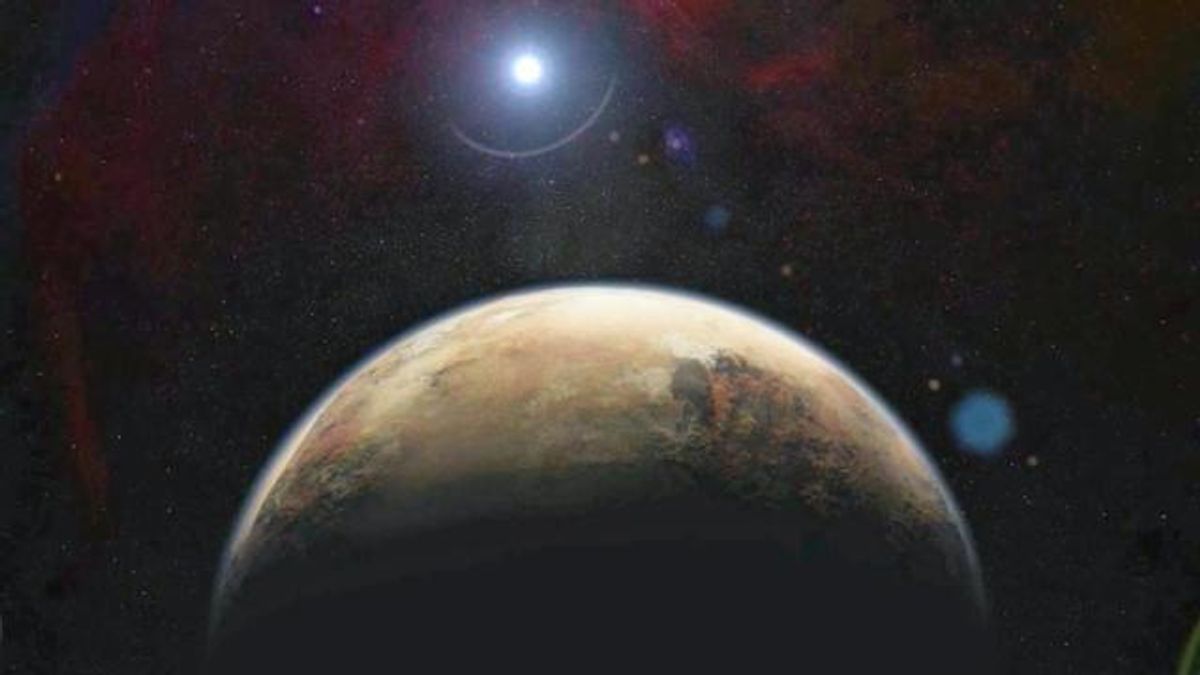
On February 18, 1930, just two weeks after his 24th birthday, Clyde Tombaugh made a groundbreaking discovery while reviewing photographs on glass plates taken with the 13-inch telescope at the Lowell Observatory near Flagstaff, Arizona. One of the faint points of light had shifted a few millimeters between images of the same patch of sky in the constellation Gemini, photographed six days apart.
He had discovered "Planet X." Eleven-year-old Venetia Burney Phair later suggested the name Pluto, inspired by the Roman god of the underworld.
Other WRAL Top Stories
Astronomers had been searching for this theoretical planet for decades, believing it could explain deviations in the orbits of Uranus and Neptune—possibly caused by the gravitational pull of an undiscovered ninth planet.
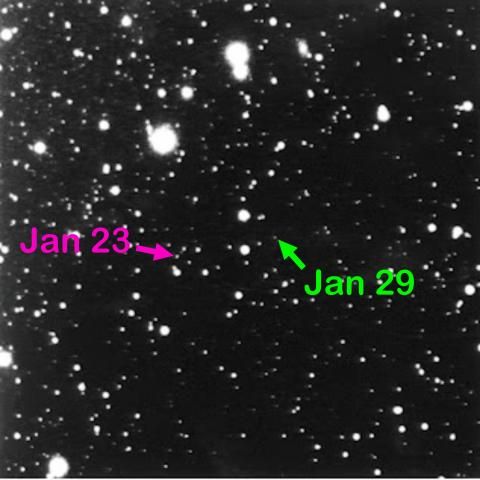
Tombaugh used a blink comparator, a device that alternates between two 14 x 17-inch glass plates, allowing astronomers to detect moving objects against the backdrop of stationary stars. While searching for Pluto, Tombaugh also identified several asteroids, moons, and other celestial bodies before spotting Pluto.
Venetia Burney Phair proposed the name Pluto over breakfast to her grandfather, a retired Oxford University librarian, who then shared the idea with a professor of astronomy collegue. Naming celestial bodies ran in the family—Venetia’s great-uncle, Henry Madan, had previously named the moons of Mars: Phobos and Deimos.
Pluto the planet came first. Pluto the pup made is debut in the Disney cartoon "The Chain Gang" in 1930, but was unnamed. Mickey's canine pal woudn't be callled Pluto until the following year.
Pluto fever continued with the discovery of plutoniun in 1940, following the the other radioactive elements uranium and neptunium.
Planetary demotion
As technology improved, especially in the 1990s, more Pluto-sized objects were discovered in the Kuiper Belt, a distant zone of icy bodies beyond Neptune. Should they be considered planets?
As scientists debated what defined a planet, they were actually deciding whether another four planets would join the solar system, (Ceres, Haumea, Makemake, and Eris). Astronomer Mike Brown, discoverer of most of those dwarf planets, argues more than 700 other objects could be considered planets depending on how the word is defined.
Ultimately the International Astronomical Union, the professional orgnanization which decides these things, decided during their 2016 annual meeting that a planet must
Orbit the Sun.
Be spherical in shape due to its own gravity.
Have “cleared its orbit” of other debris.
Pluto meets the first two criteria but failed the third, losing its planetary status bu joining the newly created ranks of "dwarf planets". It will complete the first orbit since its 1930 discovery in 2178.
You can see the blink-comparitor along with a glass photographic plate used in Pluto's discovery in the Exploring the Planets Gallery at the the Smithsonian National Air and Space Museum in Washington D.C.