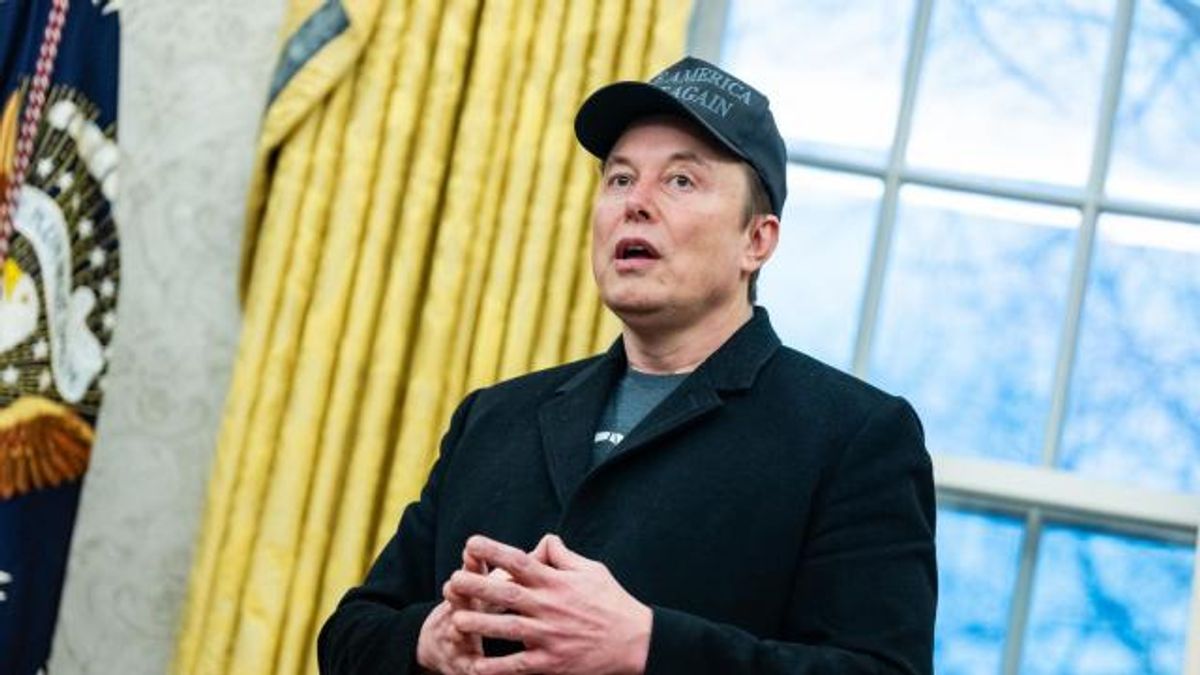
Is billionaire entrepreneur Elon Musk, the face of President Donald Trump’s effort to slash federal spending, really in line to receive a $400 million purchase order of armored Tesla vehicles from the State Department?
A reader asked us about the possible contract for Musk, which was first reported by the outlet Drop Site and inspired a flurry of mediacoverage and social media attention, given Musk’s dual roles as head of the newly created Department of Government Efficiency and the CEO of electric vehicle maker Tesla.
Other WRAL Top Stories
But in response to inquiries, the State Department told PolitiFact the idea had emerged from the Biden administration, and that it’s now on ice.
The discovery originated on a State Department spreadsheet of contractor bidding opportunities for 2025 that was released in December. One spreadsheet row said, "Armored Tesla (Production Units)" with a contract value between $100 million and $500 million.
The spreadsheet was updated on Feb. 12 to remove any mention of Tesla from the line about armored electric vehicles.
Musk already does a lot of business with the federal government. His companies, including SpaceX and Tesla, have received at least $15.4 billion in government contracts over the past decade, The New York Times reported.
But on X, the social media platform Musk owns, he wrote Feb. 13, "I’m pretty sure Tesla isn’t getting $400M. No one mentioned it to me, at least."
In a statement to PolitiFact, the State Department confirmed Tesla isn’t in store for that money. The department said the Biden administration had pursued the possible purchase. Biden had signed an executive order in 2021 encouraging government agencies to buy electric vehicles when possible.
The department also said that specifying "Tesla" in the spreadsheet was an error. The statement said that only one company had responded to the offering, and that was Tesla, but that the spreadsheet should have cited a generic electric vehicle manufacturer rather than Tesla specifically, since it was open to any company. It described the bid solicitation as being on hold, with "no current plans to issue it."