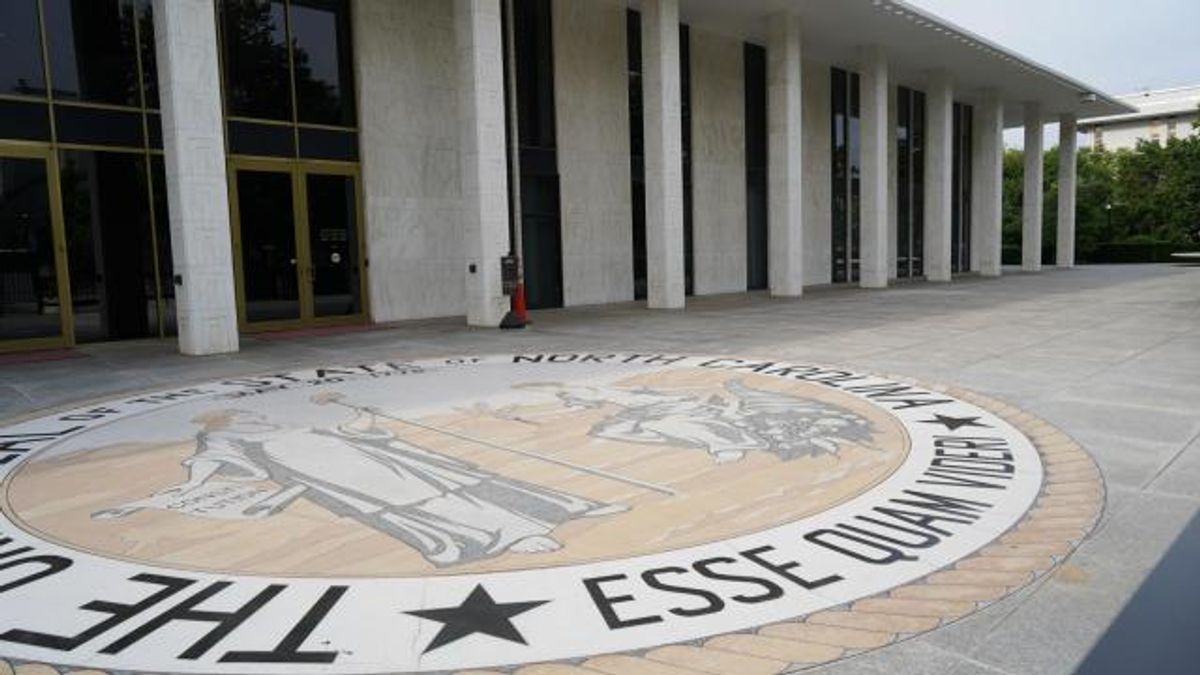
The first day of the 2025 state legislative session Wednesday saw lawmakers file dozens of bills to kick off the new year — some indicating top priorities of Republican leadership or the Democratic opposition, and others reflecting more niche interests.
The state legislature is controlled by GOP lawmakers. The party lost a veto-proof supermajority in the November elections. Bills passed in the General Assembly need approval from Democratic Gov. Josh Stein. If he vetoes legislation, lawmakers would need enough votes to override the veto — a scenario that would require the GOP majority to get buy-in from some Democrats.
Other WRAL Top Stories
Here's a breakdown of some of the notable bills filed so far.
Taxes and daylight. Rep. Harry Warren, R-Rowan, filed two bills copying 2024 campaign promises of Republican President Donald Trump. Trump has said he'll push Congress to exempt overtime and tips from federal income taxes. House Bill 11 seeks to exempt bonus pay up to $2,500, plus overtime pay and tips, from state income taxes. "This is a common-sense way to reward hardworking hourly employees who go above and beyond to support their families,” Warren said in a statement to the media. “It also incentivizes workers to take on extra shifts and helps employers fill vacant positions.”
House Bill 12 would end Daylight Savings Time in North Carolina, another issue Trump has backed at the federal level. Similar proposals have been filed in the state legislature for years, however, but have failed in face of opposition by airlines and other industries heavily reliant on scheduling across multiple states.
Another tax bill filed by Rep. Erin Paré, R-Wake, would primarily affect people who wager large amounts of money on gambling. House Bill 14 would allow bettors to deduct wagering losses against gambling winnings on their state taxes — but only if they itemize their deductions.
Under current law someone who won $10,000 gambling, but lost another $9,000 in separate bets, still has to pay taxes on all $10,000 in winnings. This bill would instead tax only their $1,000 net gain. Taxpayers would not be allowed to deduct more in losses than winnings and thus lower their adjusted gross income.
The bill would be retroactive to 2024, when North Carolina legalized sports betting, and this is not the first time this type of tax reform has been proposed. Senate leader Phil Berger, R-Rockingham, previously said he was not interested in changing the state law to allow deductions for gambling losses. House Speaker Destin Hall, R-Caldwell, said Wednesday that he would need to "look at it to see all the pros and cons and the numbers on it."
Bettors wagered more than $5 billion on sports in North Carolina in 2024, leading to millions of dollars per month in new tax revenue for the state.
Concealed weapons, shooting ranges. Rep. Keith Kidwell, a Beaufort County Republican who leads the right-wing Freedom Caucus group within the House GOP, filed two bills to loosen gun laws. House Bill 5 would allow almost anyone who's 18 or older to carry a concealed handgun in North Carolina without needing to pass tests on firearm safety and accuracy, in addition to other current requirements. House Bill 9 would exempt shooting ranges from all local government rules and ordinances. It would also allow anyone to shoot guns on their property without getting in trouble with city or state officials as long as they take "reasonable care to prevent a projectile from crossing the bounds of the property."
Literacy test, redistricting. At least two constitutional amendment proposals were also filed Wednesday, which would be placed on the 2026 ballot for a popular vote if they pass the legislature. Sen. Bobby Hanig, R-Currituck, proposed a constitutional amendment in Senate Bill 14 to get rid of the racist literacy test requirements that remain written into North Carolina's state constitution, even though they've been unenforceable since the 1960s. And Rep. Pricey Harrison, D-Guilford, filed House Bill 20, a proposed new state constitutional amendment to ban politically motivated gerrymandering that would be placed on the 2026 ballot.
Similar efforts to the new constitutional amendments proposed by Hanig and Harrison, as well as Kidwell's concealed carry proposal, have failed in recent years due to opposition from GOP leadership. It's unclear if they'll enjoy any more success this year.
Among the dozens of other bills filed Wednesday were:
- SB 10, to require the Department of Motor Vehicles to provide mobile driver’s licenses upon request starting July 1, 2026. The legislature approved a study for mobile licenses in 2024 with bipartisan support after DMV leaders advocated for the idea.
- SB 20, to ban organized balloon releases such as the kind that are sometimes associated with funerals or celebrations, with a fine of $250 per offense. The bill says releasing balloons en masse "poses a harm to the scenic beauty of the State and a danger and nuisance to wildlife and marine animals."
- HB 8, to require state and local government agencies to buy recyclable materials and compostable food when possible, to measure how much plastic the state uses, and to look into having the state partner with the private sector on reducing or better recycling its plastics waste. It has bipartisan sponsors.
- HB 13, to allow the state to fine businesses up to $5,000 when they charge customers fees for paying with a credit card or a debit card, if that fee is higher than what the business itself has to pay to process the payment.
- HB 24, to repeal a new law passed with little debate in the 2024 lame-duck session that banned all local governments from enacting stricter zoning rules on any properties, unless the property owner agrees.
WRAL state government reporters Paul Specht and Brian Murphy contributed reporting.