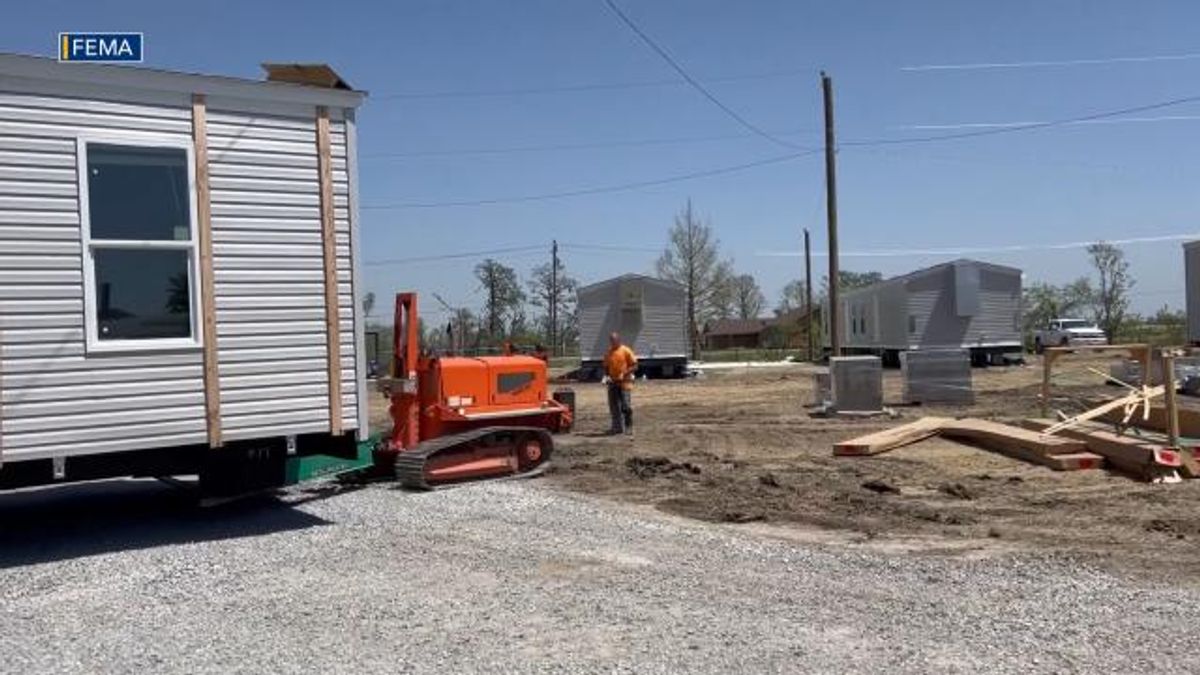
FEMA approved 536 households impacted by Hurricane Helene for temporary housing units, which are move-in ready trailers. WRAL has learned only 57 households have received them, more than two months since the storm hit.
That is far behind FEMA's original projection of having 103 units occupied by Thanksgiving. WRAL Investigates asked FEMA why it was not keeping pace with what it promised and when families could expect to have their temporary housing units.
Other WRAL Top Stories
A spokesperson provided a response that did not directly answer those questions, writing, in part:
"FEMA recognizes that post-disaster housing is one the most important missions to help survivors, it’s important to know that FEMA’s housing solutions are not a one size fits all. Our programs are designed to meet each survivor’s unique needs and preferences for their families."
In a Zoom call on Nov. 22, FEMA officials explained that the temporary housing units are challenging to deploy in part because of the geography and in part because of all of the various steps and permissions that need to be achieved to make them safely habitable.
"Direct housing is tailored to meet the individual needs of survivors and site-specific considerations and so it can take a significant amount of time to implement," said Julia Moline, Deputy Assistant Administrator for Logistics Operations at FEMA Headquarters. "It takes time to assess sites, to transport, permit, install and inspect these homes."
"We are in a hurry and I know sometimes that doesn't feel that way," said Jeremy Slinker, FEMA Deputy Federal Coordinating Officer. "But we are trying to move as fast as we can. We also don't want to install a unit that's improper."
FEMA typically does not put temporary housing in flood-prone areas.
In a letter to President Biden dated November 22, lawmakers, including U.S. Senators Thom Tillis and Ted Budd, asked the President to reconsider that.
"While this policy is designed to protect the safety of homeowners waiting to be able to return to their homes from the risk of dangerous further flooding, the policy can also prevent residents from being able to stay on their own property, which would make it more difficult for impacted residents to stay close to family and loved ones, attend school, continue working, and help their communities rebuild," the letter states.
Vice President-Elect JD Vance echoed that sentiment last week during a visit to western North Carolina.
"If you don't do that," he said in a news conference, "you're not going to allow people to actually live in their homes. You're not going to allow people to celebrate Christmas around their families."
In an interview with WRAL News, state Speaker of the House Tim Moore agreed.
"Those [temporary housing units] need to be deployed," he said. "We don't need to be having some bureaucratic backlog. They don't need to be off in some storage field somewhere. They need to be deployed right now."
FEMA officials note that temporary housing units are just one of many ways the agency offers aid to disaster survivors.
In the Nov. 22 Zoom call, FEMA noted it has given out more than $47 million in displacement assistance.
A spokesperson told WRAL it is currently paying for hotels for about 5,000 families.
"We know it's going to be a long road to recovery here in North Carolina," Moline said. "FEMA is here. We are going to be here every step along the way."