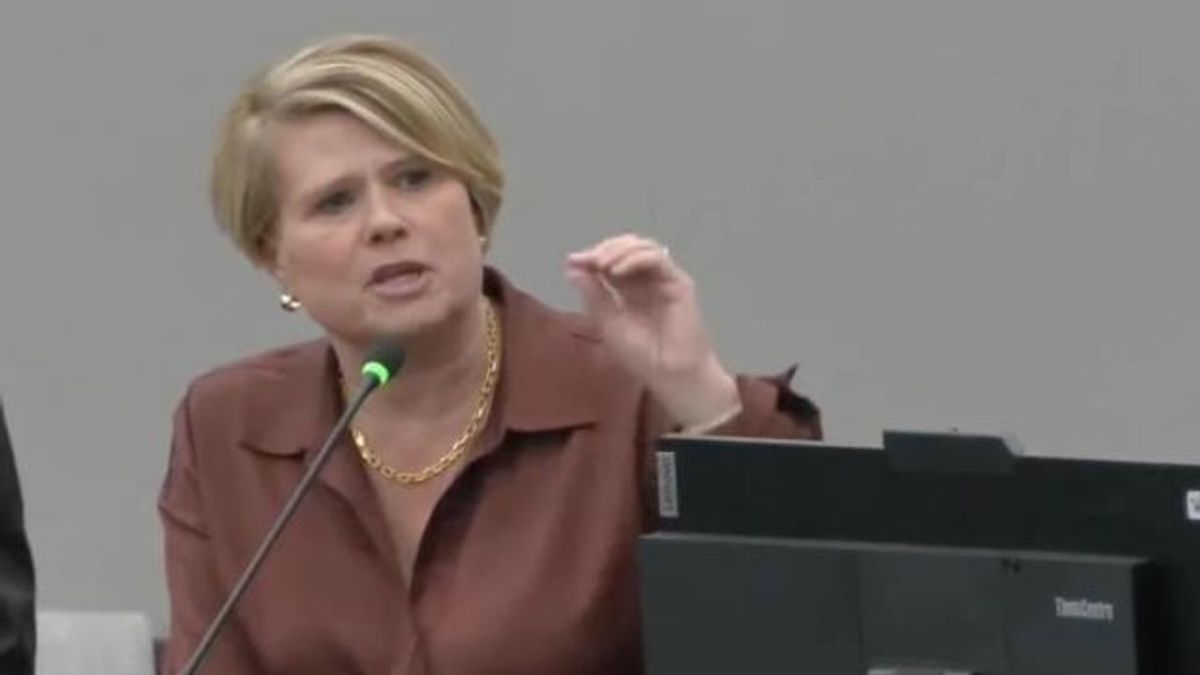
State lawmakers should ensure school employees in hurricane-ravaged parts of North Carolina can still get paid while schools are out, North Carolina Superintendent of Public Instruction Catherine Truitt said Thursday.
At Thursday’s State Board of Education meeting, Truitt listed several items she plans to bring to state lawmakers to help schools in Western North Carolina just starting to recover from feet of rain and subsequent floods and destruction from Hurricane Helene. Other requests would include flexibility for remote learning or to extend the school year beyond mid-June.
Other WRAL Top Stories
The state Senate and House of Representatives are scheduled to convene Wednesday.
At the same time, Truitt shared an update on what she knows about damage to schools in the area.
Several counties are still without Internet service and many schools remain without power.
At least one elementary school building in Yancey County has been destroyed, Truitt said.
“We don’t know yet how many other buildings will be rendered useless,” she said.
After the presentation, Department of Public Instruction spokeswoman Blair Rhoades said Micaville Elementary School is “likely out of commission.”
About two dozen school systems and 20 independent charter schools are in the region.
School leaders have begun assessing the damage to schools and making insurance claims.
Some of the things Truitt plans to ask lawmakers to help with are adjustments lawmakers have made during previous hurricanes, such as ensuring school employees can still get paid, giving schools flexibility to extend the school year, giving schools the flexibility to count up to 20 days as “completed” even if school was not held, and allowing educator interns to count their internships as complete even if they didn’t last the full 16 weeks.
The cost of continuing to pay school employees while school is out was $16 million during Hurricane Florence.
The cost of replacing and repairing buildings, equipment and technology was $150 million. That doesn’t include rebuilding entire buildings, Truitt said. School systems can apply for state grants to replace buildings on a sliding scale, starting with a $42 million grant for elementary schools.
Truitt plans to ask lawmakers for the same amounts of money, even though the extent of damage is still unknown, along with the cost of making repairs. The need is urgent, she said, and lawmakers will understand it’s too early to have a real price tag.
“They know it’s fluid, we know it’s fluid,” she said.
Some changes DPI can make on its own.
Truitt said DPI has already directed superintendents to apply for waivers to class-size limits, in case students or staff need to be rearranged in ways that would go over the limits.
DPI leaders are still looking into whether the State Board of Education can grant attendance waivers to students that would still allow them to participate in sports even if they miss school.
Board Member Wendell Hall thanks Truitt for thinking of athletics, because he said many families will be very concerned about that. Truitt said continuing to have athletics is important for morale.
“It may not be as great a priority as academics for many but it is incredibly important,” she said.
Some board members and advisers Thursday brought up concerns that weren’t on Truitt’s list.
Kimberly Jones, a board adviser and former state teacher of the year, asked about help for nearby schools that might be taking in new students from other schools.
Under state school funding laws, if a student transfers into a new school in a new district mid-year, the new school doesn’t get funding for them. The funding stays with the old school.
Truitt said lawmakers would need to waive state law to allow the funding to move with the student.
But if the student were homeless, the school could apply for federal McKinney-Vento dollars that are designed to help schools transport and educate students who don’t have permanent homes.
While the board discussed urgent needs Thursday, Board Member John Blackburn reminded people that the damage the hurricane wrought will require long-term planning, as well.
“Keep it in your thoughts, and keep it in your prayers and remember that this is going to be a long time [that] we need to continue to support this,” he said.