But don't expect to see what is being described as a second "mini-moon".
Asteroid 2024 PT5, discovered on August 7 by the NASA's Asteroid Terrestrial-impact Last Alert System (ATLAS) will be drawn in by Earth’s gravitational pull causing it complete one orbit of Earth between September 29 and November 25.
Other WRAL Top Stories
Don't expect to see a second Moon shining in the October sky. 2024 PT5 is only about 5 meters wide or about the size of a bus and far too dim to be seen without a large telescope.
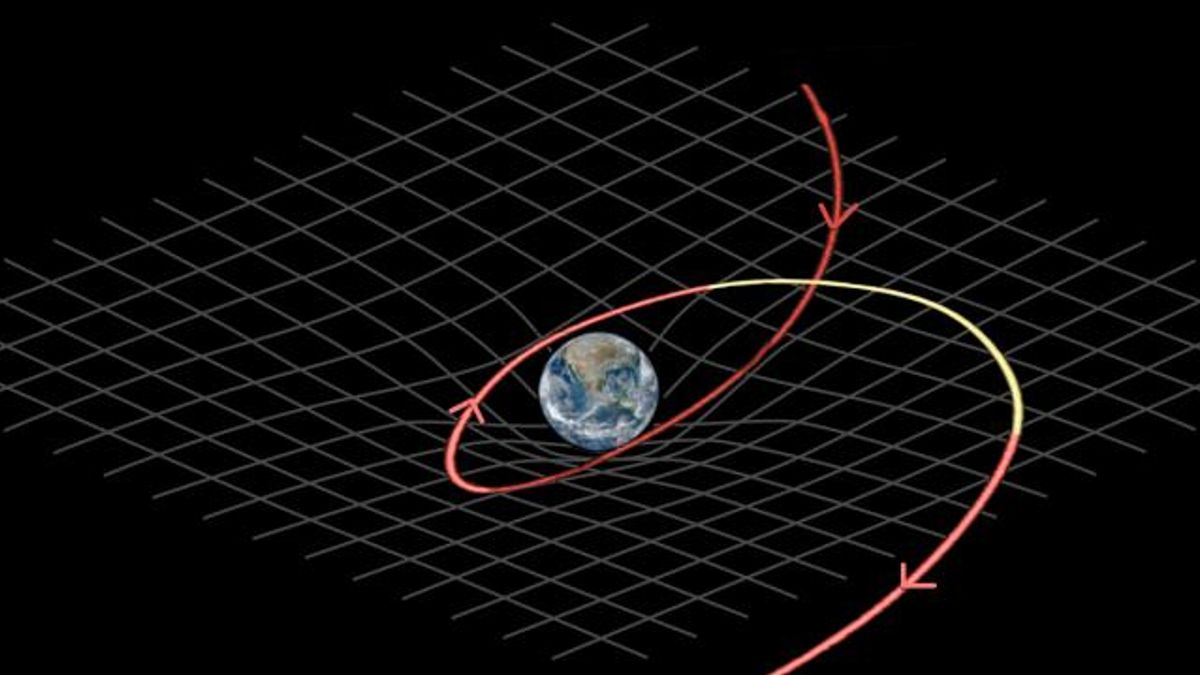
This visualization by astronomer Tony Dunn shows 2024 PT5's path around Earth in the coming weeks. The oddly shaped path is caused by gravity's pull on the small asteroid.
Scientists describe the influence large bodies, like Earth or the Sun, have on passing smaller bodies like asteroids as a gravity well.
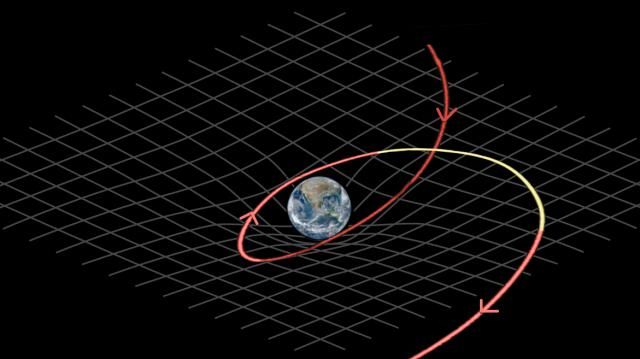
Think of the stretchy fabric covering a trampoline.Roll a ball across the trampoline and it will travel in a straight line.
Add a massive object (like a bowling ball) ot the middle of the trampoline and the ball will be deflect as it travels into the well.
If that ball (the asteroid) is rolling at the right speed, it will loop around the mass in the middle (the Earth).
The last time we had a rocky visitor like this was in 2022 when asteroid 2022 NX1s similar made a loop around Earth over a few months. 2022 NX1s made a similar visit in 1981.
Carlos and Raúl de la Fuente Marcos also point to other temporarily captured flybys in 1992 and 1981 in a paper recently published in the Research Notes of the American Astronomical Society. Some temporary moons linger longer like 2006 RH120 that remained gravitationally bound to Earth for a year beginning in July 2006.