ATLANTA — Everything is different now for Democrats.
Their crowds are dancing. Beyoncé has conquered the soundtrack. The celebrities — from Southern rappers to Hollywood actors — are showing up.
Other WRAL Top Stories
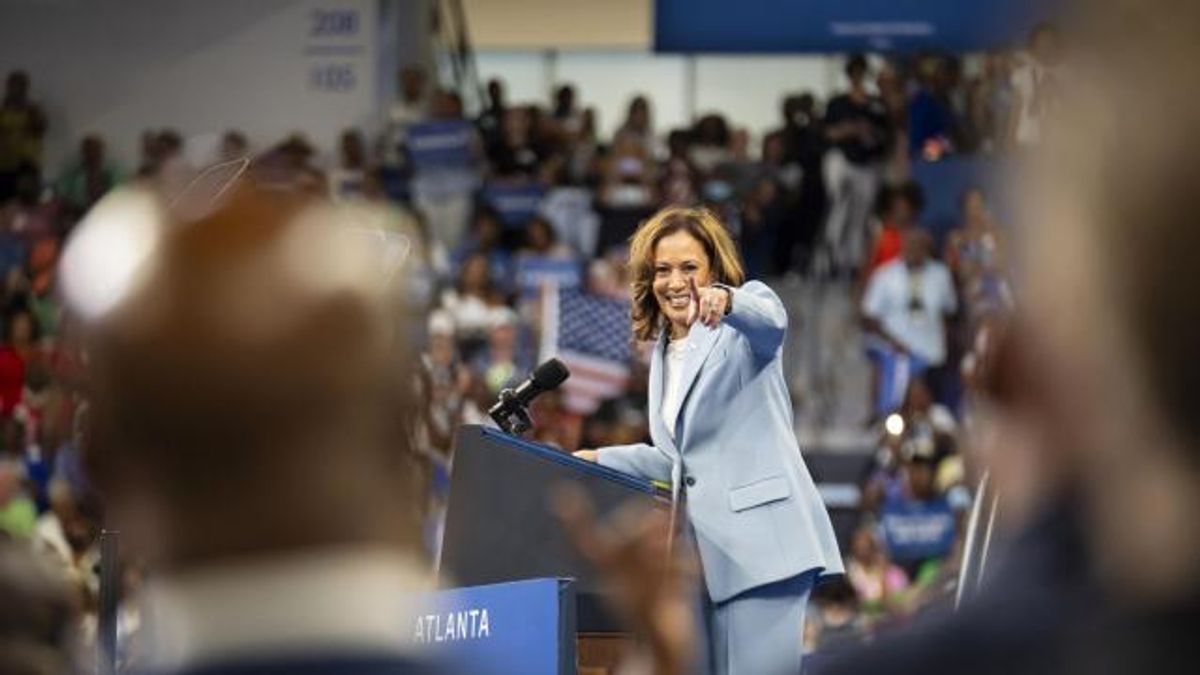
And by the time Vice President Kamala Harris took the stage Tuesday night in Atlanta for what her aides billed as the kickoff for her new-and-improved campaign, it was clear that President Joe Biden had been left a distant memory — a name not even mentioned in her remarks.
“The momentum in this race is shifting,” she declared from behind a lectern embossed with the vice presidential seal. “There are signs that Donald Trump is feeling it.”
Harris’ ascent to the top of the ticket has transformed the presidential race into a fundamentally different contest, delivering an electric shock to a listless Democratic Party that for more than a year struggled to mobilize its base behind Biden.
But the real test awaits: whether Harris can convert the wave of pent-up liberal energy into sustained momentum. While polling shows that the party’s core voters have rallied behind Harris, the race remains in a dead heat, reflecting the politics of a fiercely divided nation. After months of Democratic attrition over a weakened candidate, Harris must now rebuild the coalition that powered Democrats — and the Biden-Harris ticket — to victory in 2020.
In some ways, her campaign remains a work in progress. Though Harris inherited the 1,300 people working for Biden’s reelection operation and its $96 million in the bank, her plans to reshape it remain unsettled. She has yet to fully reveal her own vision for the party and the country, beyond what she inherited, or to hold a news media interview.
And she still needs to pick a running mate, though an announcement is expected early next week. Cautioning that no vice presidential decisions have been made, her campaign announced Tuesday night that the new ticket would begin a swing through the seven battleground states next week — starting in Philadelphia.
She will be operating in one of the most unpredictable political environments in recent memory. Not since the era of black-and-white television have two candidates competed in a race measured in weeks, rather than the nearly yearlong traditional battle to the White House.
The condensed timeline could extend her support enough to last through the election — or send it crashing down.
“How long does the honeymoon last? Who knows,” said Neil Newhouse, a Republican pollster. “When you have an unprecedented event like this, people take time to digest it.”
So far, Democrats are thrilled with what they see. With thousands of people, her rally in Atlanta was far larger than any event hosted by the Biden campaign. But it was also a hard tonal shift away from the president.
The Biden campaign, as in 2020, had been about restoring the “soul of the nation,” a paean to a lost pre-Trump comity he hoped to bring back. Harris is pushing a message squarely about what’s next.
“This campaign is about two very different visions for our nation: one focused on the future, the other focused on the past,” she said Tuesday. “We are not going back because ours is a fight for the future and for freedom.”
Like the president, Harris promised to lower housing costs and tackle prescription drug prices. She vowed to protect “hard-fought freedoms” including voting rights, pledged to expand access to abortion and, as she did last week in Wisconsin, told supporters, “The baton is on our hands.”
But the frame was new, to reflect the upended reality of the campaign. The Harris warm-up speakers mocked the Trump campaign for running the same playbook against her that it did against Biden.
“Some days I feel sorry for Republicans, because they’ve got to figure out how to run a criminal against a prosecutor,” said Sen. Raphael Warnock of Georgia.
In the most emotionally charged moment of the Atlanta rally, Harris ridiculed Trump for announcing last week that he was backing off his commitment to a September debate he had agreed to attend when Biden was still running.
“Well Donald, I do hope you’ll reconsider to meet me on the debate stage,” she said, drawing out the tension with a long pause. “Because as the saying goes, if you’ve got something to say, say it to my face.”
The crowd went wild. And in the campaign’s YouTube post-rally show — another thing that did not exist when Biden was running — actor Sterling K. Brown recalled the triumphant “say it to my face” moment and declared, “I felt that in my bones.”
Campaign aides say they now face the challenge of converting the burst of enthusiasm into more durable support.
There are early signs that Democratic voters may be giving her a second look, after they largely rejected her during her ill-fated 2020 primary campaign. In a little more than a week, she has broken fundraising records, dominated social media and created the kind of energy that some Democrats say they haven’t seen since Barack Obama first ran for the White House nearly two decades ago. A series of recent polls show a significant increase in the number of voters who view her more favorably than even just a month ago.
Harris aides say this new sense of energy has already opened up fresh opportunities for their campaign. By the time Biden exited the race, Democrats had quietly acknowledged that his path to victory had narrowed to the “blue wall” states of Michigan, Pennsylvania and Wisconsin.
Harris’ campaign now says the plan is to compete across a wider range of more racially diverse Sun Belt and Southern states, including Arizona, Georgia, Nevada and North Carolina.
“We have multiple pathways to 270 electoral votes,” said Dan Kanninen, the campaign’s battleground states director, drawing an unstated contrast with Biden. “The vice president is strong in both the blue wall and the Sun Belt, and we are running hard in both.”
Democrats also hope to benefit from the shortened timeline. The longer the Harris campaign can portray her as a cultural phenomenon, the longer she can avoid articulating details of her policy agenda that could divide her support.
“I think we are three weeks from knowing whether she can ascend the Obama ladder to where it’s about her and not any specific policies she has,” said Rick Davis, who was the campaign manager for Sen. John McCain’s 2008 presidential bid, which was derailed by Obama’s political rise.
For now, the Harris team intends to skip some of the traditional markers of a presidential bid. While Harris released a host of policy papers during her 2020 campaign — some of which she has since disavowed — this time she plans to cast herself as a policy extension of Biden’s administration. She may release some economic plans that largely mirror what the president has proposed, but is unlikely to offer any policy surprises.
Republicans have struggled to adapt to the changed environment, cycling through a series of attacks against Harris over the past week before settling on the playbook that they have been pursuing against Biden for more than a year.
“When Kamala tells us she is weak, failed and dangerously liberal, we should believe her,” the Trump campaign said in a statement about Harris on Tuesday.
That language almost exactly echoed the attacks used against Biden throughout the campaign: “Joe Biden is weak, failed, dishonest and not fit for the White House,” Chris LaCivita and Susie Wiles, Trump’s top campaign aides, said in a July 3 statement.
Trump campaign officials attribute the shift in the race to what Tony Fabrizio, a campaign pollster, has called the “Harris honeymoon.” They plan to focus on the same set of issues that have driven Trump’s campaign for months: economic discontent, concerns about the border, high housing costs and worries about crime.
Trump’s aides believe those issues may override concerns among moderate Republican voters about the former president’s polarizing style and criminal record.
Still, Democrats say they see little signs of fading support. A series of calls hosted by different demographic groups — white men, white women, Black women, Latinos — have attracted hundreds of thousands of participants and raised millions of dollars.
Katie Paris, the founder of Red, Wine & Blue, a political organization for suburban moms, said her group had heated debates after the debate a month ago over whether Biden should step down.
But after Biden endorsed Harris, those disagreements vanished. Now, Paris said, her members are more unified and mobilized than she has seen since 2020. And thousands more people have signed up to organize with them.
“Politics can feel like such a slog. Nobody likes two-year presidential campaigns,” Paris said. “Give me 100 days, and, ‘OK! I can grab my friends and do that.’”
This article originally appeared in The New York Times.