The eighth annual World Asteroid Day is celebrated today to raise awareness about potentially hazardous asteroids (PHA) and the efforts to track these threats.
It was established om 2014, the year after a meteor exploded above Chelyabinsk in Russia's Ural region with energy estimated to be about 30 times as much as the atomic bomb at Hiroshima.
Other WRAL Top Stories
No deaths were reported but nearly 1,500 people were injured seriously enough to seek medical attention, most from broken glass. Many had gone to their windows to investigate the sudden flash of light which arrived before the shockwave.
June 30 was selected because it is the anniversary of the 1908 Tunguska event when a stony asteroid, estimated to be 160-200 feet in size, entered Earth's atmosphere at 80 times the speed of sound, exploded about five miles in altitude, leveling more than 800 square miles of Siberian forest.

Upcoming close approaches
NASA's Center for Near Earth Object Studies (CNEOS) is currently monitoring 79 asteroids, through the year 2200, with orbits that will bring them closer to Earth than the average distance to the Moon (1 LD = 238,900 mi). This may seem like a lot but looking over the previous past 12 months, similarly close approaches have happened over 100 times with objects ranging from about the size of a dorm fridge to a city block.
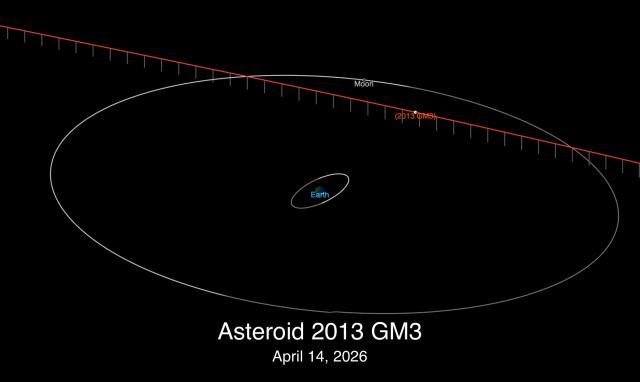
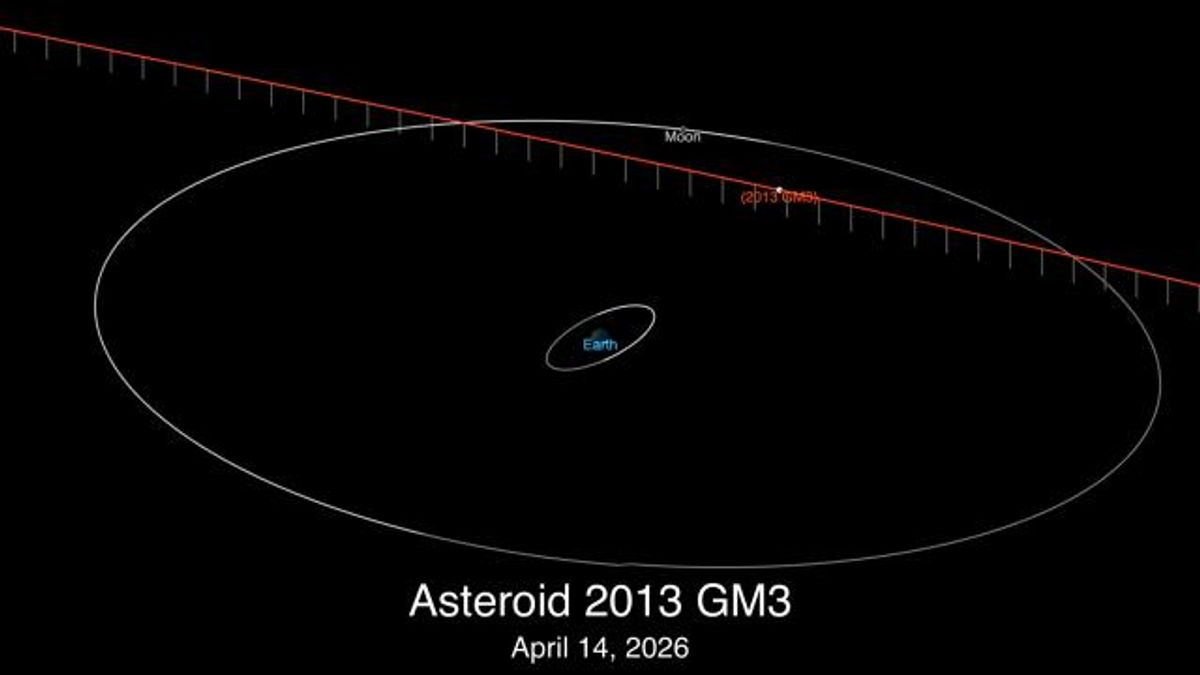
The next close approach inside 1 LD will happen on April 14, 2026 when the around 90-foot-wide asteroid 2013 GM3 will pass (safely) more than 161,000 miles from Earth.
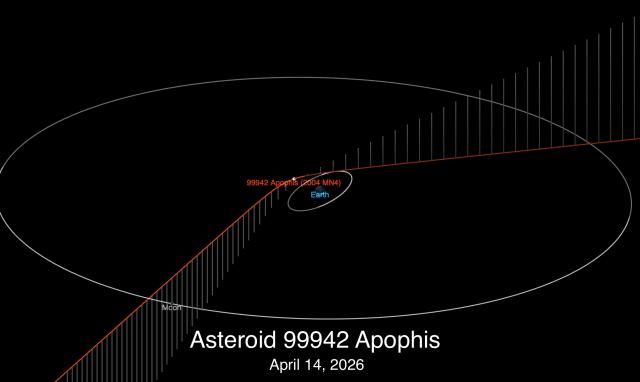
The closest orbital path currently being tracked by CNEOS is 99942 Apophis. Researchers have assigned this the highest rarity rating not just because that path brings it within 24,000 miles of Earth on April 13, 202 but because its size (about as wide as three football fields end-to-end). For comparison, you could fit nearly three Earths inside that gap).
There will be many radio and optical telescopes aimed at this asteroid as arrives from above the plane of Earth's orbit around the Sun (remember space is 3D).
So what does all this mean?
There no asteroids, on NASA or any other space agency's radar (pun intended) that pose a threat through the year 2200.
But take another look at the numbers above. There were more than 100 NEOs that passed within a lunar distance, in the last year alone, and we are tracking only 79 that have been calculated to come that close in the 175+ years.
More will be found as technologies improve to find them earlier and the scientists at the CNEOS and the Smithsonian Institution's and Harvard University's Minor Planet Center will find them.