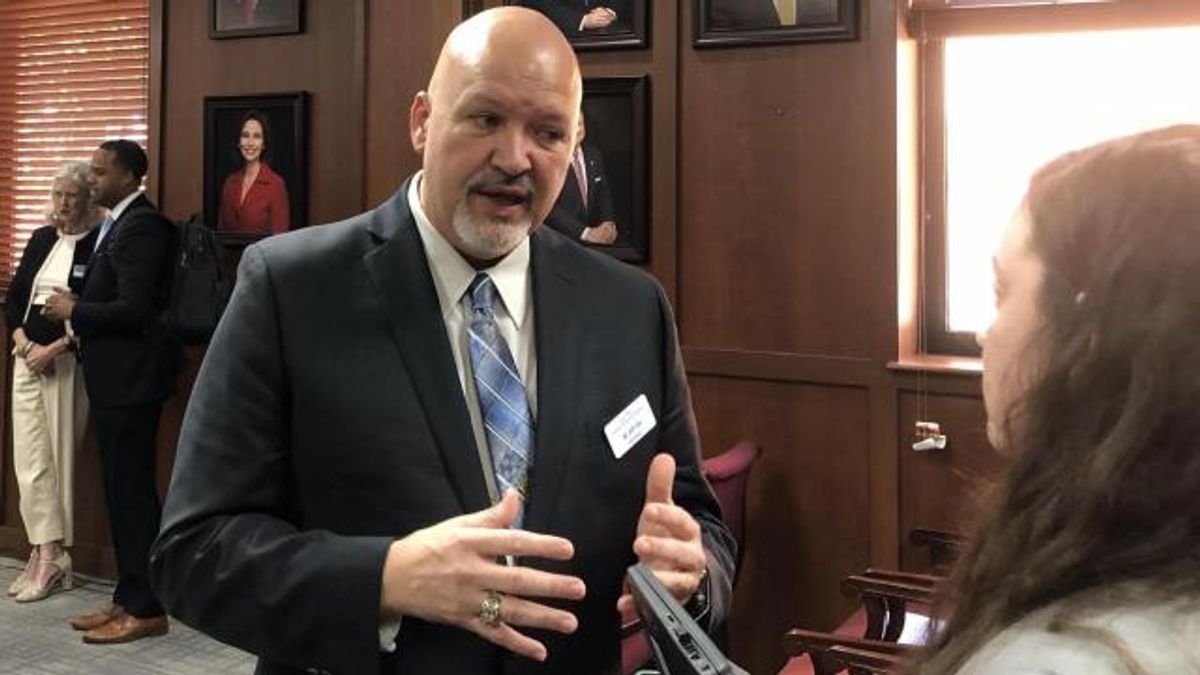
A state board voted Friday to name a new president to oversee North Carolina’s system of community colleges.
Jeff Cox, president of Wilkes Community College and head of the North Carolina Association of Community College Presidents, will be the system’s 11th president. The State Board of Community Colleges approved the hire on a voice vote with no opposition. Board members Lisa Estep, Tom Looney, Hari Nath and Jerry Vaughan abstained.
Other WRAL Top Stories
"Dr. Jeff Cox has proven to be among the best education leaders in the country during his time at Wilkes Community College and as a North Carolina K-12 superintendent, and we're excited to announce Dr. Cox as the new president of the North Carolina Community College System," Burr Sullivan, chairman of the board, said in a statement. "We know our community colleges need strong statewide leadership and dynamic future-forward approaches to business and workforce development and Dr. Cox is that leader."
Cox replaces Bill Carver, who has served as interim since July, when Thomas Stith resigned from the role following an 18-month tenure and after what people familiar with the matter described as concerns over his hiring decisions.
Cox’s top priority is workforce development. He also sees his and the system’s vision as innovative. “We’re going to set a new standard for community colleges across this country,” Cox told WRAL News.
Turnover in the top role — Cox will be the eighth president in eight years, including interim leaders — has concerned state lawmakers, who are seeking more power over the hiring decision and other changes that would give the General Assembly more oversight. Republican lawmakers pushing that shift have also expressed concern with some campus presidents, saying that some don’t work well enough with businesses to set up job-training programs.
Cox told WRAL that he wants to make sure community colleges are better working with area businesses to prepare students to work for them. “We're the number one state in the country for business,” Cox said. “And if we're going to keep it that way, we've got to have the number one workforce in the state, and our community colleges are going to play a critical role in that work.”
The timing of the hire is key. Republican lawmakers are working on a bill to require legislative confirmation of the president’s position, which would give GOP leadership more power over who becomes president of the system, which provides certificates and two-year degrees, adult education and GED programming.
That bill would also overhaul the board and increase the system president’s power over the 58-campus system, in part by giving the system president the power to fire local campus presidents in the system and taking power away from the governor and local school leaders at the state and campus level. The measure, Senate Bill 692, is part of a suite of bills shifting appointments to consolidate more power with the General Assembly and thus its political majority.
Cox told the system board Friday, prior to its vote, that most campus presidents support the legislative push to give the system president more power. He said the bill was discussed during a recent meeting of campus presidents, but that the presidents' association and its members aren’t taking a formal stance on it.
At least some community college board members wanted to fill the system president’s job before that bill passes and avoid the proposed confirmation process. Sources familiar with the presidential search indicated this week that a college executive in Colorado was the leading candidate but withdrew his application.
Cox has been president of Wilkes Community College since 2014, where he more than doubled the school’s completion rate from 25% to 55% in five years. While he was there, the college raised $20 million and fully endowed the colleges Education Promise fund, which provides free tuition to every high school senior graduating in the college’s service area. He also worked in K-12 schools, serving as superintendent from 2005 to 2014.
He takes over a system office that has a 13.5% employee vacancy rate and a statewide community college system that has a 23.4% employee vacancy rate. The statewide system has more than 55,000 employees.
Cox said the colleges need to pay close attention to community members who want a better life and providing them what they need.
“We've got 30% or 40% of our high school population now not pursuing any kind of post secondary degree or credential,” Cox said. “And almost all of these new jobs that are emerging in our economy require some kind of post-secondary skill or credential, most of them not a four-year degree.”