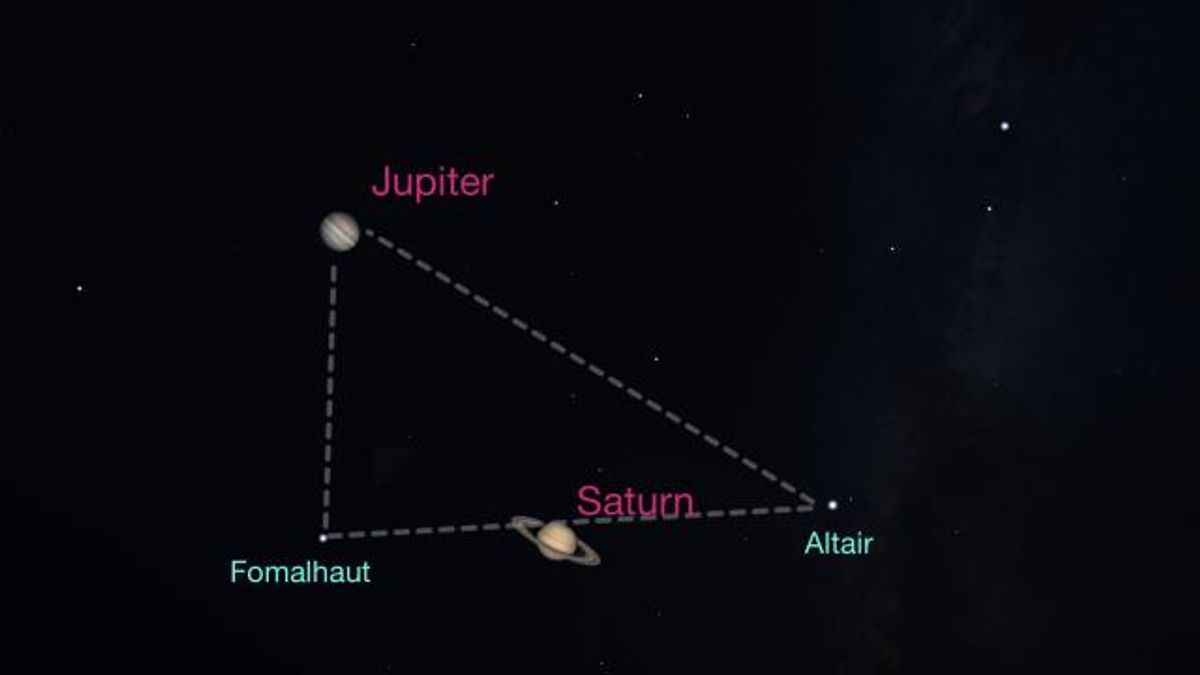
Look in the southern sky after dark for Jupiter to form a right triangle with bright stars Fomalhaut and Altair. About halfway between those stars, you'll also find Saturn.
Jupiter is bright so you shouldn't have any problem spotting it, but Saturn and Altair are about the same brightness. So how do you tell them apart?
Other WRAL Top Stories
One way is to look for the one that twinkles. Stars twinkle, planets do not.
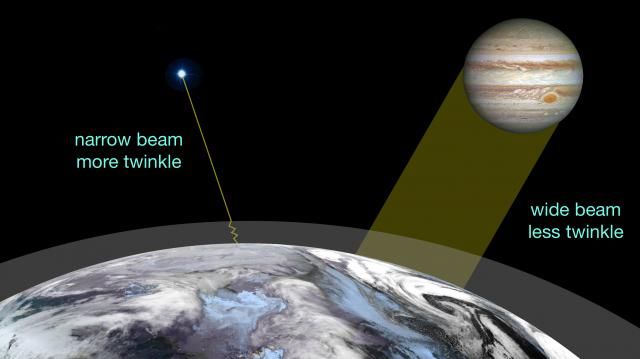
As light moves through the atmosphere it bent this way and that as it passes through each layer, encounters rising heat from the Earth's crust, or even by the same turbulence than makes air travel a little less pleasant. Astronomers call this optical effect scintillation.
Altair is more than twenty times bigger than Saturn, but it's also more than 100,000 times further away. This gives
Just as something very far away appears as just a speck on the horizon, Altar and other stars appear as a single point of light. That tiny beam of star light gets pushed around a lot more than the wider beam reflected off the much closer planet with a larger angular diameter measured on the dome of the night sky.
The amount of twinkle also changes as a star moves through the sky.
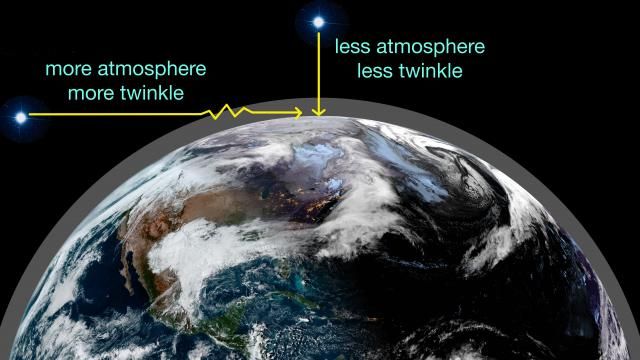
Compare the stars near the horizon to those directly overhead. You'll see a lot more twinkle to those lower stars because their light is passing through a more atmosphere. There's more than 35 times more atmosphere at the horizon than at zenith (directly overhead).
As you stargaze this weekend, Friday and Sunday night are expected to have few clouds to get in the way, consider that those photons of light took 16 and 25 years (Altair and Fomalhaut) to reach Earth, survived being tossed about in the atmosphere and made it to your eyes and yours alone.