Jamie White drives twice a week to pick up bottled water from the same chemical plant that has made her well water undrinkable. She says life at her "forever home" in Hope Mills, North Carolina, has become a never ending nightmare.
"We have to survive from a one-gallon jug," White said. "It's insane that we are forced to live this way."
Other WRAL Top Stories
She's one of thousands in North Carolina with drinking water that contains toxic "forever chemicals," that have been leeching from the Fayetteville Works chemical plant for decades.
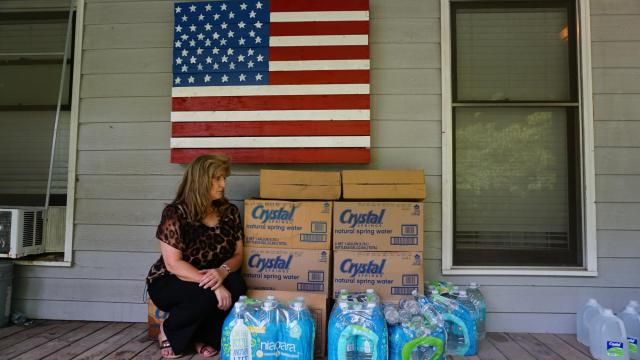
"They’ve put not just me at risk, but my children and my grandchildren,” White said. She suspects birth defects in her family are a result of the tainted water.
There are thousands of compounds that are considered forever chemicals, a nickname for per and polyfluoralkyl substances (PFAS). There is growing evidence that exposure to some types of PFAS could lead to adverse health outcomes, including birth defects and cancer.
"It's probably the most significant toxic chemical threat that we're facing these days," said Phil Brown, a professor at Northeastern University and director of the PFAS Project Lab. "We now understand that it's dangerous at much lower levels than we thought."
Chemours, a spin-off of DuPont, currently operates the plant that sits on the Cumberland and Bladen county lines that first opened in 1971.
Based on public disclosures from plant officials, DuPont has been discharging perfluoro-2-propoxypropanoic acid – known by its trade name GenX – as a byproduct of one of its manufacturing processes since at least 1980.
In 2005, DuPont paid more than $16 million for violations and civil penalties for failing to report information about the harmful effects of PFOA at its West Virginia plant between 1981 and 2004. The settlement was at the time the largest civil penalty in the EPA's history.
In 2015, DuPont moved its “performance chemicals” division into a spinoff company called Chemours. Critics said this move was a tactic to skirt responsibility for chemical pollution.
"It's really disappointing this huge corporation that was spun off from DuPont, specifically to avoid liability in part, are fighting against even basic things like providing people safe drinking water, when we know hundreds of thousands of people at least, are drinking his water every day," said Erik Olson of the Natural Resources Defense Council, who has been working on drinking water safety for more than three decades. "It's really outrageous that you've got these polluters, making money off the chemicals, and then refusing to help the people that they're hurting."
In 2017, researchers unveiled GenX contamination in the Cape Fear River, a drinking water supply, and regulators begin investigating.
A settlement in 2019 requires Chemours to curb chemical emissions and provide remediation to well users with contaminated water.
Since the consent order, Chemours has since been fined more than $200,000 for multiple violations and nearly 10,000 private wells are currently contaminated.
The chemical levels in White's well water, more than 18 times over the EPA's current health advisory levels for GenX alone, qualified her home for a filtration system. She's been waiting four years for the system and says the company is refusing to install it.
Chemours declined interview requests, but said in a statement that it is in compliance with the consent order and it has recently installed technology to stop polluting most of the chemicals into the environment.
Chemours is challenging the EPA’s health advisory levels for GenX and other forever chemicals, which were lowered in June, but a number of community and advocacy groups have moved to intervene, including the Natural Resources Defense Council.
"What Chemours is trying to do is undermine the Environmental Protection Agency's efforts to at least tell people, if they're being exposed to a toxic chemical," Olson said. "It isn't even a mandatory regulation. It's just advice to tell people that this chemical is dangerous."
The Department of Environmental Quality approved a barrier wall permit Thursday for Chemours' Fayetteville Works plant, the source of chemical drinking water contamination in 9 North Carolina counties now. The permit still allows for some contamination, including emissions of GenX 12 times higher than the EPA's lifetime health advisory. Some critics want the plant to be shut down.
Despite pushback, Chemours is planning to expand production. White says it feels like "a slap in the face." Some groups are planning protests for Chemours' public meetings next week about expansion plans. There are two sessions planned:
Tuesday, Sept. 20, 5-7 p.m. Bladen Community College Auditorium, 7418 NC Hwy 41 West, Dublin
Wednesday, Sept. 21, 5-7 p.m. Leland Cultural Arts Center, 1212 Magnolia Village Way, Leland