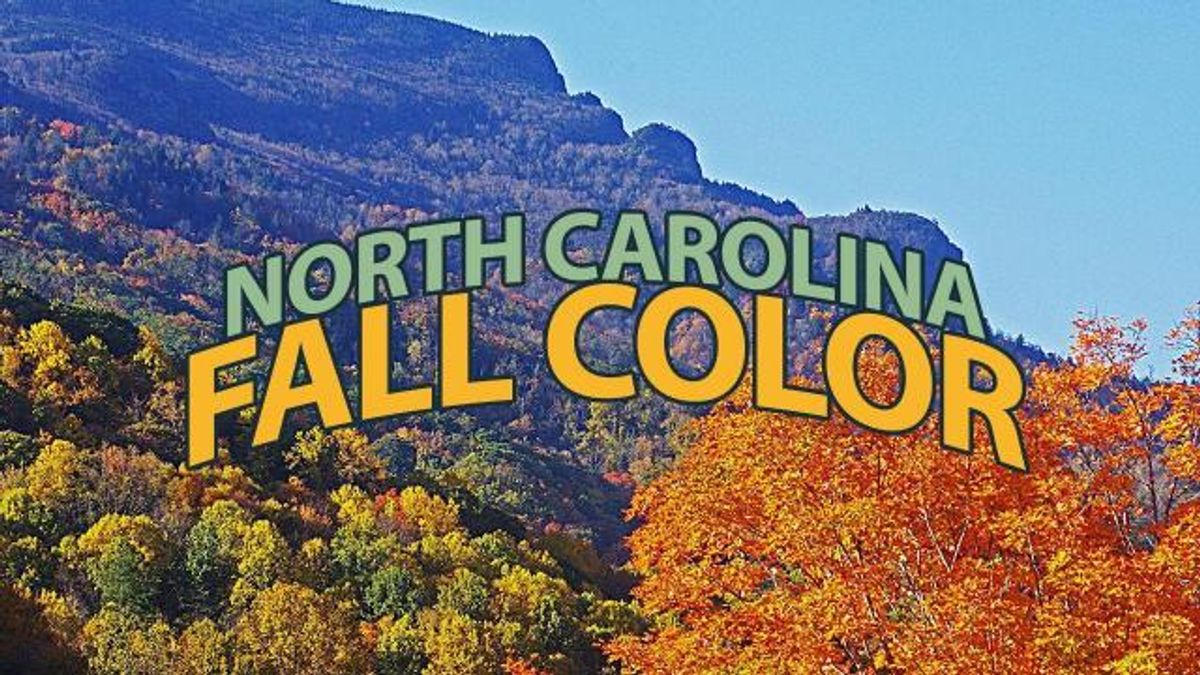
Fall color generally begin in the North Carolina mountains in September but peaks in October.
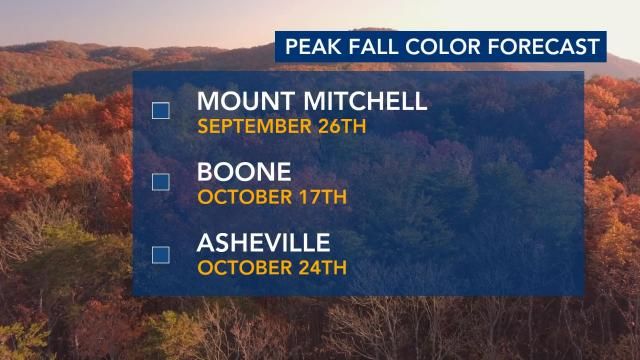
ExploreAsheville has an interactive map showing which areas in the NC mountains are seeing the most vivid color. The website recommends visiting the following locations at the following times:
Other WRAL Top Stories
Sept. 29-Oct. 9
- Graveyard Fields
- Grandfather Mountain
- Mount Mitchell State Park
Oct. 10-16
- Black Balsam Knob and Sam Knob
- Max Patch Mountain
Oct. 17-23
- Devil’s Courthouse
- Mount Pisgah
- Bearwallow Mountain
- Pinnacle Park
Oct. 23-28
- Pisgah National Forest
- Linville Gorge
- Montreat
- Downtown Asheville
Oct. 24-31
- Biltmore
- North Carolina Arboretum
- DuPont State Forest (features easy waterfall hikes)
- Wildcat Trail
Nov. 1-14
- Biltmore
- North Carolina Arboretum
- DuPont State Forest
- Chimney Rock State Park
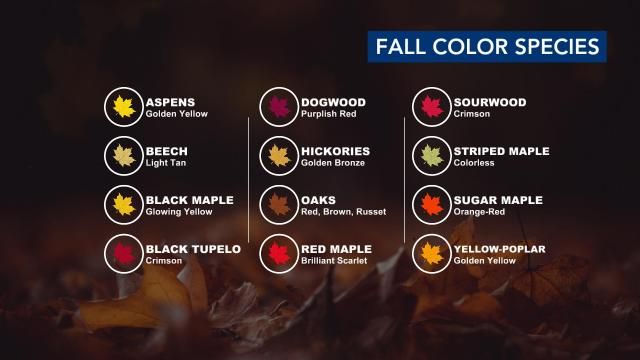
Buckeyes and locusts trees are usually the first to change color from green to yellow, and maple trees usually give shine bright red early on in the fall, according to the Grandfather Mountain Stewardship Foundation.
Jesse Pope, president and executive director of the foundation, said that this summer has been wet in western NC, making for perfect fall foliage conditions.
"This year, I think, is shaping up to be a good one," Pope said. "The trees have good leaf foliage on them. The leaves have grown. They’re healthy. We’ve had a drier September than we did August, and the nights are starting to cool off. All that is the scenario for a good fall. We’re optimistic.”
What impacts fall colors in NC
Warmer temperatures could threaten fall color.
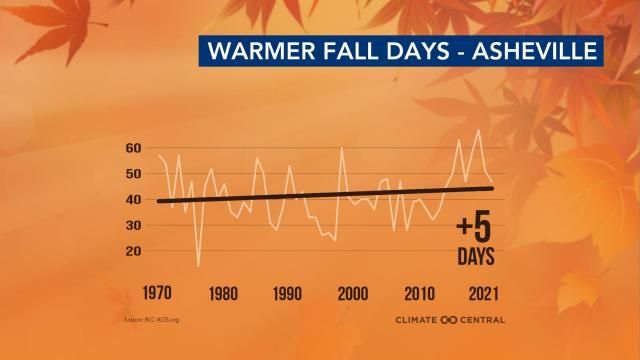
On average, fall temperatures have gone up by 2.7 degrees across the United States since 1970, according to data from Climate Central. A hotter than normal fall day could lead to changes in when we see leaves change colors.
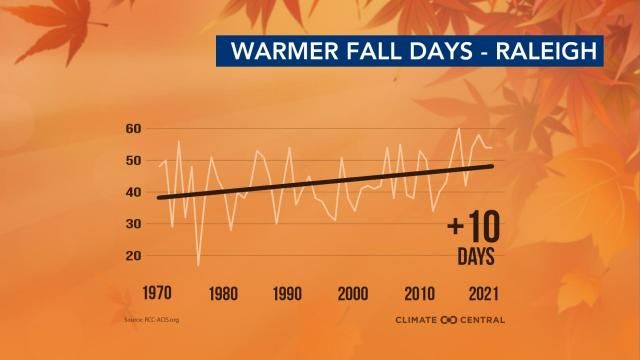
Between 1970 and 2021, we have seen an average of 10 warmer fall days in Raleigh. In Asheville, we have seen five warmer fall days.
According to Dr. Howard Neufeld from Appalachian State University, ”The best conditions for on-time and good fall color are cooling in September, particularly from now on, and into October, with cool nights and clear, cool sunny days -- but not freezing nights, as that can cause leaves to drop early.”
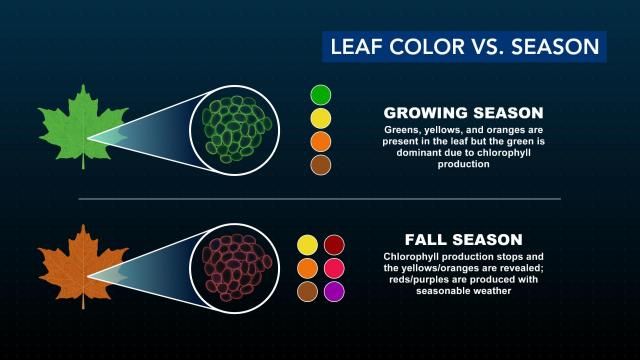
Temperature impacts can vary the colors we see on trees. Warmer temperatures could lead to more cloud cover and warm nights, resulting in muted colors. Cooler temperatures could influence more sunshine and vibrant rich fall colors.
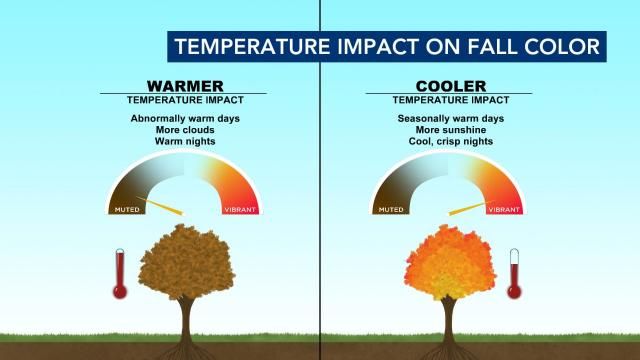
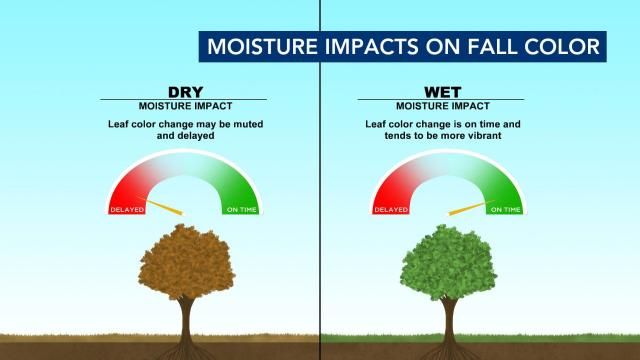
Neufeld added, “If warm and/or rainy, that can delay the colors and also mute the red colors somewhat, since the production of the red pigment, which occurs in the fall, is dependent on photosynthesis, and trees do more photosynthesis when it is sunny, not cloudy.”
Heavy rain from hurricane season could also have an impact.
"If we get rains and wind when the leaves are still green, as they are now, it will have minimal effect," Neufeld. "But if a storm occurs when we get near peak color, it can take off many leaves, as they are not attached as well at that point."