A proposed constitutional amendment to turn the North Carolina State Board of Education into elected officials has been sent back to the state House of Representatives' rules committee, decreasing its chances of passing during the short session set to end this week.
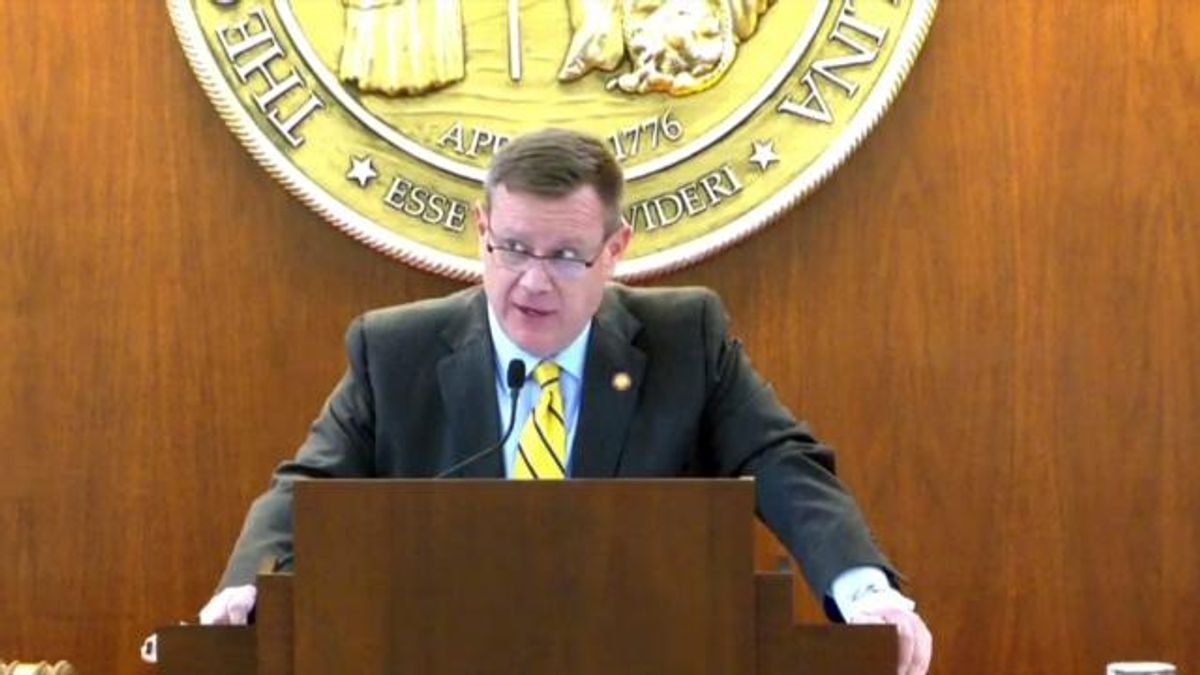
The bill passed through the rules committee on a voice vote Wednesday but was removed from the House's voting items both Wednesday and Thursday. On Thursday, House Speaker Tim Moore, R-Cleveland, said it would return to the rules committee. There was no discussion, though House Democrats had expressed opposition to it Wednesday. The House had several absences Thursday afternoon.
Other WRAL Top Stories
On Wednesday, Senate President Pro Tempore Phil Berger, R-Rockingham, said he wasn't sure the Senate would take up the bill if it passed the House. He noted the Senate's plan to adjourn the short session by Friday or Saturday.
For the General Assembly to place a constitutional amendment before voters, at least 60% of the House and at least 60% of the Senate — among those present — would have to vote to do so.
House Bill 1173, if passed, would place a constitutional amendment on the ballot this November. It would do two major things, starting in 2024: Make the state superintendent the chairman of the State Board of Education and shift the governor’s power to appoint board members over to voters every four years.
Currently, the superintendent is a nonvoting member of the board, elected to lead the North Carolina Department of Public Instruction. The department works directly with the board to report progress and suggest policy changes for board approval.
The proposed amendment would reduce the governor’s executive authority, and influence, over education. At the same time, voters would assume that authority, electing both the board members and who would run the board. The voting districts would be aligned with congressional boundaries — boundaries Democratic lawmakers still contend are gerrymandered to favor electing more Republicans.
“All it is going to do is just make partisan officials in the state board,” Rep. Cecil Brockman, D-Guilford, told the House Education Committee Wednesday morning.
Bill sponsor Rep. Hugh Blackwell, R-Burke, said elections would change whether politics was involved, arguing, “To suggest that education is a nonpartisan issue, I think, is maybe to deceive ourselves."
Lawmakers are considering the proposal more than a year after many of them expressed concerns with the State Board of Education’s approval of new social studies standards. DPI staff had written them and proposed them to the board. Some board members thought the standards focused on too many negative parts of history, while other board members felt the standards told history from a more diverse perspective.
Education has become a focus in national politics as conservative movements have decried various aspects of curriculum and books for being too political or containing sexual content.
The State Board of Education sets academic standards and some policies, open and close charter schools, adopt budget and policy recommendations, and maintains general oversight of the public education system. The board often carries out changes required by Legislation.
The proposed amendment would also expand the State Board of Education to 17 members: the superintendent, lieutenant governor and state treasurer, plus 14 elected people.
The lieutenant governor and treasurer are already voting members. Eight district-based appointments and three at-large appoints comprise the rest of the current 13-member board, appointed to eight-year terms. They can be re-appointed.
However, the board has not had 13 members in some time. Lawmakers must approve of every governor appointment, and they have not always done so.
WRAL State Government Reporter Travis Fain contributed to this report.