This article was written for our sponsor, NC State Online.
As the largest four-year university in the state, North Carolina State University offers a diverse array of concentrations and majors. Some of the school's top programs include engineering, business, agricultural science, education and computer and information sciences, among others.
Other WRAL Top Stories
Through online learning, the university is able to make these top programs available to a wider range of students — all while ensuring these online offerings are innovative, accessible and of high quality.
"Even before the pandemic, N.C. State was delivering high-quality online programs to our students. In the 2019-20 academic year, more than 3,000 graduate students were enrolled across 90+ online degree and certificate programs at the university," said Tim Petty, associate vice provost for online and distance education.
According to Petty, that same academic year immediately before the pandemic, N.C. State also offered more than 1,000 undergraduate classes online. Flexibility of scheduling for both entire programs as well as individual classes has made online learning more appealing.
With a growing demand, faculty are looking for ways to innovate the online experience.
"There's a constantly increasing demand across the university for interactive online materials that aid in engaging students — it's been a growing sentiment consistently over the past several years," said Mike Cuales, creative director, new media development at Digital Education and Learning Technology Applications. "When it comes to online learning, in this day and age, I feel like it's almost a requirement to have some level of engagement. N.C. State began exploring immersive technology early, and has brought a lot of innovations to the online classroom to engage students in a variety of disciplines."
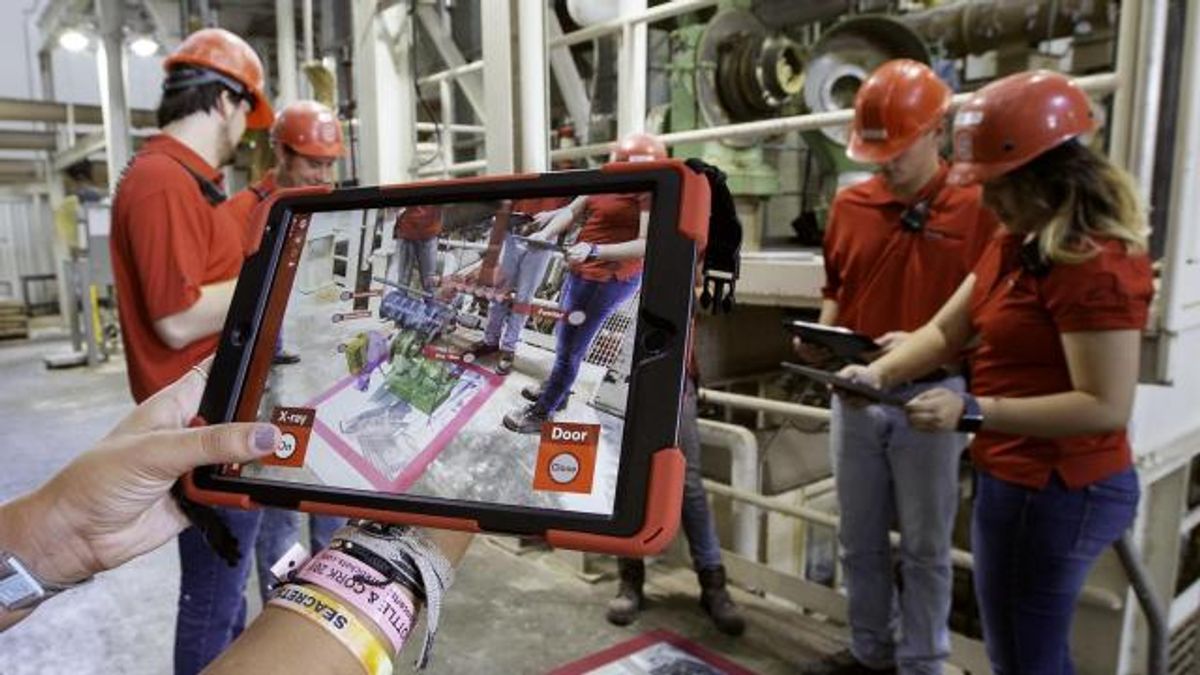
N.C. State offers plenty of specialized online resources. For example, at the College of Agriculture and Life Sciences, online courses enhanced with virtual and augmented reality technology allow students to virtually visit a working animal feed mill.
"Our virtual reality programs have two different sides. One is a set of interactive, web-based tools that we use, where students are able to jump in and click around, move equipment, things like that," said Adam Fahrenholz, associate professor in CALS. "The other part of it is what we call augmented reality, where, on a screen, they can basically take a piece of equipment, pick it up, and then be able to spin it around and turn and get a better look at it since they obviously can't be in a facility."
"Those facilities are really noisy places, and they're kind of closed off, so they can be hard to access otherwise," added Marissa Herchler Cohen, an extension agent specializing in animal food safety in CALS and a Ph.D. candidate. "At an actual facility, you can't open up equipment while it's running, either. Part of our goal for creating some of those augmented reality forms was so that students could experience what it looks like to see the inside of the machine running."
Not only does this type of instruction provide students with the ability to gain hands-on experience without physically visiting sites, but it also improves student engagement and comprehension — and further illustrates N.C. State's commitment to online programs.
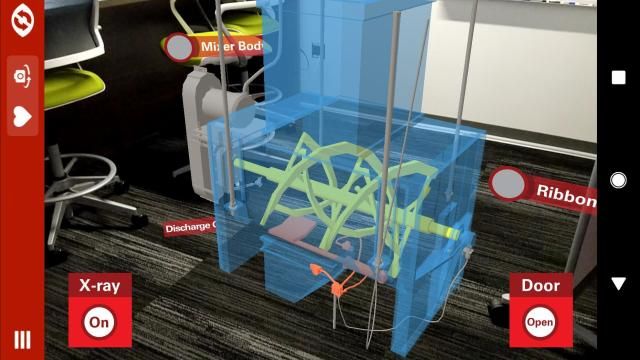
"With our coursework, we break up the lectures and find engaging ways to encourage interaction. These technologies that we're talking about make those things possible," said Fahrenholz.
"When students are in a class, and they have access to a tool like virtual reality, they automatically know that we are putting in an effort to create something that exists in the same digital age as the rest of their life does," he continued. "When they see the same technology they use in their lives inside of one of our classes, even if it's a small amount, they know that we're trying to exist in that space and bring them tools from the 21st century."
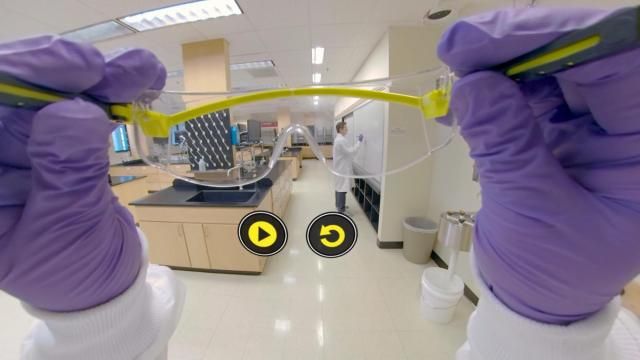
Using a broad range of immersive technologies, online programs across the university are able to bring these engaging, innovative experiences to students.
Maria Gallardo-Williams, Ph.D., teaching professor and director of organic chemistry labs, has worked with an N.C. State team to develop a whole series of virtual reality-based lab experiences and exercises for students. The lab experience is vital for students who can't come to campus or cannot attend due to chemical sensitivity.
Gallardo-Williams made the organic chemistry labs available worldwide during the pandemic, and nearly 50 institutions globally have adopted the lab environments.
"Online lab experiences allowed us as well as 48 other universities all over the world to continue teaching organic chemistry labs during the pandemic. Without these resources our ability to continue our teaching program online would have been severely compromised. Even after we return to fully in-person lab teaching we will continue to offer online labs for students that are unable to attend labs in person," said Gallardo-Williams.
N.C. State Online continues to lead the digital transformation of teaching and learning for more innovative and accessible student experiences.
This article was written for our sponsor, NC State Online.