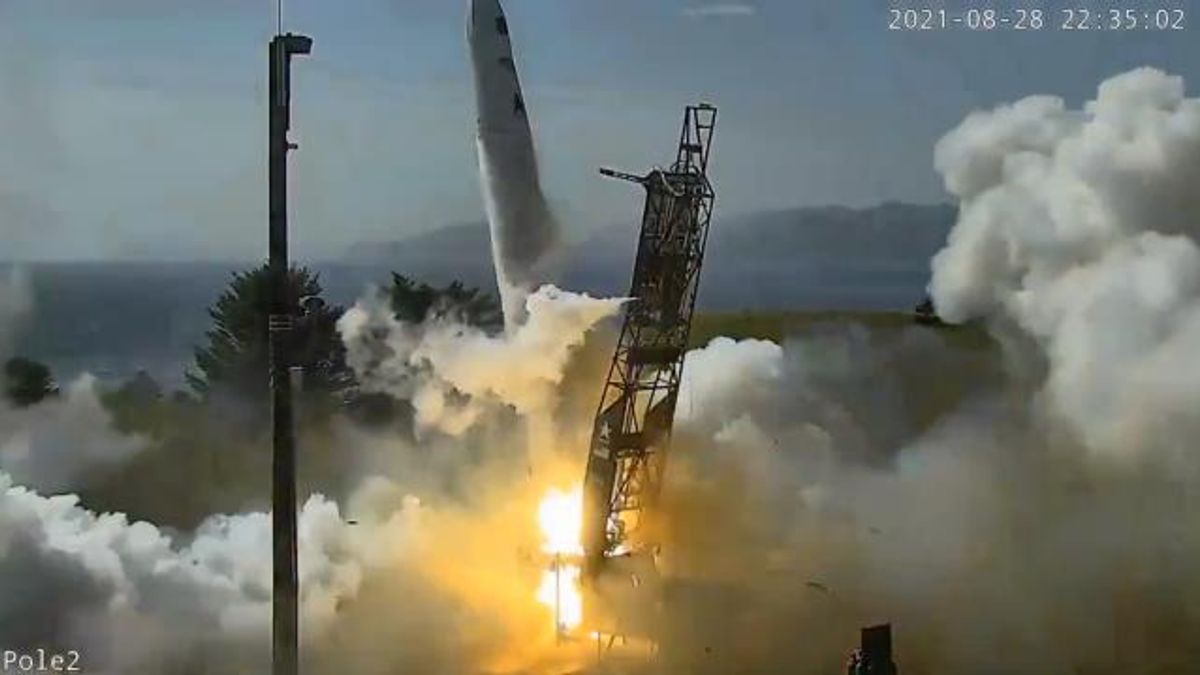
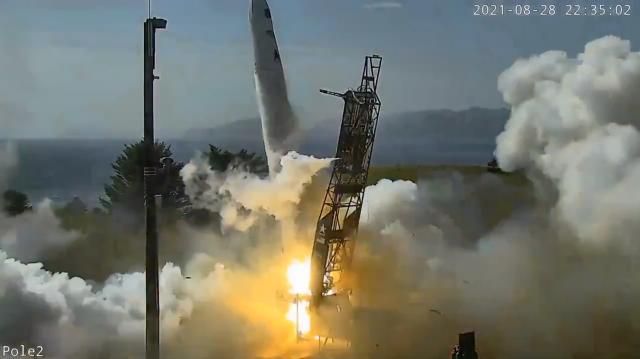
Startup Astra's test flight of their Rocket 3 launch vehicle on Saturday from the Pacific Spaceport in Kodiak, Alaska, did not go as planned.
Other WRAL Top Stories
As the countdown reached zero, the rocket lifted off a few inches from the launch pad, tipped away and hovered a few feet off the ground. It continued to hover, scouring a shallow trench in the ground with its exhaust as it continued moving slowly sideways out an open gate.
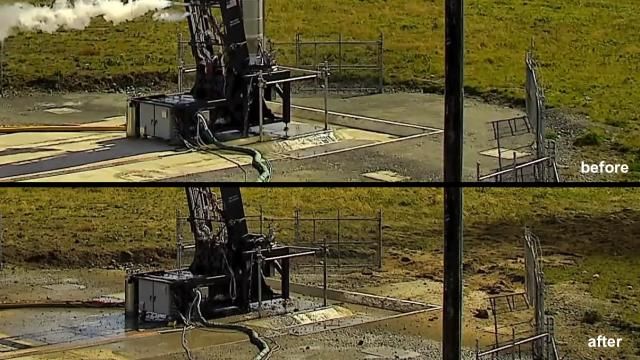
"We got about 2.5 minutes of flight data which will be incredibly helpful as make improvements to our next vehicle on our way to reaching orbit." said in a prepared statement. "Any flight where we get some data we can learn from is a successful one in our mind."
This was the company's sixth launch and third attempt to reach orbit.
The first on September 12, 2020 failed shortly after liftoff and the second on December 15, 2020 performed well but was just short of reaching orbital velocity.
Saturday's launch of the seventh vehicle off the assembly line, lasted only 2.5 minutes and reached only about 30 miles in altitude, well short of orbit, and space.
Why did the rocket fly sideways?
Like any vehicle, space or otherwise, there are a lot of technical specs describing Rocket 3's capabilities. At launch time the only one that really matters is thrust-mass ratio. The higher that number, the faster the rocket can gain the speed needed to overcome Earth's gravity.
The closer that number is to one, the slower the rocket lifts off the pad, and the more fuel it will likely need to reach orbit.
When that thrust-mass is one, the rocket hovers, as Rocket 3 did on Saturday.
After about 30 seconds of very low altitude flight, the rocket began to not only ascend but gaining speed. This is because the four remaining engines continued producing the same thrust but on a lighter vehicle
Even after a fill-up, less than 5% of your car's weight is fuel. While fuel makes up about 80-90% of a rocket's weight at launch time.
Astra hasn't released information about the thrust to mass ratio or wet mass of their rockets. But, they have published the thrust of each of the five Delphin engines in the first stage as 6,500 lbf. Knowing that, watching Astra's Rocket 3 hover on four engines tells us:
the thrust-mass ratio is ~1.25
the mass on the pad at launch time is ~26,000 pounds.
Why was the flight terminated?
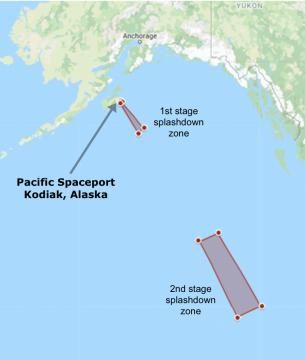
The rocket's shutdown about 2.5 minutes after launch. Less than 10 seconds later, flight controllers send flight termination commands to the rocket, bringing it down in the Pacific Ocean.
This was likely done, when it was done, for safety. This ensures debris stayed within hazard areas communicated in advance to ships along the rocket's path.
Waiting until the fuel was spent also prevented raining down RP-1, a highly refined version of kerosene which is closer to jet fuel, over Kodiak Island or the Gulf of Alaska.
It was terminated when it was terminated likely because the rocket didn't have enough thrust to make it to space or even the next splashdown zone.
Big plans for small rockets
Astra was founded in 2016 with a focus on capturing the growing small-satellite launch market. The company is similar to SpaceX in that both companies design and build not only the vehicle but engines as well. Both have are fast paced, focused on bringing down the cost of getting to space and have embraced the concept of "fail fast".
That's where the comparisons end however. SpaceX has bet on reusing expensive parts of the rocket, like the booster and payload fairings — protective covers over the satellite at the top of the rocket. Astra's focus is on reducing the cost to manufacture and transport (they fit in a standard shipping) their rockets.
"We've invested in machines and infrastructure to produce rockets at scale" describes CEO and Founder Chris Kemp in a tour of their Alameda, Calif facility.
"You won't find 3-D printers and composites... you won't find technologies that drive up costs and labor and make it hard to scale." explains Kemp.
The company stresses the importance of iteration, not only in getting things right, but bringing costs down. The fairing built by the company cost $250,000 to build in carbon fiber, half the total cost of the rocket the company is aiming for. Today fairings are built from lightweight aluminum tubing and sheet metal for $13,000 with a goal of getting that cost under $10,000.
The company's headquarters are located on the former Naval Air Station Alameda. Rockets are built in a 180,000 square foot building across the street from
To the southwest is the USS Hornet which recovered the crews of Apollo 11 and 12 and is now a floating museum. To the northwest are the former runways where Warner Brothers built a 1.25 mile section of freeway to film freeway chase scenes for The Matrix (1999) and the Discovery Channel's MythBusters filmed dozens of episodes.
The facility includes includes a testing facility once used by the Navy to test jet engines.