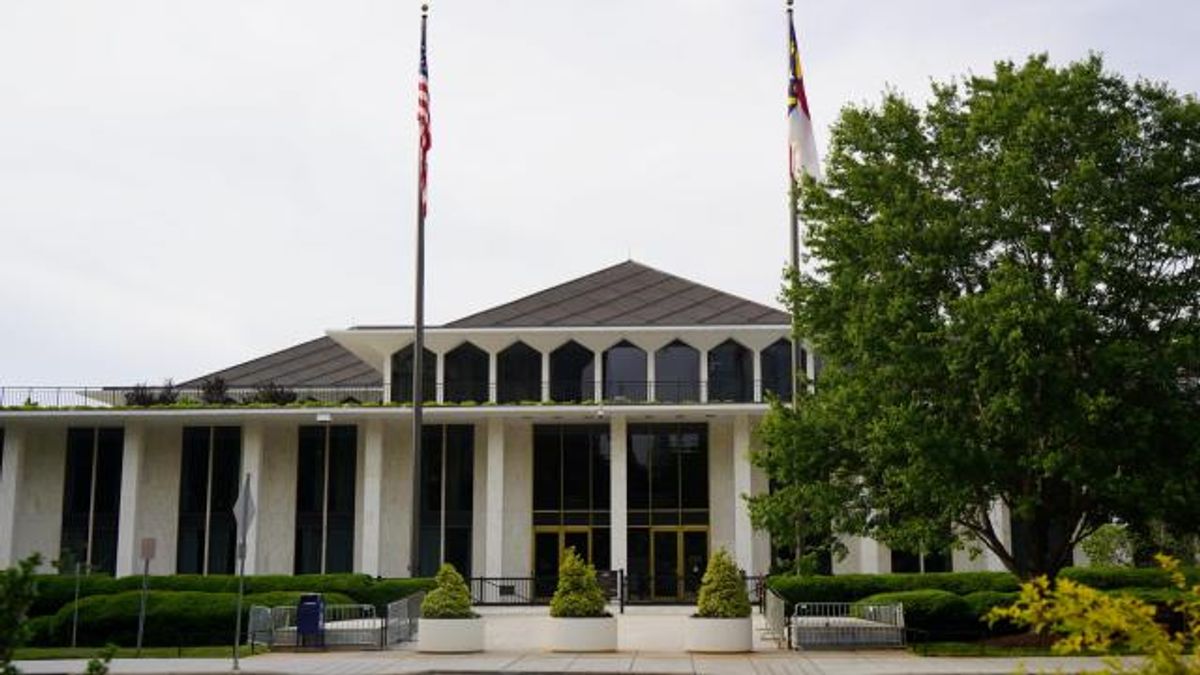
The North Carolina House voted last week to make school teachers post all of their course materials online, to strip the governor of some of his emergency powers and to keep cities from protecting trees on private property.
What do all these things have in common?
Other WRAL Top Stories
None of them was a separate bill the House considered last week. They were all policy measures inserted, along with many others, into a 671-page budget bill otherwise meant to lay out billions of dollars in state spending plans.
Among other things, the House budget also includes:
- Language limiting the attorney general's power to settle lawsuits involving the legislature.
- A financial break for college booster clubs, allowing them to fund athletic scholarships at the in-state tuition tuition rate instead of the higher out-of-state level.
- A long-debated measure allowing more police license plate readers on state highways.
- Several measures limiting the rules local governments can write, including on stormwater control and short-term rentals like AirBnB homes.
- Language giving billboard companies more freedom to re-locate signs that have to move for a road project.
Some of the policy ideas in the proposed budget have bounced around the state legislature for years without passing. Others never got a committee hearing this year as a single-issue bill. Some, including the measure limiting his emergency powers, Gov. Roy Cooper has indicated he won't sign.
Dropping it in the budget gives the Republican legislative majority one more negotiating tool as the House, the Senate and the Governor's Office try to hammer out a final budget deal in the coming weeks, or months.
It's not unusual for lawmakers to put policy in the budget, but long-time observers said this year's effort included more than most. One lobbyist called it "above average" and said it would have been "trending toward egregious" had the House not dropped a section repealing wetlands protections from the budget last week, just after the bill hit the House floor.
The North Carolina League of Municipalities sent an action alert to its members last week highlighting the budget's tree ordinance ban and "numerous" other policy provisions that would limit local authority. The list included limits on short-term rental regulations cities can have and language that would limit the fees municipalities charge cellphone companies to install equipment on city poles.
Others at the legislature took the policy proliferation in stride.
"We call it 'the budget,' but it's really legislation," long-time lobbyist Brian Lewis said. "I contend that the budget and its provisions get more scrutiny, media attention and opportunities to debate and offer amendments than most legislation at the General Assembly."
House budget writers defended their decisions.
"Budgets always have lots of policy," House Appropriations Co-chairman Donny Lambeth, R-Forsyth, said in an email. "Seems that is an acceptable norm by both House and Senate. No rules against it."
"I reject the notion that an inordinate amount of policy is in the budget," fellow Co-Chairman Dean Arp, R-Union, said via email. "Policy is linked to the money and spending."
This year's House budget bill is the longest, by more than 200 pages, in at least 20 years, based on a count League of Municipalities spokesman Scott Mooneyham put together.
Some of the length is because this year's budget includes billions in new federal funding that came down as pandemic relief aid and stimulus. But the state Senate's budget proposal includes American Rescue Plan funding, too, and it's 427 pages long.
The House's bill runs 671 pages.
Much of the policy in the budget deals with education. In addition to requiring teachers to post school course materials online, the House budget would create a "Standard Course of Study Advisory Commission," appointed by the General Assembly, to review what K-12 schools around the state teach children.