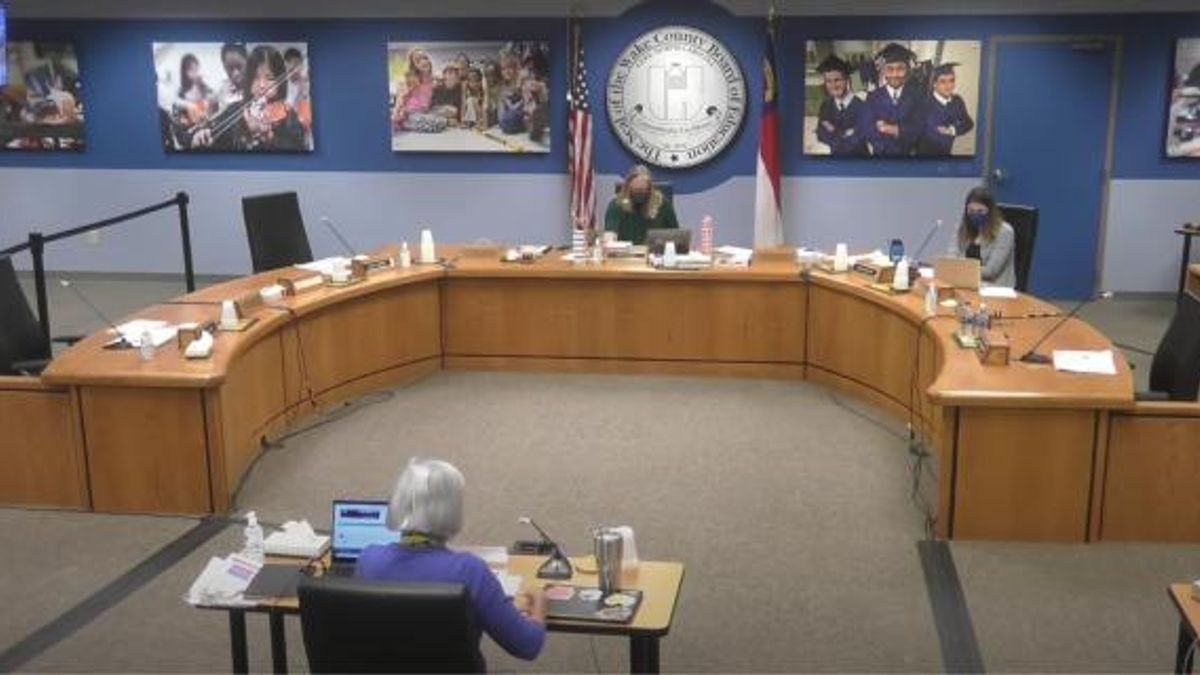
Wake County parents and guardians will have until May 14 to commit their children to the Wake County Public School System’s summer learning program, once they’re invited to it later this spring, district officials told district Board of Education members Monday.
That’s the district’s plan so far for this summer’s by-invitation learning programs for more than 20,000 students. The summer program will incorporate elements of “summer camps,” to differentiate from traditional school. That will include more outdoor time and other activities, district officials told board members.
Other WRAL Top Stories
“We want it to feel like a summer experience,” Chief Academic Advancement Officer Edward McFarland said.
In a typical summer, just about half of elementary students invited to summer reading camps sign up, Senior Director of High School Programs Brian Pittman said.
The new North Carolina law passed this year, SL2021-7, requires public school districts across the state to offer summer learning programs for students in all grades who are considered at risk of not progressing to the next grade level, as defined by the school district. The law is intended to provide extra instruction to students who might have missed out on instruction or struggled to learn remotely during the novel coronavirus pandemic.
The new law requires kindergarten through eighth grade math and reading instruction, third through eighth grade science instruction, physical activity for kindergarten through eighth grade students, meal service, transportation and social-emotional learning supports.
For ninth through 12th grades, summer programs must offer a variety of courses to allow students to recover credits, core courses and at least one elective.
The law doesn't provide funding for the programs, as lawmakers assumed federal COVID-19 stimulus dollars could cover the costs.
In addition to enrolling and engaging students, the Wake County school district will need to hire more than 1,000 staff members. They plan to offer pay incentives for teachers who sign up, including bonuses for those who commit to the whole summer program
The district typically only operates a summer reading camp for first and second graders, credit recovery for high schools students and orientation programs for students transitioning into middle and high schools.
On Monday, board members expressed concern that the school district would be able to hire as many people as needed, noting teacher burnout from more than a year of remote learning and, often, dual remote and in-person learning.
Board Member Jim Martin noted that pay incentives for bus drivers and substitute teachers helped but didn’t yield the district’s hiring goals.
Board members Christine Kushner and Monika Johnson-Hostler both encouraged the district to consider hiring retired teachers and taking on parent volunteers. Johnson-Hostler noted that she’s already heard from recently retired teachers who would be willing to help with summer school.
“The reality of what we’re facing is it strikes me we’re going to need multiple contingencies,” Martin said, suggesting that the district consider plans to consolidate some learning sites or courses if they can’t hire the requisite number of teachers.
Nearly 1,500 staff said they’d be willing to commit to part of or the summer program in a survey the district administered earlier this spring, Senior Director of Elementary Programs Syreeta Smith said. About 1,000 said they’d be willing to commit to five to six weeks of a summer program. It wasn’t clear Monday how many of those staff were teachers and, if so, what subjects or grades those teachers taught. About 4,400 staff responded to the survey.
The district anticipates inviting about 23,000 “at-risk” students to attend summer school. That would be an improvement on the district’s assessment earlier this year, which identified about 30,000 students — of the district’s 158,000 — at risk of not progressing to the next grade level. However, Pittman said, it doesn’t include high school students who may need credit recovery, as that information isn’t yet known.
The district determines “at risk” at the elementary level based on assessments and performance, and at the middle and high school levels based on tests, grades and intervention plan data.
About 11,000 at-risk students are at the elementary level, about 6,800 are at the middle school level and about 5,500 are at the high school level.
The Wake County district’s plan calls for in-person summer learning at 136 sites throughout the district, meaning some students would attend summer school at a location other than their home school.