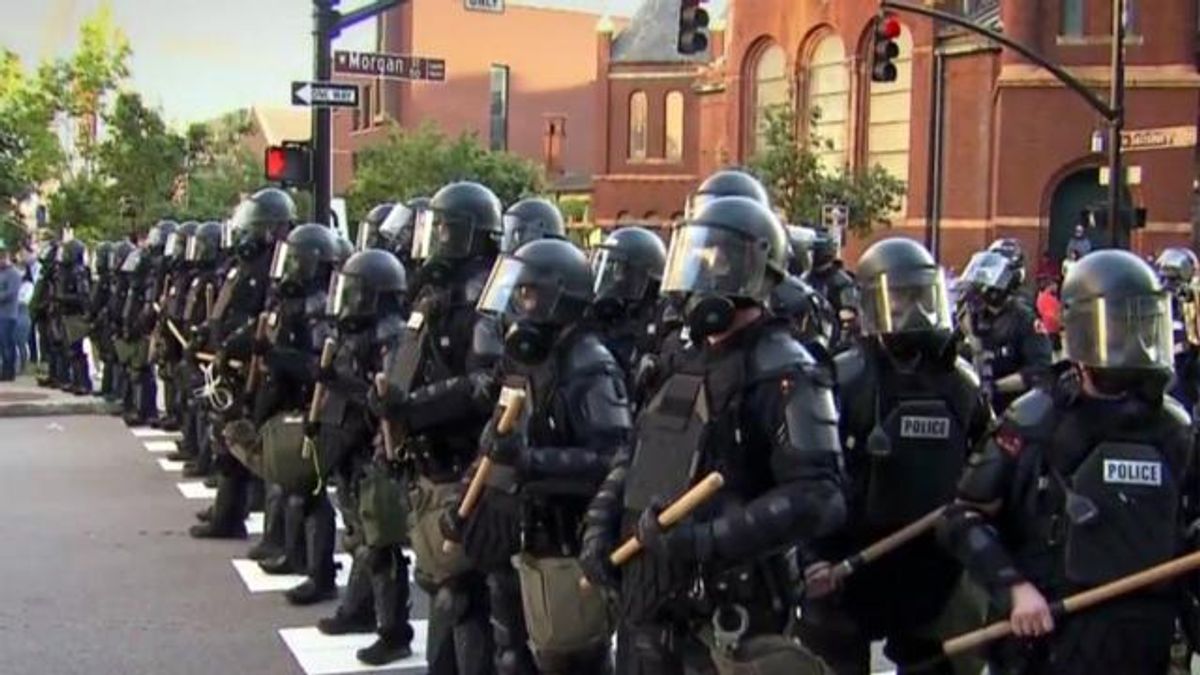
There's a slew of police reform bills pending at the General Assembly this legislative session, but the ones primed to move have backing from law enforcement.
A key House Republican filed three bills last week, all stemming from a House commission appointed last summer in the wake of protests that followed George Floyd's death in Minnesota. A single, but much longer, package of reforms is under construction in the Senate, also carried by a member of the Republican majority.
Other WRAL Top Stories
Key lawmakers say they expect a number of reforms to pass this year, including a new duty to intervene, which would write into state law an officer's responsibility to intervene when he or she sees another officer using more force than allowed.
Another measure with broad support would require new mental health screenings for law enforcement, as well as training on racial bias.
Formal hearings on these proposals haven't yet gotten underway, but more sweeping reforms don't have the momentum it normally takes to pass at the statehouse. Proposals to strengthen the oversight of citizen review boards, ban police chokeholds outright and increase transparency for officer body-worn camera footage didn't make it into legislation backed by the majority party.
Bills from legislative Democrats embracing some of these reforms are less likely to move.
Asked what she expects to pass this year Rep. Marcia Morey, D-Durham, a former District Court judge and member of another task force created last year to review criminal justice reforms, predicted "not nearly enough."
But Morey called several of the likely reforms "good and common sense" changes.
Rep. John Szoka, R-Cumberland, is carrying most of the bills in the House. He said late last week that it's not clear yet what the timetable is for debate, but he expects the bills to pass.
Here's a breakdown:
House Bill 436: Requires psychological screening before an officer is hired, as well as training on "effective mental health and wellness strategies." Officers would have to undergo two hours of training every three years.
House Bill 536: Requires any officer who sees another use excessive force and has “a reasonable opportunity to intervene" to do so. They must also report the use of force within 72 hours to the highest-ranking officer not present.
House Bill 547: Szoka described this, in part, as a "clarifying" bill to require organizations that certify police officers and sheriff's deputies in North Carolina to search a national database of officer de-certifications, which is maintained by the International Association of Directors of Law Enforcement Standards and Training, and to "utilize any record of conviction of a criminal offense" in deciding to certify the officer.
House Bill 548: District attorneys sometimes refuse to put officers on the stand because they don't trust them, and that triggers a requirement to tell the defense in criminal cases those officers are involved in. That's done with a Giglio or Brady letter, both named after court cases establishing this precedent. The letters aren't public record, nor would they be under this bill. But the bill would require state and federal prosecutors in North Carolina to provide copies to the state's Criminal Justice Standards Division, which would compile them.
Except for some of the language in the de-certification database bill, these bills generally have support from policing groups, including the North Carolina Sheriffs' Association and the North Carolina Association of Chiefs of Police.
Those groups also support Senate Bill 300, a broader criminal justice bill that runs 12 pages as filed and incorporates many of the issues the House bills deal with. The Senate bill also includes:
- A new database, held by the state but not available to the public, of every "critical incident" involving law enforcement. Law enforcement would be required to submit basic information about these incidents, which are defined as "an incident involving any use of force by a law enforcement officer that results in death or serious bodily injury to a person."
- More training for law enforcement in how to deal with mentally ill people, as well as new mental health screening protocols and an annual psychological screening requirement for officers.
- A new “early warning system” for potential problem officers that tracks, internally at agencies in the state, times officers use their guns, use other force, get in a car crash or have a citizen complaint filed against them. The database would not be public.
- New required training on mental health, community interaction, “implicit bias and racial equity,” use of force and the duty to intervene when another officer uses excessive force.
This Senate bill would also increase penalties for rioting, changing it from the most serious misdemeanor to the least serious type of felony. The bill would also bump up the felony charge if property is damaged in a riot.