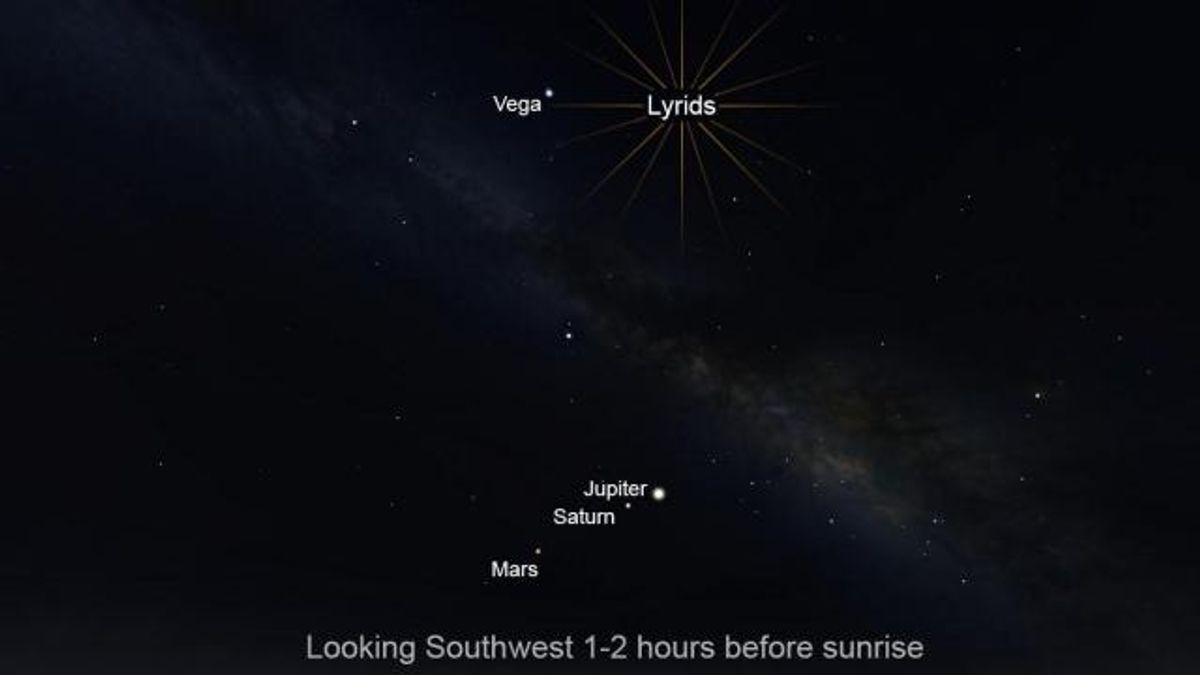
The Lyrid meteor shower peaks overnight Tuesday into Wednesday morning. Expect 10-15 meteors per hour to be visible from rural areas, about half that under suburban skies.
The meteors are caused be debris not much bigger than a grain of sand left behind by comet C/1861 G1 Thatcher traveling about 30 miles per second through the atmosphere.
Other WRAL Top Stories
Meteors will appear to be coming from the constellation Lyra, just ot the right of the bright star Vega. Vega rises about 9 pm but most of the show will still be hidden below the horizon. Few if any meteors will be visible until after midnight.
The best time to look is a few hours before sunrise, when that radiant point is highest in the sky exposing the most sky real estate where meteors might be.
Meteors can appear anywhere in the sky so don't necessarily focus on the constellation Lyra, look to the darkest part of your sky, away from artificial lights.
There had been some talk of a possible outburst this year, an increased number of visible meteors. Dr. Bill Cooke of NASA's NASA's Meteoroid Environment has his doubts.
"I’m skeptical about an outburst as well." Dr. Cooke agreed in an email, but reminded "there will be no moonlight to wash out the fainter Lyrids, so rates will be about as good as they get for this shower."