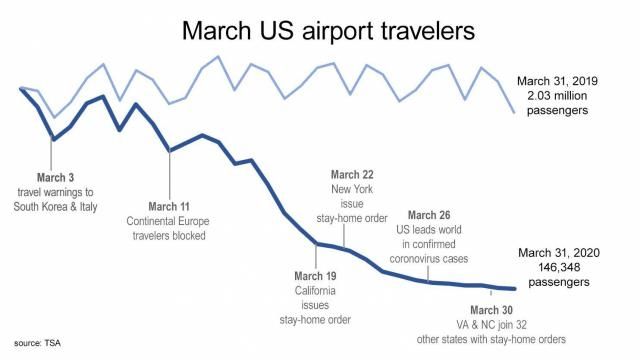
Airports across the country have been converted into storage facilities in the wake of an unprecedented downturn in air travel. Delta has parked more than 600 aircraft on closed runways and taxiways at their Atlanta hub along with other airports. American is storing wide-body aircraft like the Boeing 777-200 that serve international routes as well as narrow-bodies like the 737-800 which serve US domestic routes in Tulsa, Oklahoma.
Southwest and other carriers have also moved hundreds of planes to desert facilities Southern California and Arizona signaling these aircraft will likely not fly again for months or more.
Other WRAL Top Stories
The impact of hundreds of passenger planes has begun rippling beyond the airlines to weather forecasting.
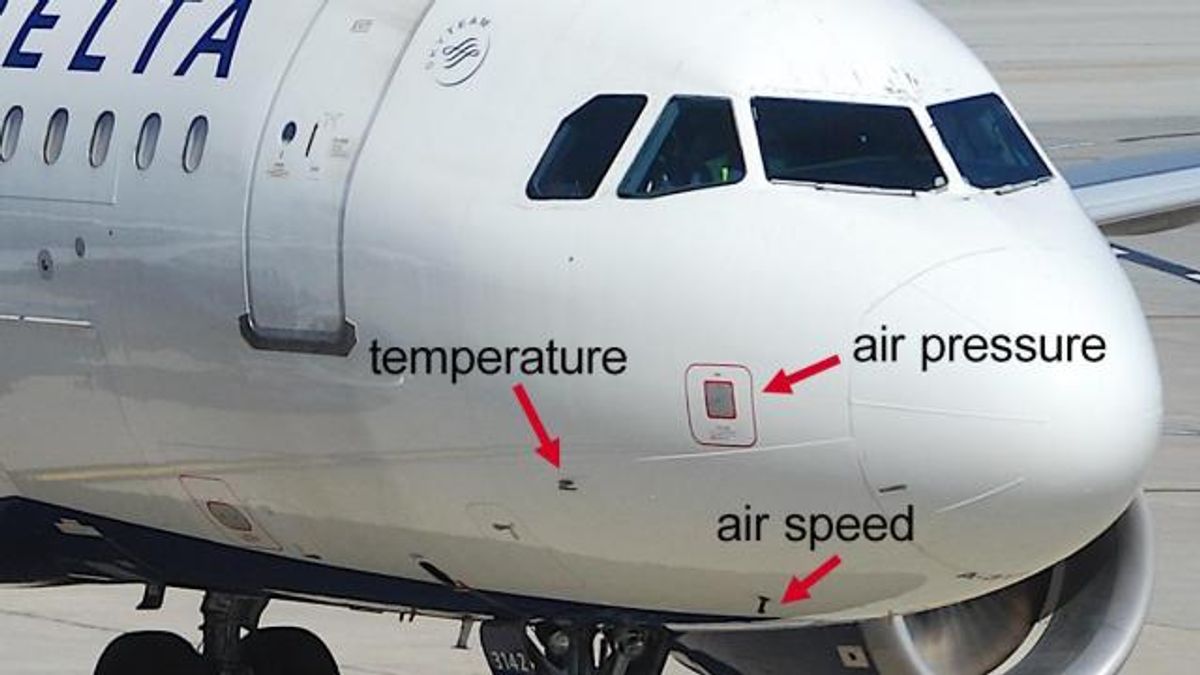
Delta, American, Alaska, United, and Alaska airlines along with UPS and FedEx participate in Aircraft Meteorological DAta Relay (AMDAR), a program created by the World Meteorological Organization (WMO) to collect weather data using sensors aboard.
By mid 2019 more than 3,500 commercial aircraft across 43 airlines world wide were providing more than 1.1 million observations daily. Upper air data provided across such a wide geographic area, including oceans, is particularly valuable to forecasters.
AMDAR equipped aircraft provide high resolution measurements from take-off to landing of air temperature, wind speed and direction, barometric pressure and water vapor, as well as air turbulence. AMDAR data usually contributes about 13% of the data that is used to produce weather models. It is particularly helpful in filling in gaps in similar data from radiosondes (weather balloons) released twice daily from NOAA facilities like those in Greensboro and Elizabeth City, North Carolina.
Studies found AMDAR improved wind, relative humidity, and temperature forecasts by up to 20%, especially for 6-9 hour forecasts according to UCAR, a consortium of universities focused on atmospheric science.The reduction in observations has become noticeable especially as more airlines park aircraft.
“The latest information available from airlines suggests that European AMDAR coverage will be reduced by 65% or more over the coming month, which is currently expected to continue into the summer,” says Steve Stringer of ECMWF producers of the the Euro weather model.
““We are anticipating the substantial reduction in the availability of US AMDAR data to continue over the coming weeks, likely to generate some measure of impact on the output of our numerical weather prediction systems,” says Christopher Hill from the US National Oceanic and Atmospheric Administration (NOAA).
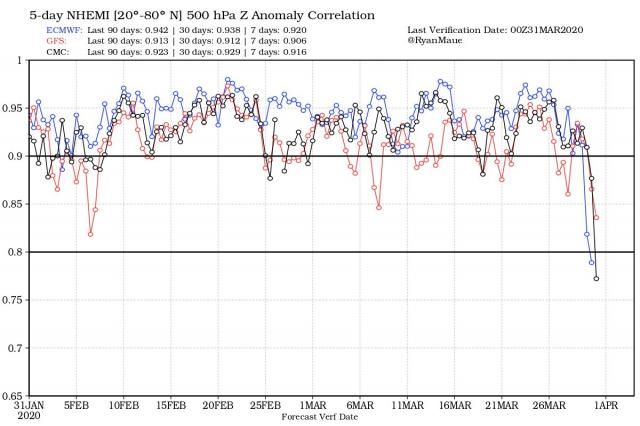
Meteorologists are taking note of impact accuracy of the ECMWF (Euro), GFS (NOAA), and CMC (Canada). “This type of forecast "drop out" hasn't happened in 6-months for ECMWF.” According to Dr. Ryan Maue of BAMWX forecasting services.
The news isn't all bad.
"The entire fleet of 261 jets continues to operate. Our entire fleet provides wind and temperature data, about 80% of the fleet have the capability to provide high-resolution ascent/descent/enroute wind and temperature reports. In addition, 25 of our Boeing 757s are equipped to provide water vapor data" according to UPS spokesperson Jim Mayer.
FedEx also continues to fly and like USPS, mostly at night. This provides critical data to the 06z (2 am EDT) and 12z (8 am EDT) model runs.
There is also discussion of increasing the frequency of weather balloon releases. Model makers as well as WRAL's team of trained meteorologists are already making other adjustments needed to continue putting together accurate forecasts.